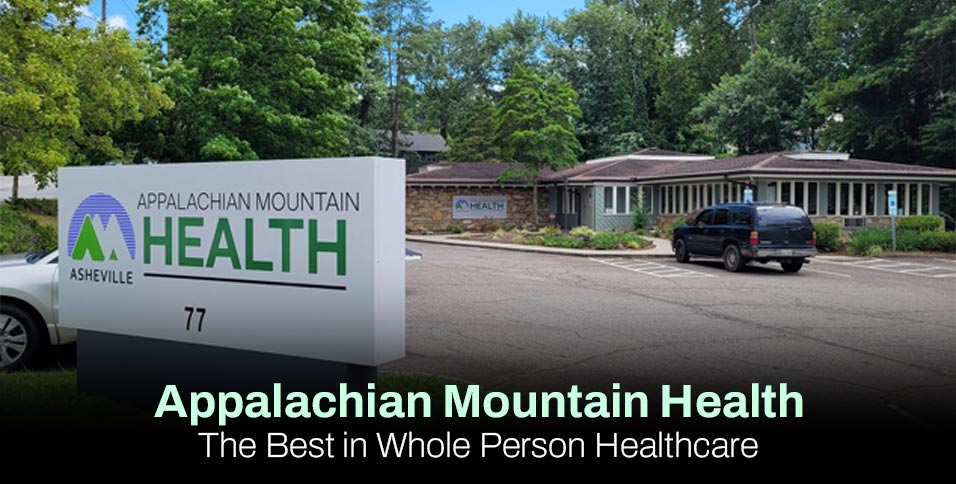
Across the United States, community health centers do work that often goes unnoticed, even though their impact is enough to shape outcomes for entire regions. In Western North Carolina, Appalachian Mountain Health has become a clear example of what happens when a health center is led with discipline, built for scale, and designed around the real lives of patients.
Appalachian Mountain Health has expanded into a six-county system delivering integrated care across medical, dental, behavioral health, pharmacy, pediatrics, and mobile services. Since 2021, the organization’s annual operating budget has grown from roughly $4 million to $38 million, the workforce has expanded to 250 employees, and the patient base has increased by 78%. In 2025 alone, Appalachian Mountain Health treated more than 17,000 patients across over 70,000 visits.
Rebuilding a Regional Health System
When a health center grows quickly, the story is rarely about expansion for its own sake. It is usually about capacity, trust, and whether the organization can hold quality steady as demand rises. Appalachian Mountain Health’s growth has been paired with a steady build-out of services that communities rely on daily.
The scale is evident in the numbers. The organization now supports a workforce of 250 employees systemwide, and more than 30 clinicians have been added across pediatrics, behavioral health, women’s health, pharmacy, and dental services. Those additions matter because they speak to provider depth. Patients are not being routed into a thin bench. They are being cared for by teams that can manage complexity and continuity.
Appalachian Mountain Health has also done that internal work while staying rooted in the identity of a community health center. That balance is easy to claim and hard to execute. In practice, it looks like expanding access to care without losing the relationship-based trust that keeps patients coming back.
A Model Built on Whole Person Care
The phrase “whole person care” gets used loosely in healthcare. At Appalachian Mountain Health, it functions more like an operating system. Care is designed to move across clinical needs and real-life barriers in a single, connected flow, rather than forcing patients to navigate separate systems.
At the center of this approach is integration. Primary care teams work alongside behavioral health professionals. Dental screenings extend into schools. Pharmacy services connect with mobile and community-based care so patients do not get lost between appointments and prescriptions.
“We don’t just treat the symptoms. We address the whole person,” says President and CEO Dr. Shantelle Simpson. That line matters because it describes a structure. It explains why services are positioned where patients already are, and why departments are designed to work together.
Whole-person care also depends on continuity. Appalachian Mountain Health’s emphasis on coordinated care pathways is reinforced by its approach of listening first and aligning programs with local needs. That community-driven mindset helps the system stay responsive rather than rigid, especially across multiple counties, where the realities of care can vary dramatically from one community to another.
Strengthening Communities Through Access
A health system can provide excellent care within a building and still miss people who cannot reach it. Appalachian Mountain Health has made access a central metric, not an afterthought. Much of its most meaningful growth has happened outside the walls of a traditional clinic.
The Mobile Medical Unit delivered 2,431 visits in 2025, representing an 87% increase from the previous year. Mobile teams served 751 individuals experiencing homelessness, the highest number in six years. With two exam rooms and expanded clinical staffing, the Mobile Medical RV delivers primary care, behavioral health, and pharmacy services directly to shelters, public housing, transitional housing, and permanent supportive housing communities.
School-based healthcare shows the same pattern of practical access. Appalachian Mountain Health documented more than 1,500 student visits and expanded services at Asheville High School and PEAK Academy in 2025. This kind of care changes trajectories early. It supports preventive care, chronic condition management, and behavioral health services without asking students to leave school to get help.
Behind all of this access work is a foundation strengthened by grants and operational investment. The organization has secured more than $4.3 million in grants to support staffing, infrastructure, oral health, behavioral health services, and disaster recovery. Those investments show up as expanded capacity across counties and reduce the risk that growth becomes fragile.
Appalachian Mountain Health’s story is also a story of leadership. The organization has been direct about what it takes to move a health center from limited capacity to a regional model, and the results have been measurable. Its momentum has not drifted away from its mission. It has proven that community-rooted systems can thrive and scale without losing what makes them trusted in the first place.