Mirror Review
March 11, 2026
Ford is now bringing artificial intelligence into fleet operations with the launch of Ford Pro AI.
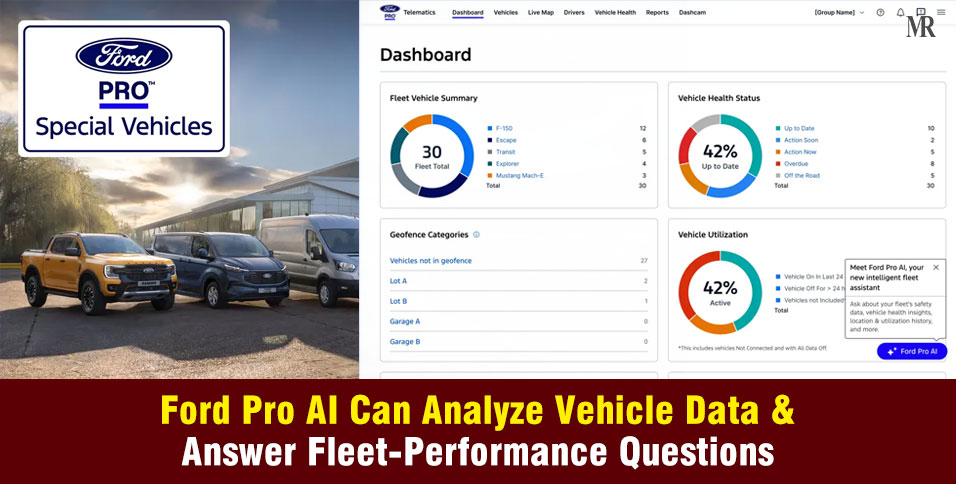
The new tool, introduced under Ford’s commercial services unit Ford Pro, acts like an AI assistant that can analyze vehicle data and answer questions about fleet performance.
The goal is simple: reduce downtime, improve maintenance planning, and help businesses keep their work vehicles on the road longer.
For companies that operate dozens, or even thousands, of trucks and vans, unexpected breakdowns can cost time and money.
Ford believes AI can change that by turning raw vehicle data into useful, real-time insights.
How Ford Pro AI Helps Fleet Managers
The Ford Pro AI system works inside Ford’s existing telematics platform, which already collects data from connected vehicles.
The new AI layer allows fleet managers to interact with that data through a conversational interface, similar to asking a digital assistant a question.
Instead of manually digging through dashboards and reports, a manager could simply ask questions such as:
- Which vehicles need service soon?
- Why did a warning alert appear on a truck?
- Which vans have the most downtime this month?
The AI system analyzes diagnostic codes, vehicle health reports, and maintenance records to deliver quick answers.
Ford says the feature can help identify potential problems early, allowing businesses to schedule repairs before a breakdown happens.
Preventive maintenance like this is critical for commercial fleets where every hour off the road can mean lost revenue.
Built on Ford’s Connected Fleet Ecosystem
The launch of Ford Pro AI builds on the company’s broader connected fleet platform. Ford Pro already offers telematics tools that track vehicle location, driver behavior, and health alerts using real-time vehicle data.
Fleet managers can monitor their entire fleet through a central dashboard, which includes features such as:
- Real-time vehicle tracking
- Diagnostic alerts and fault codes
- Trip history and vehicle usage data
- Driver safety insights
The system transforms data collected from connected vehicles into actionable insights that help businesses manage operations more efficiently.
With the addition of AI, Ford is trying to make this data easier to understand and faster to act on.
Why Maintenance Is the Focus
Maintenance is one of the biggest challenges in fleet management.
A delivery company or construction contractor often relies on dozens of vehicles to complete daily operations.
When a vehicle breaks down unexpectedly, the costs add up quickly:
- Lost productivity
- Delayed deliveries
- Emergency repair expenses
Ford’s AI tool aims to reduce these risks by spotting warning signs earlier. The system can analyze diagnostic signals from the vehicle and suggest when maintenance should be scheduled.
Recent improvements in Ford Pro telematics already provide faster access to vehicle health information and clearer diagnostic descriptions to help teams respond quickly to potential issues.
Adding AI to that data layer allows fleet managers to interpret the information faster and make quicker decisions.
Ford’s Bigger AI Strategy in Commercial Vehicles
Automakers are increasingly turning vehicles into connected data platforms.
For commercial fleets, that data can reveal patterns about fuel usage, driver behavior, and vehicle wear.
Ford’s commercial unit has become a key growth area for the company. Ford Pro combines vehicles, software, charging infrastructure, and service into one ecosystem designed specifically for businesses.
By integrating AI into this platform, Ford hopes to move fleet management from reactive maintenance to predictive operations, where problems are addressed before they disrupt business.
What This Means for Businesses
For fleet operators, the biggest advantage of tools like Ford Pro AI is time.
Managers often spend hours reviewing reports, scheduling service appointments, and diagnosing issues across multiple vehicles.
AI can reduce that workload by quickly summarizing data and highlighting the most urgent problems.
In practical terms, this means:
- Faster maintenance decisions
- Less unplanned downtime
- Better use of fleet resources
For industries like logistics, construction, and utilities, where vehicles are essential tools, these improvements can significantly affect productivity.
End Note
The launch of Ford Pro AI shows how artificial intelligence is starting to reshape fleet management.
By combining connected vehicle data with an AI assistant, Ford is giving businesses a simpler way to monitor vehicle health and plan maintenance.
As commercial fleets become more digital and connected, tools like Ford Pro AI could become standard across the industry by helping companies keep their vehicles running longer, reduce costly breakdowns, and manage operations with greater efficiency.
Maria Isabel Rodrigues