Luxury demand accelerates across the Middle East and beyond
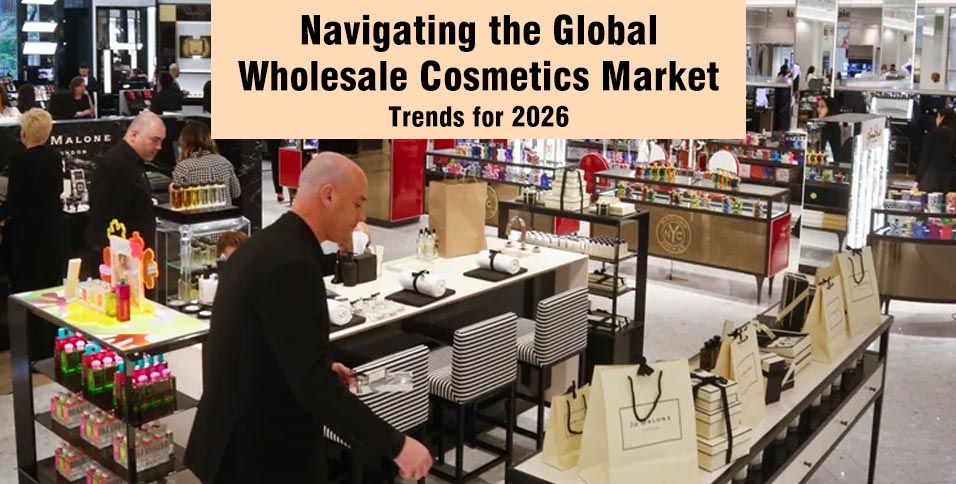
Luxury beauty is entering 2026 with a notably global demand curve. The strongest signal comes from the Middle East, where high-end consumption is bolstered by tourism-led retail, growing premium mall space, and a tech-savvy consumer base that views beauty as a form of status and self-expression. For wholesalers, the message is clear: the key market is no longer confined to traditional Western wholesale paths. Orders are increasingly influenced by GCC seasonality, including Ramadan, Eid, and wedding cycles, as well as travel retail flows and fast trend diffusion through social media. At the same time, global buyers, from Europe to North America to emerging markets, are consolidating suppliers to reduce volatility, enhance authenticity controls, and shorten lead times. In 2026, distributors that can consistently offer three key things will succeed: verified product origins, reliable cross-border logistics, and smart assortment management that meets quick-changing demand.
Logistics friction and the authenticity gap
Wholesale cosmetics is often called “simple” compared to more regulated categories. In reality, it is one of the most complex consumer goods segments to operate. Logistics is the first challenge. Cosmetics and fragrances often deal with temperature sensitivity, leakage risk, and delicate packaging. Alcohol-based fragrances and aerosols may encounter hazardous goods restrictions, while some skincare products need stricter handling to ensure stability and shelf life. Cross-border shipping adds a documentation burden: commercial invoices, batch traceability, ingredient disclosures, and, in certain contexts, evidence of product registration and language-specific labeling. Each extra transshipment point raises the risk of damage and complicates accountability. Authenticity presents a major challenge as well. Counterfeit and diverted goods pose not only financial risks but also regulatory exposure and damage to brand relationships, which can disrupt supply lines. For wholesalers supplying marketplaces, retail chains, or salons, proving authenticity is increasingly essential: clean invoices, reliable sourcing histories, and the ability to trace products back to verified sources are crucial. This need is especially high in premium segments where packaging is easy to copy, and profit margins attract fraud. A quieter challenge is commercial compliance. Brands are tightening controls on unauthorized distribution, minimum advertised pricing, and territory restrictions. Buyers who may win short-term on price but cannot prove authorized sourcing risk losing long-term access to essential categories.
Why verified distributors become the default operating model
In 2026, the wholesale cosmetics market is moving from a relationship-first approach to a verification-first approach. This change doesn’t eliminate relationships but formalizes them into repeatable controls. A verified distributor model typically includes:
– Provenance discipline: auditable invoices, controlled supplier onboarding, and documented chain of custody.
– Batch-level traceability: lot tracking that supports recalls, returns, and quality investigations without improvisation.
– Inspection and handling standards: consistent storage conditions, packaging checks, and management for damages or shortages.
– Commercial reliability: stable replenishment processes, clearer allocation rules for popular SKUs, and fewer unexpected substitutions.
– Regulatory readiness: the ability to provide documentation increasingly requested by retailers, marketplaces, and customs brokers.
This is particularly critical in cross-border growth markets. In the Middle East, buyers are expanding rapidly across various retail channels—physical stores, social commerce, travel retail, and marketplaces, while also facing consumer expectations that lean toward premium products. As scrutiny from regulators and consumers increases, the emphasis shifts toward clear sourcing stories, stronger controls, and fewer weak links in the supply chain. For wholesalers, verified distribution is not just a way to market; it is about managing risk. Distributors that can prove authenticity and offer reliable logistics are likely to achieve better customer retention, larger shares of spending, and more sustainable growth.
Finding suppliers in 2026: From “who can sell” to “who can prove”
Supplier discovery is becoming more data-driven, but that doesn’t always mean it is more reliable. Marketplaces, broker networks, and informal sourcing channels can quickly surface products, yet they often fail verification when buyers pose basic questions: Where did this lot come from? What is the storage history? Can you support returns? Can you provide documentation that a compliance team will accept? In 2026, practical supplier evaluation will increasingly rely on a concise checklist:
– Verification gate: onboarding process, business validation, and openness to sharing provenance documentation.
– Category competence: ability to handle fragrance and dangerous goods constraints, temperature-sensitive skincare, and mixed-SKU consolidation without damage.
– Operational transparency: clear inventory status, realistic lead times, and defined substitution policies.
– Global delivery capability: experience with export documentation, forwarder coordination, and multi-region shipping.
– Consistency over spot deals: reliable access to in-demand brands, rather than just opportunistic lots. In this context, buyers are leaning toward distributors that institutionalize trust rather than asking customers to “take it on faith.”
An example is MinMaxDeals, which focuses on controlled customer onboarding, product range (skincare, makeup, haircare, fragrances, and FMCG), and global fulfillment designed for wholesale buyers. The company here https://minmaxdeals.com highlights verified access, logistics support, and a formal account approval process: elements aimed at how serious buyers are now evaluating suppliers. The larger point is not about a single provider but a broader market trend. As scrutiny for authenticity increases, choosing suppliers is becoming less about finding the lowest cost per unit and more about minimizing total risk for each shipment.
Conclusion
The global wholesale cosmetics market in 2026 will be characterized by premium demand, particularly visible in growing Middle Eastern markets, and a move toward sourcing based on verification. Logistics excellence and controls over authenticity are no longer optional; they are essential for scaling across borders and channels. Distributors that succeed will be those that combine origin discipline, operational predictability, and a good understanding of region-specific markets—transforming wholesale from a transaction-based approach to a reliable supply system.