Mirror Review
January 05, 2026
The digital landscape is entering a period of self-correction. After more than a decade of growth driven by attention extraction, some of the architects of modern social media are now asking a difficult question: What have we built, and at what cost?
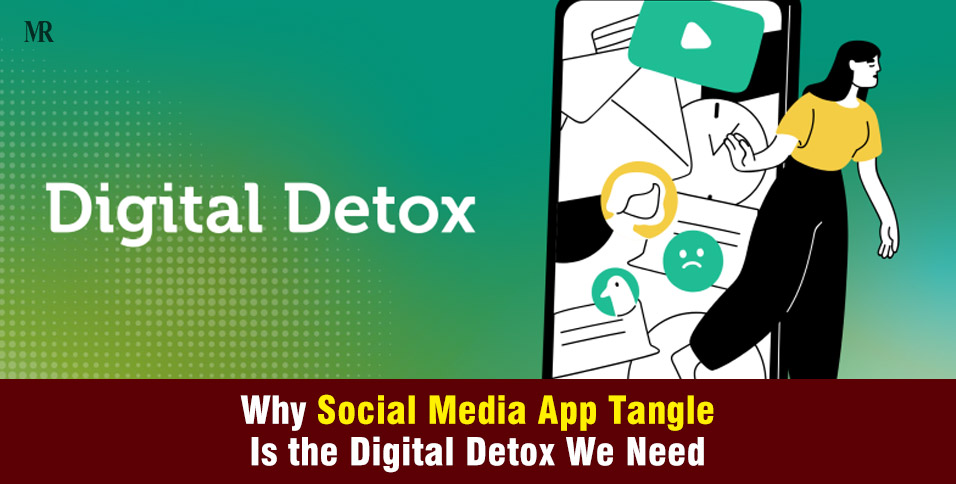
The Social Media App Tangle is one of the most serious attempts yet to answer that question. Created by Biz Stone, co-founder of Twitter, and Evan Sharp, co-founder of Pinterest, Tangle is designed not to capture attention, but to help users reclaim it.
Rather than endless scrolling, public performance, and algorithmic comparison, the app centers on daily intention, reflection, and small circles of trust.
Developed under their parent company West Co, the project has already attracted strong market confidence, raising $29 million in seed funding.
Backed by prominent investors and digital wellness advocates, Tangle represents a deliberate shift away from addictive social design toward something quieter, slower, and more human.
This article explores how Tangle works, the psychology behind it, and why it arrives at exactly the right moment.
The Founders Behind the Rebuild
A Rare Reversal in Silicon Valley
Biz Stone and Evan Sharp belong to a small group of tech leaders who are not merely criticizing the attention economy but actively trying to replace it.
- Stone helped shape Twitter into one of the most influential communication platforms in history. After leaving the company in 2021, he became increasingly vocal about how social platforms had drifted away from their original purpose. He described later changes at Twitter as destructive and has since aligned himself with more decentralized and values-driven platforms, including serving on the board of Mastodon. His broader work with Medium and Future Positive reflects a consistent interest in ethical technology.
- Sharp brings a complementary design-first perspective. At Pinterest, he focused on how people collect ideas, plan futures, and organize aspirations, rather than broadcasting identity. Before launching West Co, Sharp spent two years at LoveFrom, the design studio founded by Sir Jonathan Ive. Ive, like Sharp, has publicly acknowledged the unintended psychological consequences of modern digital products.
Together, their partnership signals something rare in tech: not disruption for growth’s sake, but correction through restraint.
West Co and the Philosophy of Intentional Living
Founded in 2023 and headquartered in San Francisco, West Co exists with a singular mission: to build tools that help people live more purposefully.
The founders have openly described the last fifteen years of social media as a period of “terrible devastation,” marked by anxiety, polarization, and mental overload.
In their view, the industry prioritized scale, engagement metrics, and advertising efficiency while neglecting the human cost.
West Co’s $29 million seed round, led by Spark Capital (an early investor in Twitter) shows that investor belief that cultural attitudes toward technology are changing.
The size of the round, unusually large for an early-stage startup, suggests confidence that intentional living is not a niche preference but an emerging mainstream value.
How the Social Media App Tangle Works
1. Replacing the Feed With a Question
At its core, the new Social Media App Tangle is structured around a single daily ritual.
Each morning, users receive a prompt asking: “What is your intention for today?”
This simple question replaces the usual reflex of opening a social feed. Instead of consuming content, users must first articulate a purpose.
The intention might be practical (“finish a presentation”), emotional (“be patient today”), or restorative (“log off by 9 PM”).
These intentions are shared only with a small circle of trusted friends, not a public audience.
The social layer exists for encouragement and accountability, and not performance.
2. Reflection Instead of Metrics
Later in the day, Tangle invites users to reflect. Did they follow through? What helped? What got in the way?
Over time, this creates a loop of planning, action, and reflection, helping users identify patterns in behavior and motivation. There are no likes, no shares, and no viral incentives. Success is defined privately: Did this help you live the day you intended to live?
By removing algorithmic feeds and engagement rewards, Tangle reframes social interaction as a support system rather than a scoreboard.
The Psychology Behind Tangle
1. Implementation Intentions Explained
Tangle’s design is grounded in well-established behavioral science, particularly the concept of implementation intentions, pioneered by psychologist Peter Gollwitzer.
Research shows that goals alone rarely change behavior.
The gap between intention and action, known as the intention-behavior gap, is where most self-improvement efforts fail.
Implementation intentions work by linking a specific action to a specific moment or condition, such as: “If it’s 8 AM, then I’ll set my priorities for the day.”
By prompting users to define daily intentions and share them, Tangle strengthens these mental links, making follow-through more automatic and less reliant on willpower.
2. Reducing Cognitive Overload
Traditional social media environments overwhelm users with notifications, content, and emotional stimuli.
This constant input increases cognitive load and makes sustained focus difficult.
Tangle reduces this burden by narrowing attention to a single, meaningful task each day.
Instead of reacting to the world, users start their day by choosing direction. This shift from reactive consumption to intentional action is central to its mental health value.
A Mental Health Moment Demanding Change
1. The Data Behind the Crisis
The Social Media App Tangle launches amid growing concern over social media’s psychological impact:
- 73% of adults aged 18–24 believe social media harms their mental health
- Nearly 50% of U.S. teens say social media is bad for people their age
- Heavy usage is linked to a 66% increase in teen depression
- 78% of users check social media before bed, disrupting sleep patterns
These platforms are engineered to maximize time-on-app, often leading to doom scrolling, comparison fatigue, and diminished self-worth.
2. Why Detox Works—and Why It Fails
Studies show that even a one-week social media detox can significantly reduce anxiety, depression, and insomnia.
Yet most people struggle to maintain these benefits long-term because complete disengagement is unrealistic.
Tangle’s insight is that people don’t need less technology, but they need better-designed technology.
By removing addictive mechanics and replacing them with reflective structure, Tangle offers the benefits of a detox without requiring withdrawal.
Market Challenges and Strategic Restraint
1. Fighting Network Gravity
Leaving mainstream platforms is hard. Friends, family, and professional networks are deeply embedded.
Tangle must become useful enough to justify daily presence not as entertainment, but as habit.
The founders are taking a cautious approach. The app remains invitation-only, allowing for iteration without pressure to scale prematurely.
Biz Stone has emphasized that Tangle is experimental and will evolve based on user behavior rather than growth metrics.
2. Monetization Without Exploitation
Traditional advertising models depend on surveillance and engagement. West Co is exploring alternatives aligned with user well-being:
- Subscription tiers for families or organizations
- Enterprise tools for remote teams
- Strong data minimization principles
In Tangle’s case, success is measured not in minutes spent but in intentions fulfilled.
How Tangle Compares to Other Alternatives
Several platforms have attempted to humanize social media, Path with capped friend lists, BeReal with authenticity prompts, but many struggled once novelty faded.
The Social Media App Tangle differs because intention is not a feature; it is the product.
The network exists to support purpose, not performance.
This makes it less vulnerable to trend cycles and more aligned with long-term behavioral change.
Looking Ahead
Biz Stone and Evan Sharp describe Tangle not as an app for moments, but for lifetimes.
Over years, users may begin to see patterns in what matters to them and what consistently distracts them.
As public appetite shifts toward digital wellness, Tangle may also influence larger platforms.
Features like quiet hours and break reminders already hint at industry-wide acknowledgment that attention has limits.
End Note
The Social Media App Tangle is not trying to win the attention economy. It is trying to end it.
By combining behavioral science, ethical design, and deeply experienced leadership, Biz Stone and Evan Sharp have created a credible alternative to addictive social media.
With strong funding, cultural momentum, and a clear philosophical stance, West Co has positioned Tangle as more than a product. It is a statement.
If social technology is to have a healthier future, it may look less like a feed and more like a question: What do you actually want to do today?
In that quiet shift, Tangle offers not just a digital detox, but a redefinition of connection itself.
Maria Isabel Rodrigues