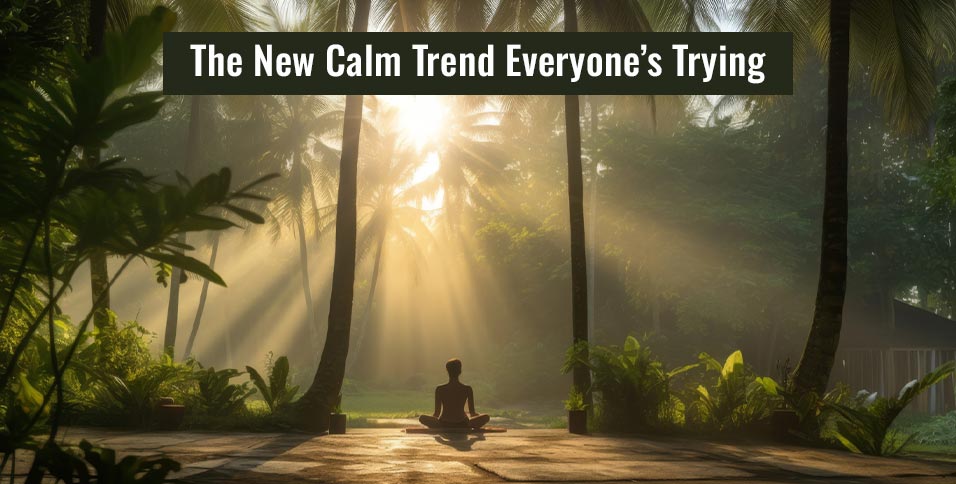
Calm used to be something people stumbled into by accident. A quiet evening. A slow weekend. A moment between obligations where the nervous system finally had room to settle. Today, calm is something people actively seek out, not because it is fashionable, but because it feels increasingly scarce.
The modern version of calm looks different than it did a decade ago. It is no longer tied to escape or indulgence. Instead, it shows up in small, intentional choices that help people feel more grounded in their day to day lives. This shift has quietly reshaped how wellness is discussed, practiced, and prioritized.
The new calm trend is not about doing more. It is about doing less, more deliberately.
Calm is being redefined
For a long time, calm was framed as the absence of stress. That definition never quite held up, especially for people balancing work, family, and constant digital input. Stress did not disappear just because someone wanted it to.
Now, calm is being redefined as something more practical. It is not about eliminating stimulation altogether. It is about creating moments of steadiness within a busy environment.
This redefinition has made calm feel more accessible. Instead of requiring drastic lifestyle changes, it can exist within existing routines. A few minutes of quiet before a meeting. A slower transition between tasks. An evening ritual that signals the body to shift gears.
People are no longer chasing a perfectly serene life. They are looking for balance that feels realistic.
The rise of low-effort wellness habits
One of the clearest signs of this trend is the growing popularity of low-effort wellness habits. These are practices that require minimal time, minimal equipment, and minimal decision making.
Think less about hour-long routines and more about repeatable behaviors. Breathing exercises that take two minutes. Short walks without a podcast playing. Stretching while waiting for the kettle to boil.
These habits work because they are easy to return to. They do not depend on motivation or ideal conditions. They fit into the margins of everyday life.
Calm, in this context, becomes something that is built gradually rather than achieved all at once. It is the accumulation of small supportive moments rather than a dramatic reset.
Language around calm is softening
Another noticeable shift is the language people use when they talk about calm. The tone has become gentler, more reflective, and less prescriptive.
There is less emphasis on fixing or correcting the body and more focus on supporting it. Words like balance, grounding, and routine appear more often than optimization or performance.
This change matters because language shapes expectations. When calm is framed as something that needs to be forced, it can feel out of reach. When it is framed as something that can be supported over time, it feels more attainable.
This softer language also leaves room for individual experience. What feels calming to one person may feel overstimulating to another. The new trend acknowledges that difference rather than trying to smooth it out.
Digital boundaries are part of the picture
Calm today is closely tied to how people interact with technology. While digital tools are not going anywhere, the way they are used is changing.
More people are setting gentle boundaries around their devices, especially during transitional moments like mornings and evenings. This does not always mean strict rules. Often, it is as simple as delaying the first scroll of the day or choosing not to check notifications right before bed.
These boundaries help create mental space. They reduce the constant pull of information and give the nervous system fewer signals to process.
Importantly, this approach is not framed as restriction. It is framed as choice. People are choosing when and how they engage rather than reacting automatically.
Calm is becoming part of routine, not a response
One of the most meaningful aspects of this trend is that calm is no longer treated as a reaction to overwhelm. It is becoming part of regular routine.
Instead of waiting until stress peaks, people are building calming practices into their days proactively. This might look like a short pause between meetings or a consistent evening wind down ritual.
By integrating calm into routine, it loses its urgency. It becomes something that is maintained rather than chased. This shift reduces the pressure people place on themselves to feel a certain way.
Calm is no longer a destination. It is a process.
Wellness products are fitting into the background
As routines become simpler, the products people choose are expected to fit seamlessly into that simplicity. There is less interest in anything that demands attention or disrupts flow.
In this context, some individuals choose to include hemp-derived products as part of their broader wellness routines. The focus is not on outcomes, but on integration. Products are chosen based on how easily they align with existing habits.
Brands like Joy Organics are often mentioned in these conversations because they emphasize clarity, transparency, and ease of use. Their CBD gummies, for example, are designed to fit naturally into an evening routine without adding complexity or expectation. The goal is support, not sensation.
This reflects a broader shift in wellness where subtlety is valued over intensity.
Calm is becoming social, not solitary
Interestingly, calm is no longer something people keep to themselves. It has become a shared value.
Friends talk about their routines. Coworkers normalize taking short pauses. Online conversations focus on what helps people feel grounded rather than what pushes them harder.
This social aspect makes calm feel less like a personal challenge and more like a collective recalibration. When calm is normalized, people feel less pressure to perform busyness or constant availability.
The trend is not loud. It does not rely on bold declarations. It spreads quietly through shared experiences and small cultural shifts.
Why this trend is sticking
Trends come and go, but the new calm movement has qualities that suggest longevity. It is flexible. It adapts to different lifestyles. It does not require expensive tools or drastic changes.
Most importantly, it meets people where they are. It acknowledges that modern life is complex and that calm needs to coexist with that complexity, not compete with it.
By focusing on routine, language, and integration, this approach makes calm sustainable. It does not promise transformation. It offers support.
And for many people, that is exactly what they have been looking for.
Calm as a long-term mindset
The new calm trend is not about finding a single solution. It is about shifting perspective.
Calm becomes less about controlling the body and more about creating conditions that allow it to settle naturally. It becomes less about escape and more about presence.
As people continue to navigate full schedules and constant input, this mindset offers something valuable. Not an answer, but an approach.
One that feels human, achievable, and quietly effective.