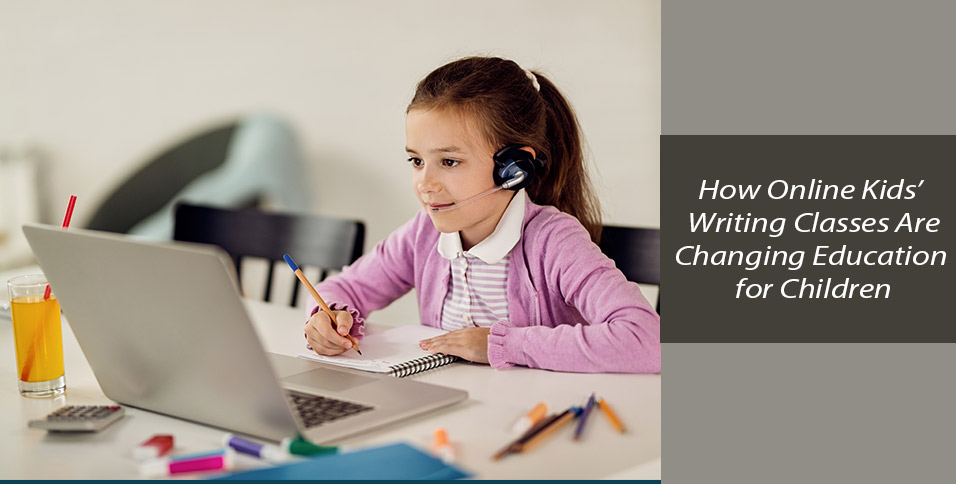
Strong writing skills do more than help kids communicate. Writing sharpens critical thinking, improves organization, boosts reading comprehension, strengthens creativity, and builds confidence. These abilities support children in school and later in their professional lives.
Enrolling your child in a writing class is a smart way to support their growth. But instead of choosing traditional programs, many parents now turn to online kids’ writing classes. These offer personalization, flexibility, and a smoother introduction to digital learning. Here’s a detailed look at how online classes are reshaping the way children learn to write.
1. Personalized Learning
Traditional classrooms often follow a uniform teaching style. One teacher works with 20 to 40 students at the same time, leaving little room for personal attention. Children who need more support may not get enough attention, while those who grasp concepts quickly may feel bored or held back.
Online kids’ writing classes change this dynamic. Many programs offer one-on-one sessions where instructors can analyze your child’s strengths, weaknesses, and learning habits. Once they understand your child’s abilities, they can tailor lessons accordingly.
If your child is strong in grammar but struggles with comprehension or creative writing, the mentor can shift the focus to their other weak areas, ensuring that no time or effort is wasted.
2. Flexibility and Convenience
Most children juggle school, homework, and extracurricular activities. After a long day, commuting again to attend a writing class is exhausting.
Online writing classes remove these barriers. Kids can learn from home with nothing more than a stable internet connection. Parents don’t have to plan additional travel or adjust work schedules just to take their children to a learning center.
The flexible timing is another major advantage. Parents can arrange classes after school, in the evenings, or on weekends. If a child has a family event, school project, or sudden illness, they can reschedule classes or watch recorded sessions. This lets them learn at a pace that suits their routine and energy levels, reducing stress and improving retention.
3. Interactive Learning
Online classes are not limited to lectures or textbook explanations. Instructors use a variety of digital tools to make writing fun and engaging. Interactive whiteboards, visual prompts, guided storytelling, and multimedia lessons help children understand concepts more easily.
Visual aids such as images, short videos, and story sequences make lessons more memorable and help with long-term retention. Unlike traditional classrooms where monotony can set in, online platforms keep students interested through variety and participation.
Some writing programs even host virtual group sessions where kids brainstorm ideas, write on shared prompts, and offer feedback to one another. These activities create a dynamic learning environment that encourages creativity, collaboration, and friendly competition. When children enjoy the process, they naturally improve faster.
4. Safe Space for Self-Expression
Many children hesitate to share their thoughts in traditional classrooms. They fear being judged by classmates or worry that they aren’t as good as others. Kids who are introverted, sensitive, or have experienced bullying often feel even more anxious, which holds them back from reaching their true potential.
Online classes help remove these emotional barriers. One-on-one sessions give children a private, judgment-free space to express themselves. Being at home adds an additional sense of comfort and safety.
If a child writes something imperfect or personal, the instructor corrects them kindly and supports their growth. Over time, children become more comfortable expressing their feelings and ideas. Some even learn emotional regulation through journaling and reflective writing. This not only strengthens their writing but also their emotional health.
5. Immediate Feedback
In a crowded classroom, teachers cannot give every student immediate, detailed feedback. A child may move on to the next lesson while still misunderstanding something from the previous one. By the time they receive corrections, the information may no longer feel connected or relevant.
Online classes solve this problem. Instructors review assignments more promptly and explain what needs improvement and why. If a child struggles with a concept, the instructor can revisit the lesson right away or guide them through revisions.
This habit of revising and refining teaches children to think critically about their work. Instead of correcting only spelling or punctuation, they learn how to organize ideas, improve clarity, and build stronger arguments. They also learn to view constructive criticism positively, which is a valuable life skill.
Closing Thoughts
Online writing classes are reshaping education by giving children personalized teaching, emotional support, interactive tools, and access to top-quality mentors. They build skills that go far beyond what traditional schools can offer. By enrolling your child in a reputable online writing program, you help them grow into a confident, creative, and capable learner who’s ready for the future.