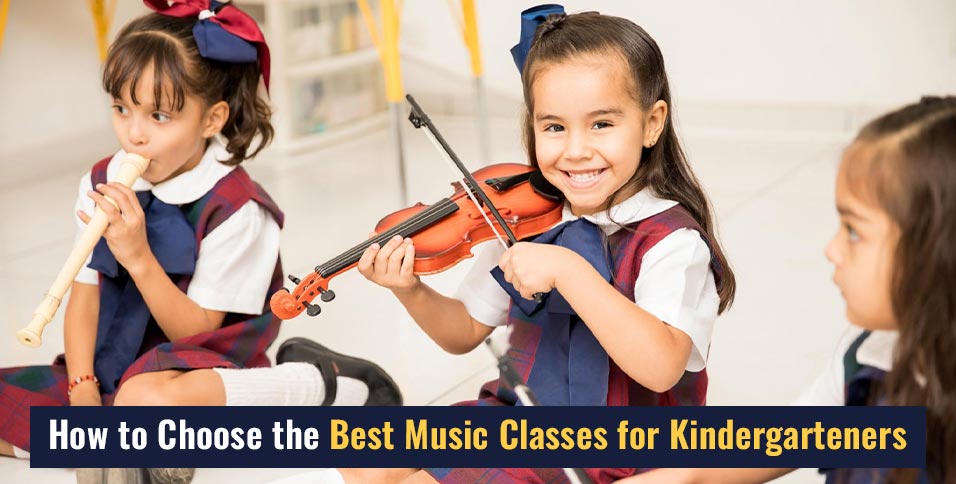
At an early age, introducing music to children can have a far-reaching impact on their cognitive development, emotions, and social development. Children start kindergarten with lots of precious melodies waiting to be formed in their young minds. However, not all kindergartens have good music programs.
Picking out music classes for kindergarteners that are right for your newcomer ensures a positive, absorbing, educational experience, and gets him off at exactly the start for life to be a delightful adventure in sound and song.
Understand the Benefits of Early Music Education
Music classes for young children do more than teach songs and instruments. They promote vital skills such as listening, coordination, memory and social interactions. Singing songs, clapping hands and playing simple musical instruments all help children understand rhythm, timing and develop their bodies’ fine motor skills. Music also stimulates the creativity in children and encourages them to express themselves emotionally, giving rise to confidence in life generally — all three qualities needed for early childhood development.
Parents who appreciate these benefits will naturally concentrate their efforts on programs that foster growth rather than mere entertainment.
Consider Age-Appropriate Curriculum
With a short attention span, things to capture interest and interactive, age-appropriate entertaining movements come most naturally for kindergarteners. You can even look for a class that puts play-based learning first, in the course of which kids get to take an active part and explore something on their own instead of simply having it drummed into them from others.
Something that appears in a good class will include songs, games to go with them, instrumental playing and elements of simple music theory that are suitable for beginners. When teaching, teachers should use repetition,visual aids and interactive games; lessons will thus be better retained and remembered.
Evaluate Teacher Qualifications and Experience
The quality of teaching you get has an ample role to play in the musical development of your child. Choose a course such as his; here classes are conducted by trained music teachers who have experience in working with young children. They should have a good grasp of early childhood development, classroom management, teaching methods that encourage involvement but don’t put on pressure and so forth.
Patient teachers who are enthusiastic about what they’re doing, and able to adapt lessons in various ways so as to respond well to different types of learning style type create an environment that gives children the freedom to grow and makes them confident in their exploration of music.
Check Class Size and Learning Environment
Smaller class sizes ensure that each child receives attention, guidance, and encouragement. Large groups may make it difficult for teachers to manage activities or provide individual feedback.
The learning environment should be safe, welcoming, and designed for young children. Ample space for movement, child-sized instruments, and vibrant visual aids enhance engagement and make classes more enjoyable.
Consider Program Flexibility and Scheduling
In smaller classes, teachers have time to see to every student’s needs as well as demoonstrate and encourage their interests. In large groups, it may be hard for the teacher to organize an activity or take on every child.
The learning environment itself should be safe, warm and child-friendly. Ample space for movement,audio-visual and appropriately sized instruments that are of interest to children all make the learning process more pleasurable.
Seek Recommendations and Reviews
Cogent tips from other parents or caregivers are priceless. Web feedback, social network discussion, or community forums are ways to get insight into class quality and interaction with the teacher, as well as the overall experience.
Observing the class and having a trial lesson at the school allows you to see how teachers interact, how students adapt to their environment and what your child’s response might be.
Encourage Consistent Participation
Regular attendance and repeated practice substantiate learning and establish musical confidence. The best music programs engage students both in the classroom and at home, providing tools such as resources, songs or simple exercises for continued exploration.
By selecting age-appropriate curricula, qualified teachers, small classes, and a supportive learning environment, parents can choose a quality kindergarten music class. Early exposure to music will nurture a child’s creativity, social skills and cognitive development; as a consequence of this solid foundation offering them benefits far into the future.