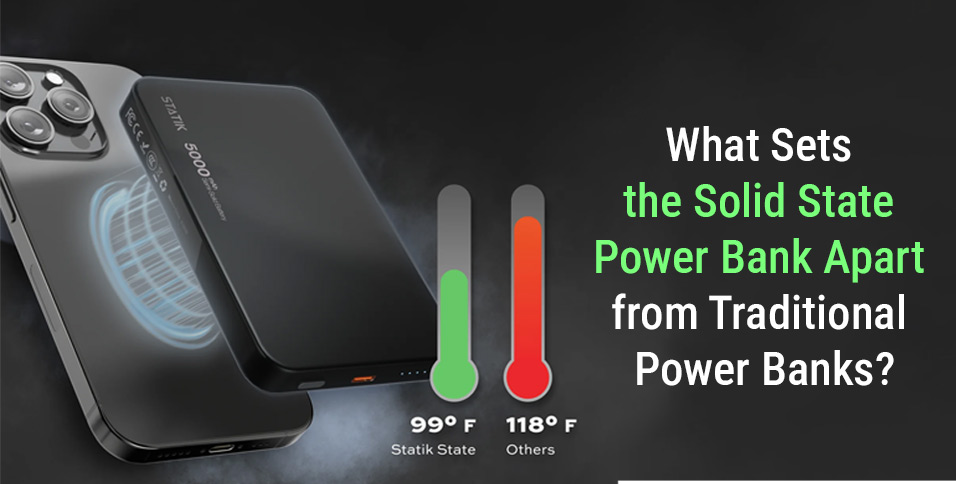
Power banks have become everyday essentials, yet many still face issues such as overheating, swelling, or slow charging. A new generation of solid-state power banks aims to change that by replacing older lithium-ion designs with safer and more stable materials. This shift marks a major step toward safer, longer-lasting portable energy solutions that meet modern needs more effectively.
As interest in solid-state and semi-solid-state technology grows, these power banks show how small design changes can make a big difference in performance and safety. The following sections explore how solid electrolytes replace flammable liquids, how new materials extend battery life, and how this technology prevents the common problems found in traditional power banks.
Semi-solid-state batteries reduce fire risk compared to lithium-ion cells
Semi-solid-state batteries use a mix of solid and limited liquid electrolytes. This design lowers the chance of leakage and short circuits that can cause fires in lithium-ion cells. Modern devices, such as solid state battery power banks, make use of this safer chemistry to manage heat more effectively during use or charging.
Traditional lithium-ion batteries rely on flammable liquid electrolytes. If damaged or overheated, they can enter thermal runaway, which may lead to fire. Semi-solid-state designs replace most of that liquid with stable materials that resist combustion.
This structure also improves internal stability. The solid layers help prevent dendrite growth, a common problem that can short-circuit lithium-ion cells. As a result, semi-solid-state batteries provide a safer option for portable devices and travel use.
Manufacturers continue to test these systems for long-term durability. Early results show that semi-solid-state batteries can last longer and operate more safely than conventional lithium-ion cells under similar conditions.
Solid electrolyte replaces flammable liquid electrolytes, enhancing safety
Solid-state power banks use a solid electrolyte instead of the liquid solution found in most traditional lithium-ion models. This solid layer conducts ions while blocking electrons, which prevents short circuits that can cause heat buildup or fire.
The absence of flammable liquid materials reduces the chance of leaks or combustion. Therefore, solid-state designs handle physical stress and temperature changes more safely than conventional batteries.
In addition, the solid electrolyte resists chemical reactions with air or moisture. This stability allows the battery to maintain performance even under demanding use.
As a result, solid-state power banks can deliver safer energy storage without sacrificing efficiency. They offer users greater confidence in everyday use, especially in devices that operate for long periods or under high load.
KUXIU S2 uses semi-solid-state technology for improved durability and safety
The KUXIU S2 uses a semi-solid-state battery that replaces the liquid electrolyte found in standard lithium-ion power banks. This design reduces the chance of leaks, short circuits, or fires, which can occur with traditional batteries under stress or damage.
Its solid structure allows the battery to resist punctures and drops better than conventional cells. As a result, it continues to function even after physical impact or exposure to heat that might disable other models.
This technology also supports longer battery life by slowing chemical wear inside the cell. Therefore, users can expect the S2 to keep its capacity for more charge cycles compared to older designs.
The semi-solid-state approach marks a step toward safer and more durable portable power. It demonstrates how small design changes can create noticeable improvements in both safety and performance for everyday charging devices.
Solid-state power banks prevent swelling and leakage common in traditional batteries
Traditional power banks often use liquid electrolytes that can react under stress or heat. This reaction may cause the battery to swell or leak, which can damage the device or create safety risks. These problems appear more often as the battery ages or faces extreme temperatures.
Solid-state power banks replace liquid electrolytes with solid materials. This design removes the fluid that can expand or escape, so the battery structure stays stable. As a result, the risk of swelling or leakage drops sharply compared to older lithium-ion types.
The solid electrolyte also resists chemical breakdown better under pressure. Therefore, the battery lasts longer and operates more safely over time. Users gain a more stable power source that maintains performance without the hazards linked to liquid-based cells.
Enhanced longevity and efficiency due to stable solid-state materials
Solid-state power banks use solid electrolytes instead of liquid ones, which helps reduce wear on internal parts. This stable structure limits chemical breakdown that often shortens the life of traditional batteries. As a result, these power banks can maintain performance over more charge cycles.
The solid materials also resist heat and pressure changes better than liquid-based cells. This stability keeps the battery’s internal reactions more balanced, which leads to fewer failures and less capacity loss.
In addition, solid electrolytes allow ions to move efficiently between the electrodes. This steady flow supports faster charging and better energy use without overheating. Therefore, the device can deliver power more effectively over time.
Manufacturers can also design thinner and denser cells with solid materials. This approach increases energy storage without sacrificing safety or durability, making solid-state power banks a practical upgrade for long-term use.
Conclusion
Solid-state power banks stand out because they use solid electrolytes instead of liquid ones. This design reduces risks such as leakage or fire, which often affect lithium-ion models. It also allows for smaller, lighter devices that maintain strong performance over time.
They offer better thermal control and longer cycle life. As a result, users gain safer and more stable charging for phones, tablets, and other devices. The shift toward solid-state technology reflects a steady move toward safer portable energy solutions.
Although the cost remains higher than traditional models, the trade-off in safety and durability makes the technology appealing for everyday use. These advantages show why many view solid-state power banks as the next step in portable charging.