From global corporations to local service providers, sustainability is no longer a marketing slogan — it’s a business necessity. Consumers increasingly expect companies to minimize waste, cut emissions, and adopt ethical practices.
For the moving and logistics industry — one traditionally associated with fuel consumption, packaging waste, and heavy transportation — this expectation is especially challenging. The bar is even higher in California, where environmental regulations evolve constantly, and the state government continues to tighten requirements for eco-friendly operations, emissions control, and sustainable business practices.
A new generation of Los Angeles moving companies is rewriting the playbook, proving that environmental responsibility and operational efficiency can work hand in hand. In a city where traffic congestion and urban density make every relocation a logistical puzzle, companies such as SQ Moving Company demonstrate that it’s possible to stay compliant, efficient, and eco-conscious — all at once.
Why Sustainability Matters in the Moving Industry
The moving sector sits at the crossroads of transportation, warehousing, and residential services — all of which have measurable environmental impacts:
- Fuel emissions: Trucks running multiple short routes increase CO₂ output.
- Disposable packing materials: Cardboard boxes, tape, and single-use plastic wrap create massive waste after each relocation.
- Operational inefficiency: Empty return trips and poor route planning waste fuel and labor hours.
Sustainability addresses each of these pain points not just from an ethical standpoint but also as a strategic advantage. Green initiatives can reduce costs, attract eco-conscious customers, and future-proof businesses against tightening regulations.
Eco-Friendly Packing: Reuse Is the New Standard
One of the most visible areas of improvement lies in packing materials. Instead of relying solely on disposable supplies, many forward-thinking movers are switching to reusable systems.
1. Recyclable and Reusable Materials
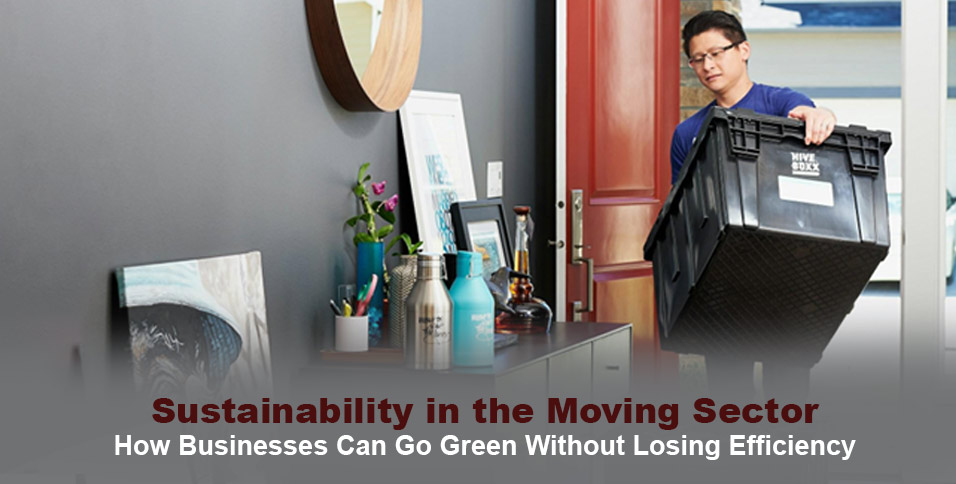
Heavy-duty plastic bins, fabric moving pads, and reusable wardrobe boxes drastically reduce waste. Moving companies rely on durable blankets and reusable shrink-wrap alternatives to cut down on single-use plastic.
2. Sustainable Sourcing
When disposable materials are necessary, eco-minded movers choose FSC-certified boxes and biodegradable cushioning made from cornstarch or recycled paper instead of Styrofoam.
3. Customer Education
Movers also play an educational role. Encouraging clients to reuse boxes from previous moves or coordinate box exchanges within communities extends product life and reduces environmental impact.
Route Optimization: The Fastest Path to Lower Emissions
Transportation is the largest contributor to the moving industry’s carbon footprint. However, route optimization technologies are delivering impressive results.
Modern moving companies use GPS-based fleet management systems to:
- Minimize total mileage through efficient scheduling.
- Avoid high-traffic zones that lead to idling and wasted fuel.
- Combine multiple smaller jobs within the same region to reduce “deadhead” miles.
Data-driven routing not only saves fuel but also improves punctuality and customer satisfaction — a direct win-win.
For example, SQ Moving Company in Los Angeles applies compact routing principles, grouping jobs by neighborhood to reduce travel time and emissions. In a sprawling metro area notorious for traffic congestion, that small change can save dozens of gallons of fuel per week.
Fleet Efficiency: Small Changes, Big Impact
While electrifying an entire truck fleet remains costly, there are incremental steps every moving company can take to reduce emissions today:
- Regular Vehicle Maintenance
- Keeping engines tuned, tires properly inflated, and filters clean improves fuel efficiency by up to 10%.
- Eco-Driving Training
- Drivers trained in smooth acceleration, moderate speeds, and minimal idling contribute significantly to fuel savings.
- Load Optimization
- Balancing truck loads ensures optimal fuel use and fewer trips.
- Alternative Fuels
- Some regional carriers are testing biodiesel or low-emission diesel blends, cutting greenhouse gases without major infrastructure overhauls.
Sustainability doesn’t always mean high-tech — sometimes it’s about operational discipline.
Smart Planning and Digital Tools
Sustainability gains momentum when paired with digital transformation. New software platforms help movers manage:
- Inventory and job scheduling, reducing unnecessary back-and-forth.
- Customer communication, minimizing misaligned appointments that waste fuel and labor.
- Data analytics, offering insights into fuel use, average drive time, and resource allocation.
By centralizing operations digitally, moving companies can identify inefficiencies invisible to manual systems. This digital backbone is becoming the cornerstone of sustainable logistics.
Waste Reduction Beyond Packing
A truly sustainable move extends beyond transportation. Companies are also focusing on end-to-end resource management:
- Donations & recycling partnerships: Collaborating with local nonprofits allows clients to donate unwanted items instead of discarding them.
- Minimal-waste policies: Encouraging staff to reuse tape rolls, straps, and pallets whenever possible.
- Responsible disposal: Sorting and recycling broken furniture, metals, and cardboard after commercial moves.
These small internal policies accumulate into substantial environmental savings over time.
Case in Point: SQ Moving Company’s Practical Sustainability Model
As a local mover in Los Angeles, SQ Moving Company has quietly integrated multiple eco-friendly measures into its daily workflow, showing that environmental responsibility doesn’t require massive investment — only consistent, thoughtful decisions.
- Reusable moving blankets and pads replace single-use wrapping materials.
- Compact route grouping minimizes unnecessary mileage and fuel consumption.
- Reusable floor runners protect clients’ floors without relying on single-use ram board.
- Recycling initiatives ensure that discarded cardboard and packing paper are reused or repurposed whenever possible.
- Reduced plastic use: the team aims to limit plastic wrap by securing furniture and boxes with reusable rubbered straps, cutting plastic waste significantly.
- Digital communication: scheduling and coordination are handled via email and text, reducing paper use while enhancing accuracy and efficiency.
Together, these practices form a sustainable operating model that balances eco-conscious decisions with the precision and care customers expect from a professional moving company.
Balancing Sustainability and Efficiency
One of the industry’s biggest myths is that “green” equals “expensive.” In reality, sustainable practices often improve efficiency rather than compromise it.
For instance:
- Reusing packing materials reduces supply costs.
- Optimized routing cuts both fuel use and labor hours.
- Digital systems lower administrative overhead.
By linking sustainability directly to performance metrics, businesses create incentives for continuous improvement rather than short-term compliance.
The Ripple Effect Across Industries
The moving industry’s green transformation mirrors broader corporate trends. Businesses in logistics, construction, retail, and real estate face similar challenges — balancing operational speed with environmental stewardship.
As movers embrace green innovation, they send a powerful message: even traditionally manual industries can modernize responsibly. This ripple effect inspires other service sectors to follow suit, contributing to the larger sustainability ecosystem.
Building a Brand Through Responsibility
Customers today value transparency. A moving company’s reputation can grow faster when clients see genuine commitment to environmental ethics.
Publishing sustainability efforts on a website, sharing recycling statistics, or offering eco-move packages aren’t just marketing tactics — they are trust signals. Companies like SQ Moving Company illustrate how accountability builds long-term customer loyalty.
Moreover, as corporate clients increasingly require eco-compliance documentation, movers that adopt measurable green practices gain access to higher-value contracts.
The Future: Electrification, Automation, and Data Transparency
According to Affordable Movers in Koreatown, the next decade will redefine what it means to operate an efficient, eco-conscious moving business. Several emerging technologies promise to drive sustainability in the moving sector even further:
Electric Trucks
Fleet electrification will gradually reduce carbon emissions, especially for short-distance and urban routes where zero-emission vehicles can operate efficiently and quietly.
AI-Driven Scheduling
Predictive AI tools will analyze booking data to optimize time slots, crew assignments, and routes — helping movers cut idle time, reduce fuel usage, and enhance customer satisfaction.
Blockchain for Traceability
Blockchain tools could log every stage of a move — from material use to waste disposal — offering clients transparent, verifiable sustainability data and building trust through accountability.
IoT Sensors
Smart tracking devices can monitor temperature, load balance, and fuel consumption in real time, fine-tuning operational efficiency while reducing energy waste.
The companies that adopt these innovations early will not only stay compliant with evolving environmental regulations but also set new industry standards for performance, transparency, and responsibility.
Key Takeaways
- Sustainability = Efficiency. Eco-friendly methods frequently lead to operational improvements.
- Reuse and reduce. Simple material changes dramatically cut waste.
- Plan smarter. Route optimization and digital coordination minimize fuel use.
- Educate and inspire. Engaging customers and staff builds a culture of responsibility.
- Lead by example. Companies like SQ Moving Company prove that even small businesses can champion sustainability with real impact.
Conclusion
The path to a greener moving industry isn’t paved with radical overhauls but with incremental, intelligent choices. From adopting reusable materials to integrating data-driven logistics, movers across the globe are discovering that sustainability and profitability move best when aligned.
In a world where every business decision carries environmental weight, those who move responsibly are not only helping the planet but also redefining what it means to run an efficient, future-ready company.