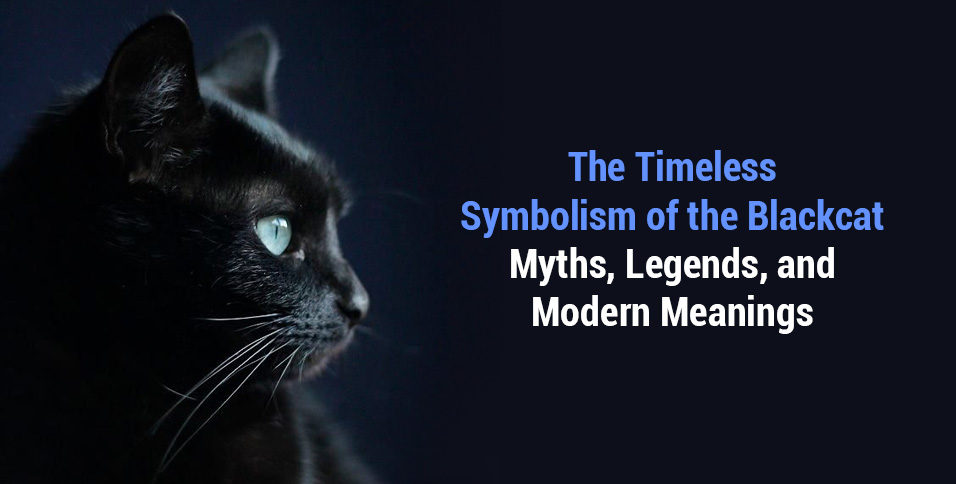
Few animals have inspired as much mystery and fascination as the blackcat. Sleek, enigmatic, and often misunderstood, blackcats have walked alongside humans for centuries, carrying with them a reputation that blends superstition, reverence, and curiosity. From being worshipped in ancient civilizations to feared during medieval times, and now adored as companions, the blackcat has a cultural history that’s both complex and captivating.
In this article, we’ll explore the origins of blackcat superstitions, their role in folklore and literature, and the modern shift in perception that celebrates them as symbols of beauty and resilience.
Ancient Roots: The Reverence of the Blackcat
Long before the blackcat became a Halloween icon, it was revered in ancient cultures.
Blackcats in Ancient Egypt
In Egyptian society, cats were considered sacred animals, and dark-furred cats held particular significance. The goddess Bastet, protector of homes, fertility, and family, was often depicted with the head of a lioness or domestic cat. Families believed that keeping a blackcat could invite Bastet’s blessings into their homes.
Egyptians not only protected cats but also mourned them deeply. Killing a cat, even accidentally, was punishable by death, and households sometimes shaved their eyebrows to show grief over a feline’s passing. For the Egyptians, the blackcat wasn’t a symbol of misfortune but of divine protection and prosperity.
Celtic and Norse Traditions
In Celtic mythology, cats were linked with the spirit world. Some legends described a mystical creature known as the Cat Sìth, a large blackcat with a white spot on its chest, believed to roam the Scottish Highlands. People thought it could steal souls before burial, making it both feared and respected.
In Norse mythology, the goddess Freyja, associated with love, fertility, and magic, rode in a chariot pulled by two giant blackcats. Farmers often left offerings for these cats, hoping to win Freyja’s favor for a bountiful harvest.
Medieval Fear: From Guardians to Omens
The blackcat’s reputation took a dark turn during the Middle Ages. In Europe, superstition grew as Christianity spread, and blackcats were increasingly associated with the devil, witches, and evil forces.
Witches and Blackcats
During the witch hunts of the 16th and 17th centuries, many believed that witches kept blackcats as “familiars”—spiritual companions that helped them perform dark magic. Some legends even claimed witches could shape-shift into blackcats to move unnoticed under the cover of night.
This association fueled fear and cruelty toward blackcats. In many towns, blackcats were burned, drowned, or avoided at all costs, as crossing paths with one was thought to bring bad luck or death.
Sailors and Superstitions at Sea
Interestingly, not all medieval beliefs about blackcats were negative. Sailors often considered them lucky. Blackcats aboard ships were seen as protectors against storms and bad weather. Families of fishermen also believed that keeping a blackcat at home could ensure their loved one’s safe return from sea voyages.
The Blackcat in Literature and Pop Culture
As time passed, the blackcat evolved into a literary and cultural symbol.
Edgar Allan Poe’s “The Black Cat”
One of the most famous depictions of the blackcat in literature is Edgar Allan Poe’s short story “The Black Cat” (1843). In the tale, a man’s descent into madness and guilt is reflected through his relationship with his blackcat, Pluto. The story reinforced the association between blackcats, the supernatural, and hidden darkness within human nature.
Blackcats in Folklore and Fairy Tales
In fairy tales and folklore, blackcats often appear as guardians of secrets or symbols of transformation. They’re portrayed as mysterious creatures who walk between the worlds of humans and spirits, embodying both danger and protection.
Blackcats in Modern Media
Today, blackcats continue to appear across popular culture:
- Comics & Film: Marvel’s Black Cat character is a sleek antihero known for charm and danger.
- Halloween Icons: The blackcat’s arched-back silhouette is as recognizable as pumpkins and witches.
- Animated Shows: From Salem in Sabrina the Teenage Witch to Luna in Sailor Moon, blackcats often play witty, magical companions.
Through these portrayals, the blackcat’s dual nature—part menace, part marvel—remains central to its cultural identity.
Modern Day: Changing Perceptions of the Blackcat
While superstitions linger, the blackcat’s image is undergoing a positive transformation in the modern world.
Adoption Challenges
Sadly, blackcats face unique challenges in animal shelters. Some are overlooked due to the lingering belief that they bring bad luck. Others are harder to photograph, leading to fewer adoption inquiries. As a result, blackcats often spend longer waiting for forever homes compared to cats of other colors.
To counter this, shelters around the world run campaigns like “Black Cat Appreciation Day” and “National Black Cat Day” to raise awareness and encourage adoptions.
Social Media Influence
Platforms like Instagram and TikTok have helped blackcats gain new fans. Pet owners share photos and videos showcasing their blackcats’ playful, loving personalities. This visibility helps dismantle negative stereotypes and highlights their unique beauty.
The Blackcat as a Symbol of Empowerment
For many, embracing the blackcat means rejecting irrational fears and celebrating individuality. The sleek elegance of a blackcat is now often seen as a symbol of mystery, independence, and resilience. Owning one can even feel like reclaiming a misunderstood piece of history.
Global Beliefs About Blackcats
Different cultures continue to view blackcats in unique ways:
- Japan: A blackcat crossing your path is a sign of good fortune, particularly in love.
- Scotland: A blackcat arriving at your doorstep signals prosperity.
- Germany: The direction matters—if a blackcat crosses from left to right, it’s good luck; the opposite direction is considered unlucky.
- United States: Around Halloween, blackcats are linked with superstition but also celebrated as part of seasonal festivities.
FAQs About Blackcats
1. Why are blackcats associated with bad luck?
This belief stems from medieval Europe, where blackcats were linked to witches and the devil. Over time, the superstition spread globally.
2. Are blackcats actually unlucky?
No. Modern science and experience prove that blackcats are no different from any other cats. In many cultures, they’re even seen as lucky.
3. Why are blackcats harder to adopt?
Lingering superstitions and their appearance in photos sometimes make them less popular with potential adopters. However, many shelters are working to change this.
4. Do blackcats have unique personalities?
While coat color doesn’t determine personality, many owners describe blackcats as affectionate, playful, and intelligent.
Final Thoughts
The story of the blackcat is a testament to how human beliefs can shape the reputation of an animal. From ancient Egyptian temples to Halloween decorations, from omens of bad luck to symbols of love and protection, the blackcat has journeyed through centuries of shifting perception.
Today, as more people embrace blackcats as loyal, loving companions, they’re not only breaking old superstitions but also rewriting the narrative of one of history’s most fascinating animals. Whether you see them as mysterious, magical, or simply adorable, there’s no denying that the blackcat remains one of the most enduring symbols in global culture.