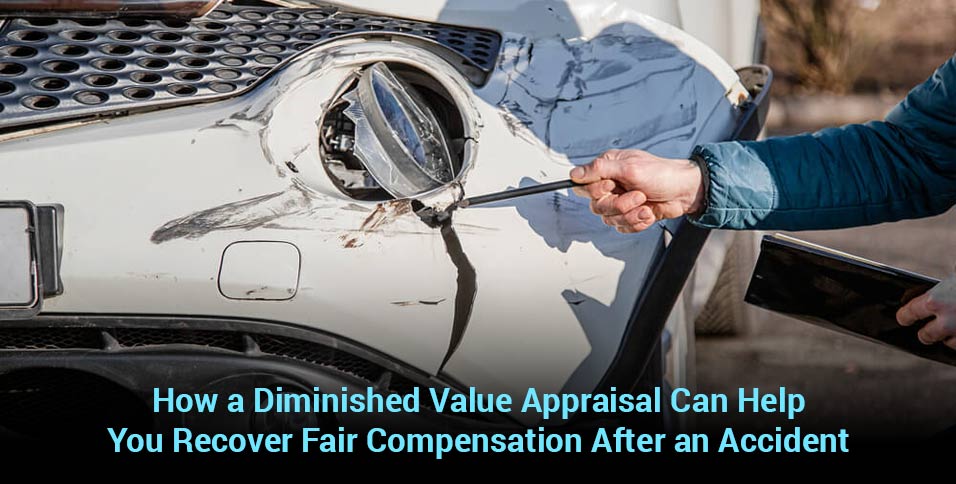
You’ve repaired your car after an accident, and it looks as good as new. But the reality is, your car will likely never be worth the same as it was before the crash. Even with perfect repairs, many buyers and dealers see accident history as a red flag.
That’s where an auto diminished value appraisal comes in. It’s a professional assessment that calculates how much value your car has lost due to the accident, even after repairs. This documentation can make the difference between accepting a lowball insurance settlement and recovering the true amount you deserve.
Why Cars Lose Value After an Accident
Modern repair shops can do amazing work, but a vehicle’s history follows it forever. Services like Carfax and AutoCheck record accident reports, which means anyone checking the VIN will see the incident.
Even if repairs are high-quality:
- Dealers may offer you less on trade-in.
- Private buyers may hesitate or negotiate aggressively.
- Insurers know the stigma reduces resale value.
This loss is called diminished value, and it can add up to thousands of dollars depending on the car.
How a Diminished Value Appraisal Works
A professional appraiser looks at:
- Your car’s pre-accident market value
- The type and severity of damage
- Quality of repairs
- Current demand for your make and model
The certified professional appraiser then calculates the reduced market value, providing a written report you can use in negotiations with your insurer.
Common Situations Where It Helps
Here are the most typical scenarios where a diminished value appraisal matters:
| Situation | Why It Helps | Who Benefits |
| Insurance claim | Supports demand for fair payout | Any accident victim |
| Trade-in negotiations | Counters low dealer offers | Car owners selling to dealers |
| Private sale | Provides transparency with buyers | Sellers protecting value |
| Legal disputes | Recognized by courts | Attorneys and claimants |
Insurance Companies and Diminished Value
Here’s the challenge: insurers don’t always volunteer to cover diminished value. Some states require it by law, while others leave it up to negotiation. Without documentation, it’s hard to prove your case.
According to the Insurance Information Institute, diminished value is one of the most overlooked parts of post-accident claims, and many policyholders don’t realize they may be entitled to compensation.
With an appraisal in hand, you can show clear evidence of the value lost. This makes it harder for the insurer to dismiss or undervalue your claim.
Why Not Just Estimate It Yourself?
You could guess at the lost value by comparing online car listings, but it won’t hold up in negotiations. An official appraisal:
- Is done by a certified expert
- Includes detailed market data
- Is widely recognized by insurers, dealers, and even courts
It’s the difference between showing an opinion and presenting proof.
Final Thoughts
If your car’s been in an accident, repairing it is only half the story. The hidden loss in value can affect resale, trade-in offers, and insurance payouts.
A diminished value appraisal gives you the documentation to back up your claim and helps you recover what you’ve truly lost—not just what the repairs cost.
For car owners who want fairness after an accident, it’s one of the smartest steps you can take.