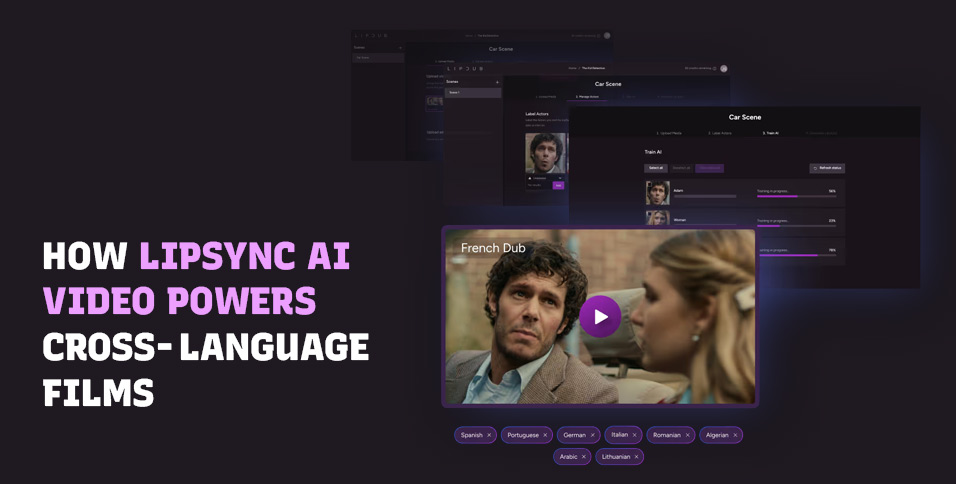
Language barriers have been a hindrance in the expanding film industry. Most dubbing and subtitles do not retain the characteristic spirit of the original performances. But technology may just be the way forward. AI lip sync changes the way films are delivered to audiences in multiple languages, making them more enjoyable and accessible worldwide.
How AI Lip Sync Works
AI lip sync technology uses specific algorithms to create an actor’s matched lip movements that synchronize perfectly with a language different from their own. This allows movies to incorporate foreign languages naturally. Keeping the expressions of the original actor preserves the authenticity and emotional potency of performances.
It is worth noting that this is not only a translation tool. It understands the nuances of speech, such as tone and inflection, meaning that the translated dialogue can sound organic. This turns the AI lip sync video viewing experience into something that is both engaging and immersive.
Benefits for Filmmakers
Lipsync AI has a huge benefit for filmmakers. A significant advantage is being able to connect with broader audiences, sans the replication of language versions. This ability significantly reduces dos production costs and time.
Besides, the tech enables simultaneous multi-region releases. Simultaneous international release allows everyone to watch the film in their language of preference, which increases the potential for box office earnings. It widens the gates for both market access and revenue streams for producers and studios.
Enhancing the Viewer Experience
The difference for audiences is night and day. Matching lips in traditional dubbing is a pain point and can draw eyes. This is where Lipsync AI becomes more real. It allows audiences to stay immersed in the story, characters, and world without the reminder: “But wait, this is not happening, this is a film, etc.”
Subtitles can sometimes distract from the visual experience, as viewers must divide their attention. Lipsync AI also somewhat reduces the need for subtitles, allowing the audience to focus on the visuals on screen.
Its Cultural Impact
Lipsync AI, because it can help cross-language films, also encourages cultural exchange. When films are made available in other languages, people from various cultural backgrounds can enjoy them, which means that stories can go much further. This enhances understanding and respect for different opinions and customs.
Translation often loses cultural subtleties. But Lipsync AI preserves these subtleties, which adds to the art of storytelling. This technology helps to close cultural gaps and stimulate conversation through cinema across the world
Challenges and Considerations
Despite the many advantages of lip-sync AI technology, it is not without challenges. Translations should hold to the context and tone as they were originally meant. However, you still need to partner with good translators and voice-over artists.
The technology must be applied with care to avoid an effect that is too uncanny or artificial. It requires constant tweaking and testing to achieve the right level of realism.
Another challenge is the ethical question about using AI in creative domains. We should be sure not to tip the scales in favour of technology over human creativity. This is a reminder to filmmakers and artists that technology should enhance the performance but never take centre stage!
Future Prospects
Lipsync AI will undoubtedly impact filmmakers around the world. As technology progresses, the accuracy or realism of AI lip-syncing is likely to get better and better. It will unlock the next chapter of multilingual content consumption for creators.
In addition, Lipsync AI might catch the attention of other industries that may also want to try this one-of-a-kind software. TV, ads, and online text could make language adaptation better and reach mass audiences globally.
Conclusion
Lipsync AI is changing how films are portrayed language-wise and making the cinematic experience seamless. This technology is changing the film industry by preserving the quality of performances and bringing the art to broader audiences.
The more filmmakers adopt these advancements, the more realistic and real experiences will be for viewers. Lip sync AI enhances cultural exchange by providing a glimpse into other realms; thus, it serves beyond just technical enhancement for cross-language films.