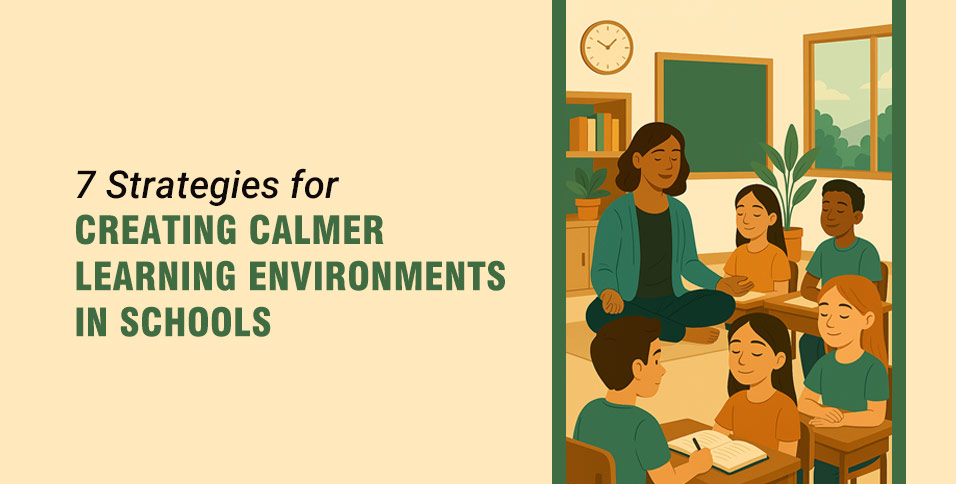
Does this sound familiar in your school? The children are overstimulated. The teachers are under pressure. And the classroom? It’s loud, fast, and unpredictable more often than not.
So, yes—creating a calmer learning space isn’t just nice. It’s necessary.
Let’s talk about how to actually do it.
1. Ditch the One-Size-Fits-All Schedule
Here’s the thing: not every kid thrives under strict routines.
For some, that bell-to-bell structure feels comforting. For others, it’s restrictive.
A more flexible routine—think built-in movement breaks, quiet time after lunch, even buffer minutes between tasks—can make a massive difference in how students focus and behave.
And no, this doesn’t mean chaos. It means creating space for students to reset before things boil over.
2. Make Room for Sensory-Friendly Zones
Every school should have at least one quiet corner. Period.
Not a punishment spot. Not a timeout chair. A legitimate sensory-friendly area with soft lighting, noise-reducing headphones, and maybe a beanbag or two.
This is essential and offers their brains a break.
It also helps with anxiety, overstimulation, and yes, an autism meltdown, too. Those moments aren’t about misbehavior; they’re about overwhelm. When students know there’s a safe spot to decompress, they’re more likely to self-regulate before things spiral.
3. Pay Attention to the Volume—Yours Too
Teachers are pros at raising their voices to get attention. But in reality? That actually cranks up the stress.
Try this: lower your voice instead. Use quieter tones, more pauses, and slower instructions.
It may be challenging at first, but kids will lean in. And they’ll start matching your energy.
Calm is contagious.
4. Stop Calling Everything a Tantrum
This one’s huge. Not every outburst is a child “acting out.”
Some students—especially neurodivergent ones—aren’t misbehaving. They’re overwhelmed.
Understanding the difference between a common tantrum and an autism meltdown? That’s key.
Meltdowns aren’t a choice. They’re a response to too much sensory input, too much pressure, too much everything.
Always learn how to tell them apart.
5. Let Kids Move (Yes, Even in Math Class)
Sitting still for six hours? It’s not natural, especially for children.
Movement-based learning—whether it’s brain breaks, stretching between subjects, or letting kids stand during reading time—reduces anxiety and boosts focus.
Don’t overthink it. Even pacing while reviewing vocab helps.
Let their bodies move so their minds can settle.
6. Give Emotional Check-Ins a Real Spot in the Day
“Are you okay?” shouldn’t just be asked when someone’s crying.
Carve out five minutes for emotional check-ins. Use feelings charts. Let kids color in their moods. Give them sticky notes to share how they’re doing.
Some won’t say a word. Some will tell you way too much. Both are valuable.
You’ll catch issues early, lower the risk of full-on breakdowns, and show your class that emotions are part of learning too.
It’s also a good time to slip in conversations about safe social media use. Not lectures—just gentle reminders that what we share, post, and consume affects how we feel. Teaching digital boundaries early helps kids manage stress, avoid drama, and stay focused in school and out.
7. Celebrate the Quiet Wins
Did a student who usually blurts out every thought raise their hand once today? Celebrate it.
Did someone ask for a break instead of throwing a pencil? That’s growth.
Calmer environments happen when you highlight progress, not just perfection.
It’s not about creating silence. It’s about helping kids feel safe enough to focus, share, and exist without always being “on.”
Want More Help Creating a Calmer Space?
Classrooms don’t have to be chaotic to be fun. And you don’t need to be a behavioral specialist to make a difference.
If you want deeper insight—especially into supporting students with autism or complex sensory needs—there are tools, real-world strategies, and professional support to help you build a more peaceful, productive environment for everyone. Don’t be afraid to access them.
You’re already showing up. These tools make it easier for you and for them.
Also Read: Should Schools Ban AI Essay Writers or Teach Students to Use Them?