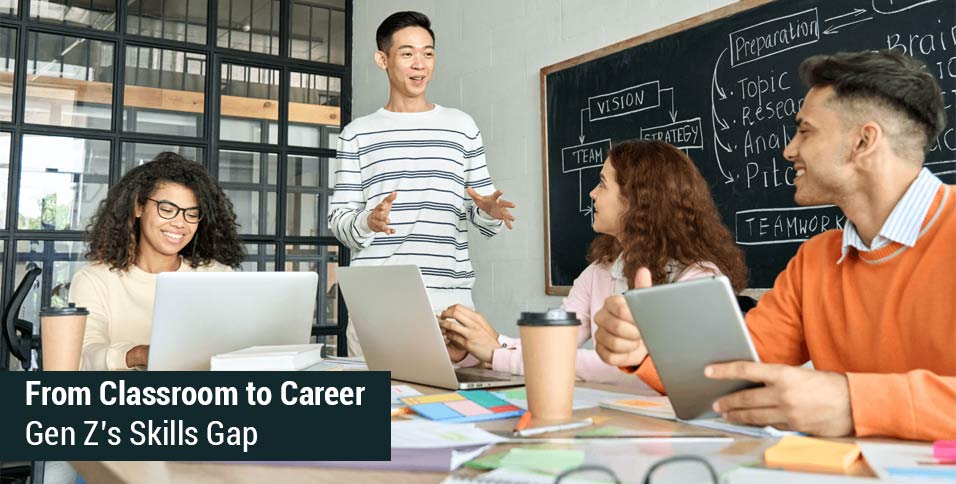
Gen Z has grown up in a world of smartphones, instant access to information, and constant digital connection. They are the most tech-native generation we’ve seen, yet many are still being taught using methods designed decades ago. Traditional education often emphasises exam results and memorisation, leaving little room for creativity, problem-solving, or emotional intelligence.
But in today’s fast-moving world, academic achievement alone doesn’t guarantee success. Employers now value adaptability, collaboration, and critical thinking just as much as qualifications. It raises an urgent question: Are we truly preparing young people for the careers and challenges ahead or simply training them to pass exams?
The Shift in What Employers Expect
The modern workplace is evolving rapidly, and so are the expectations placed on young professionals. Employers are no longer just looking for strong exam scores or impressive degrees; they want individuals who can think critically, adapt quickly, and communicate effectively. Skills like creativity, emotional intelligence, and collaboration are becoming essential, not optional.
According to the World Economic Forum’s “Future of Jobs” report, soft skills such as complex problem-solving, emotional intelligence, and resilience are among the top competencies needed for the coming decade. Similarly, LinkedIn’s Global Talent Trends shows a growing emphasis on interpersonal and cognitive abilities, with communication topping the list of in-demand skills.
Yet despite these clear signals from the workforce, many students are still judged almost entirely by written exams and rigid assessments. The gap between what schools test and what employers value continues to widen, leaving Gen Z underprepared for the real-world demands they’ll soon face.
Why Traditional Education Alone Falls Short
Across much of the world, traditional education systems continue to prioritise rote learning, standardised testing, and academic scores. Success is often measured by a student’s ability to memorise facts and repeat them under timed conditions, rather than by their ability to think critically or apply knowledge in new contexts.
This focus on memorisation over problem-solving can seriously limit a student’s adaptability. In today’s fast-paced, unpredictable job market, the ability to analyse information, work collaboratively, and learn on the go is far more valuable than recalling textbook definitions. When schools fail to nurture these skills, students may graduate with top marks but feel unprepared for real-world challenges.
The pressure to achieve high grades can also lead to burnout, anxiety, and disengagement, especially among Gen Z, who are already navigating a world of constant comparison and digital distraction. In an exam-driven culture, learning becomes a performance rather than a process, and genuine curiosity is too often replaced with fear of failure.
Gen Z’s Demand for Purpose and Flexibility
Gen Z isn’t just looking for grades; they’re looking for meaning. This generation is redefining what it means to learn and work, placing a high value on purpose, flexibility, and personal growth. They’re far more likely to engage with learning that feels relevant to their goals, rather than material delivered through rigid curriculums and outdated lecture formats.
Personalised learning environments, where students can set the pace and shape their journey, resonate strongly with Gen Z. They gravitate toward platforms that allow them to apply their knowledge in real-life scenarios, not just tick boxes on a syllabus.
Digital fluency is at the heart of how Gen Z learns best. They expect feedback in real time, opportunities to collaborate, and interactive experiences that mirror the tech-savvy world they live in. Static lectures and one-size-fits-all teaching models often fall short, leaving them disengaged. What they want is flexibility, adaptability, and learning that aligns with their values and ambitions.
The Role of EdTech and One-to-One Tutoring
As traditional education struggles to keep up with the needs of modern learners, EdTech has emerged as a powerful force for change. Personalised learning, once a luxury, is now a scalable and accessible solution thanks to digital platforms. By adapting to each student’s pace, interests, and challenges, one-to-one tutoring provides a more effective and engaging alternative to the classroom model.
Platforms like Edumentors are leading this shift by connecting students with top university mentors who understand both academic content and the pressures of modern education. Whether preparing for GCSEs, A-levels, or developing study routines, students receive tailored guidance that goes beyond exam prep. Through regular one-to-one sessions, they also build transferable skills like time management, resilience, independent thinking, and goal-setting that support success far beyond school.
Importantly, tutoring is no longer just for students who are falling behind. It’s become a proactive strategy for growth-minded learners who want to stay ahead, explore subjects in depth, and develop confidence in their abilities. For Gen Z, it’s not a fallback; it’s part of a long-term success toolkit.
Closing the Gap Between Education and Employability
As industries evolve and job roles become more dynamic, the line between education and employability is no longer as straightforward as it once was. Employers want more than academic credentials; they’re looking for individuals who can communicate clearly, adapt to change, and solve problems in real time. This is where personalised tutoring and skill-based learning step in to bridge the gap.
One-to-one tutoring platforms not only help students grasp subject matter; they also nurture confidence, critical thinking, and self-awareness. These are the very traits that employers say are lacking in recent graduates. By focusing on how students learn, not just what they learn, modern tutoring gives learners a head start in both academic and professional life.
At the same time, interest in alternative learning paths is on the rise. Microcredentials, online certifications, and project-based portfolios are becoming valuable additions or even alternatives to traditional degrees.
Conclusion: Preparing for Life, Not Just Exams
Grades may open doors, but they don’t tell the full story. In today’s world, academic scores are just one piece of a much larger puzzle. What truly matters is whether young people leave education ready to think for themselves, adapt to new challenges, and contribute meaningfully to the world around them.
Gen Z is capable, curious, and creative, but they need systems that support their development as whole individuals, not just test-takers. With the right tools, like personalised tutoring and skills-focused learning, they can become confident, lifelong learners who thrive beyond the classroom.
It’s time for parents, educators, and employers to rethink what success in education really means. Let’s move beyond scorecards and help the next generation build the skills that matter for work, for life, and for a future they’ll help shape.
Also Read: Shaping the Future of Finance: How Al Sollami is Driving Inclusive Investment Trends for Gen Z