July 4th, 2025
Summary:
- The Federal Reserve has officially removed a key growth restriction on Wells Fargo (NYSE: WFC), marking a new phase for the bank.
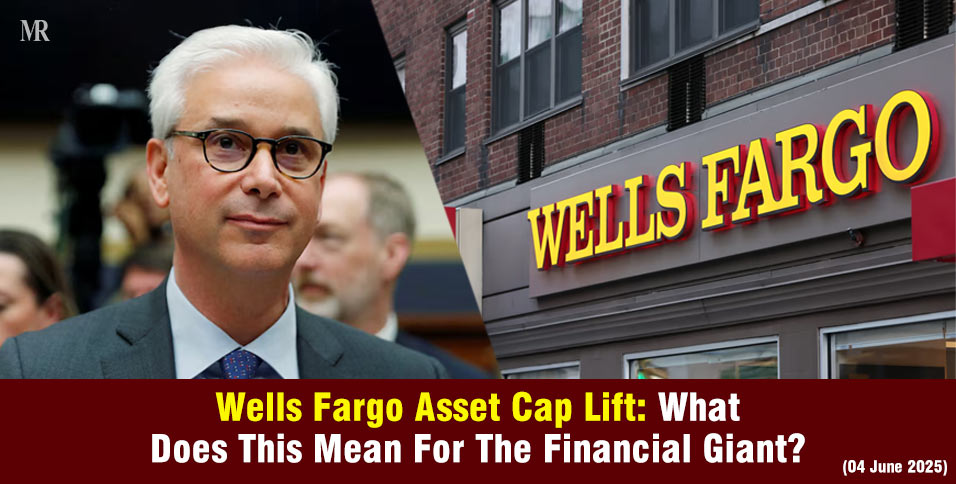
- This Wells Fargo asset cap lift ends a serious limitation that was put in place in February 2018 after several harmful scandals, including the widely reported fake accounts issue.
- The change is viewed as a major positive development for CEO Charlie Scharf, who has been leading the bank’s efforts to improve since late 2019.
The Federal Reserve Board’s Decision
The Federal Reserve Board announced on 3rd June, 2025, that Wells Fargo is no longer limited by the asset growth restriction from the 2018 enforcement action.
This restriction had kept Wells Fargo’s total assets from growing beyond its level at the end of 2017, which was about $1.95 trillion.
The central bank stated that Wells Fargo has met all the required conditions.
These conditions included making significant improvements to how its board operates and strengthening its company-wide programs for compliance and managing operational risk.
The process also involved a thorough review by an independent third party of the bank’s improvement work, alongside the Federal Reserve’s own checks.
“The Federal Reserve’s decision to lift the asset cap marks a pivotal milestone in our journey to transform Wells Fargo,” said CEO Charlie Scharf. He also mentioned, “We are a different and far stronger company today because of the work we’ve done”.
Years of Scrutiny and Change For Wells Fargo
The asset cap was put in place more than seven years ago because of widespread issues affecting customers and “a series of scandals that began with fake accounts across its branch network and later multiplied across business lines”.
Wells Fargo executives initially thought they would meet the requirements sooner, but the process took longer, and the Fed did not approve Wells Fargo’s initial plans several times.
Since Charlie Scharf became CEO in late 2019, Wells Fargo has focused on simplifying its businesses, changing its management team, and improving its risk and control systems.
The bank has sold some parts of its business, like its asset manager and student loan services, and reduced the size of its home lending operations.
This year, several other consent orders against the bank were also lifted, showing progress.
Steven D. Black, Chair of Wells Fargo’s Board of Directors, commented on Scharf’s leadership, saying: “Since he arrived in late 2019, Charlie has assembled a top-notch management team, overseen the details and the big picture of a major transformation effort, and made meaningful changes to improve returns through a global pandemic, periods of economic volatility and significant regulatory headwinds”.
Wells Fargo Employees Recognized for This Step
To acknowledge the teamwork involved in reaching this point, Wells Fargo announced a special award for its roughly 215,000 employees.
All full-time employees will receive a $2,000 award, mostly as a restricted stock grant.
This is intended to give them “an opportunity to own a part of Wells Fargo and hopefully benefit from our future success”.
Market Reaction: WFC Stock Rises
The news of the Wells Fargo asset cap lift was received positively by investors.
Wells Fargo’s shares (WFC stock) increased in after-hours trading after the announcement.
Some analysts believe this could give “a significant bump for the stock in the near term” and help with long-term growth as the bank no longer has to manage its business around the asset cap.
What the Wells Fargo Asset Cap Lift Means Now
Removing this major restriction has several important effects for Wells Fargo:
- Freedom to Grow:
The bank is no longer held back by the $1.95 trillion asset limit and can now actively look for ways to expand. This is important because competitors like JPMorgan Chase saw their assets grow by almost $2 trillion since early 2018.
- Strategic Expansion:
Wells Fargo intends to increase its returns and grow its business thoughtfully. CEO Charlie Scharf has said the bank wants to grow in areas like credit cards, commercial banking, corporate deposits, wealth management, and its trading business.
- Improved Reputation:
This is a big step in fixing the bank’s image, which was affected by past scandals and business fees.
- More Capital Flexibility:
The bank will have more options for how it uses its capital and can manage its balance sheet with more freedom.
- Competitive Standing:
Being able to grow its balance sheet will help Wells Fargo compete better with other large Wall Street firms.
- Potential Profit Recovery:
The asset cap was estimated to have cost Wells Fargo around $39 billion in profits while it was in place. Lifting it opens up the chance to recover and build on this.
Continued Oversight Despite Progress
While lifting the asset cap is a big step forward, it’s important to know that some regulatory watchfulness will continue.
Other parts of the 2018 enforcement action are still in effect until Wells Fargo meets all the conditions for their removal.
The bank also still has agreements with the Office of the Comptroller of the Currency (OCC) related to past rule violations and shortcomings in its anti-money-laundering controls.
Federal Governor Michael Barr highlighted the need for ongoing care, stating: “Removal of the asset cap represents successful remediation to the required standard based on focused management leadership, strong board oversight, and strict supervision holding the firm accountable. All three will need to continue for the firm to have a sustainable approach”.
However, not everyone is convinced. Senator Elizabeth Warren criticized the Fed’s decision, calling it an “outrageous giveaway” and stating the bank still had outstanding issues.
A New Stage For Wells Fargo
The Wells Fargo asset cap lift is clearly a key moment for the financial company. It allows WFC to move past a difficult period and actively work towards growth and better financial results.
Although some regulatory conditions are still in place, removing its biggest limitation sets Wells Fargo up for a new phase of business development and competition.
The focus now will be on how well the bank uses this new freedom to rebuild trust and provide value to its shareholders.