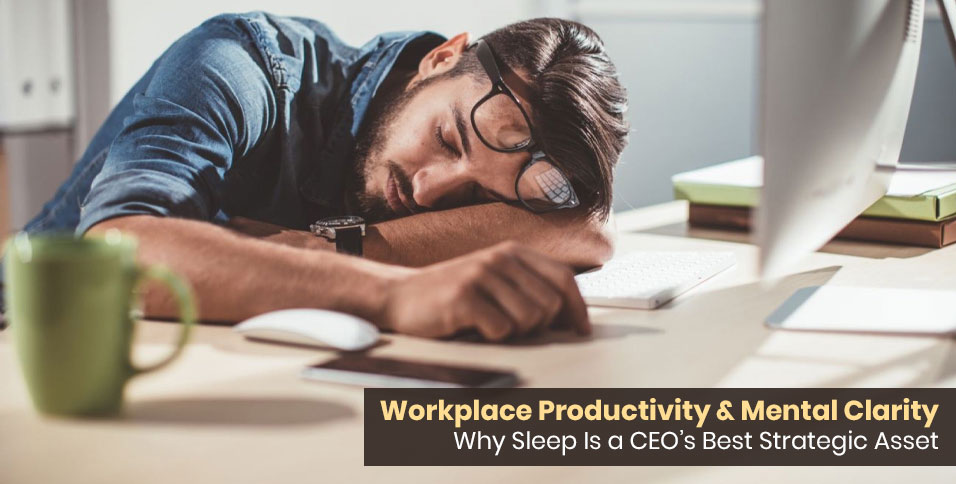
In the high-stakes world of leadership, productivity is often associated with long hours, relentless decision-making, and pushing through fatigue. But one of the most overlooked performance multipliers isn’t a new productivity hack, app, or training, it’s sleep.
For CEOs and executives, quality sleep isn’t just about rest; it’s a strategic asset. It sharpens cognitive function, boosts emotional resilience, and enhances decision-making, the three cornerstones of effective leadership.
When sleep is compromised, so is judgment. Fatigue can cloud thinking, slow reaction times, and increase stress, leading to costly mistakes and misaligned strategies. On the other hand, when well-rested, leaders think more clearly, innovate more freely, and foster healthier, more productive workplaces.
The Link Between Sleep and Executive Performance
Science has consistently shown that sleep strengthens memory, improves problem-solving, and supports creativity—all crucial for navigating complex business challenges. A well-rested leader is more likely to:
- Make balanced, data-driven decisions rather than reactive ones.
- Regulate stress and maintain composure under pressure.
- Lead with clarity and empathy, strengthening team morale.
- See opportunities and connections others may miss.
In short, sleep amplifies the traits that distinguish great leaders from good ones.
Best Practices for a Better Night’s Sleep
While no two leaders have the exact same routine, certain practices universally improve sleep quality:
- Set a Consistent Sleep Schedule – Go to bed and wake up at the same time daily, even on weekends. Consistency helps regulate your circadian rhythm.
- Create a Wind-Down Ritual – Disconnect from screens at least an hour before bed. Replace emails and late-night calls with calming activities such as reading or journaling.
- Optimize the Sleep Environment –Keep your bedroom cool, dark, and quiet. Small adjustments like blackout curtains, a mattress cooling system, or a white noise machine can make a big difference.
- Limit Stimulants and Alcohol – Avoid caffeine in the afternoon and alcohol close to bedtime, both of which disrupt restorative sleep cycles.
- Move During the Day – Regular physical activity promotes deeper sleep, but avoid intense workouts right before bed.
6 Products to Aid Better Sleep
Sometimes, strategic tools can enhance natural rest. Here are six products many leaders find helpful in improving sleep quality:
- Weighted Blanket
- Promotes relaxation by applying gentle, even pressure across the body.
- Helps reduce anxiety and encourages deeper, more restorative sleep.
- Promotes relaxation by applying gentle, even pressure across the body.
- Smart Sleep Tracker
- Devices like the Oura Ring or Whoop Band monitor sleep patterns and provide actionable insights.
- Data-driven feedback can help CEOs fine-tune habits and identify what truly impacts their rest.
- Devices like the Oura Ring or Whoop Band monitor sleep patterns and provide actionable insights.
- Blue Light Blocking Glasses
- Reduce exposure to stimulating blue light from screens in the evening.
- Encourage melatonin production, making it easier to fall asleep naturally.
- Reduce exposure to stimulating blue light from screens in the evening.
- CBD Sleep Gummies
- May help calm the mind and reduce stress before bedtime.
- Often combined with natural ingredients like chamomile or L-theanine to support deeper rest.
- May help calm the mind and reduce stress before bedtime.
- Melatonin Supplements
- A naturally occurring hormone that helps regulate the sleep–wake cycle.
- Particularly useful for jet lag, irregular schedules, or difficulty falling asleep.
- A naturally occurring hormone that helps regulate the sleep–wake cycle.
- Magnesium
- Supports muscle relaxation and nervous system regulation.
- Magnesium glycinate or citrate forms are often preferred for promoting sleep without digestive discomfort.
- Supports muscle relaxation and nervous system regulation.
- Encourage melatonin production, making it easier to fall asleep naturally.
Final Thoughts
Sleep isn’t downtime, it’s the ultimate performance enhancer. For CEOs, treating sleep as a strategic asset rather than a luxury means sharper decision-making, greater creativity, and a healthier company culture. In today’s world of constant demands, prioritizing rest may be the smartest business move you’ll ever make.