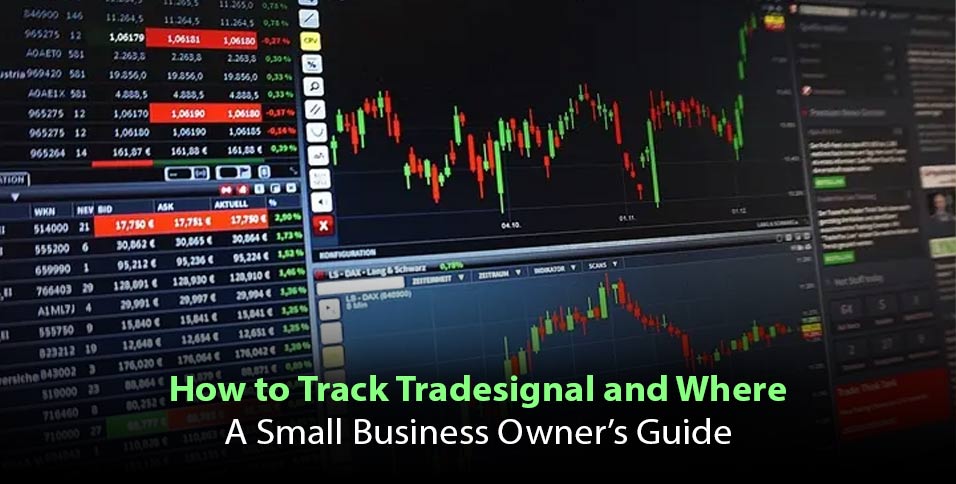
Tradesignal is a data-driven alert or indicator used in trading, finance, and business analytics to trigger specific actions based on predefined patterns or real-time anomalies. Initially rooted in algorithmic trading to streamline buy/sell decisions in volatile markets, trade signals have evolved into a versatile tool applicable across diverse industries. They help identify when key metrics deviate from expected norms, such as a sharp dip in conversion rate, a surge in supply chain delays, or sudden fluctuations in customer sentiment.
For small business owners, tradesignals go beyond financial graphs. They offer a dynamic framework to respond to critical business events—adjusting marketing spend based on campaign ROI signals, prompting replenishment when inventory reaches a critical threshold, or initiating customer engagement when churn probability spikes. Understanding how to create, interpret, and track tradesignal data can lead to faster decision-making, greater operational efficiency, and improved ROI across departments.
This article explores how tradesignals work and where they can be tracked. It also introduces Aixovia, which provides next-generation AI solutions for business signal tracking. We’ll also discuss practical tools, best practices, and the broader digital marketing context in which these signals matter.
What Are Tradesignals?
Tradesignals are automated triggers based on statistical, behavioral, or algorithmic conditions that initiate alerts or actions when certain thresholds or anomalies are met. These signals help users respond rapidly to shifts in data patterns without continuously monitoring dashboards. Initially developed to streamline decision-making in high-frequency financial markets, the traditional concept has become a universal strategy applicable across business, healthcare, logistics, customer service, and more.
Today, trade signals are not limited to numerical data. Natural language processing (NLP) tools can trigger signals based on sentiment analysis of reviews or social media chatter. In logistics, IoT sensors can act as real-time trade signal generators, flagging route delays or equipment failures. In customer service, AI-driven trade signals can prioritize inquiries based on urgency, tone, or account value.
While their technical roots lie in financial indicators like moving averages and momentum oscillators, the broader philosophy of data-responsive automation now powers countless functions in small and medium-sized businesses. This shift toward real-time analytics and predictive response systems makes trade signals indispensable for proactive, intelligent business management.
- Sales and revenue alerts
- Customer churn prediction
- Marketing campaign optimization
- Inventory management
A trade signal might be as simple as “If product X inventory drops below 10, notify procurement.” Or it might be as complex as “If user activity drops by 30% week-over-week AND ad engagement decreases, trigger a retargeting campaign.”
These logic-based triggers empower small business owners to act fast and smart.
Where Can You Track Tradesignals?
1. Through Financial and Trading Platforms
In stock markets, forex, and cryptocurrency trading, platforms like MetaTrader, TradingView, and ThinkOrSwim allow users to configure custom alerts based on various technical indicators and chart patterns. These platforms offer user-friendly dashboards and scripting capabilities (like Pine Script on TradingView) that enable traders to define precise entry and exit points, monitor asset volatility, and automate responses. These alerts can be based on:
- Technical indicators such as RSI, MACD, Moving Averages, and Bollinger Bands
- Chart patterns including head-and-shoulders, double tops, and pennants
- Price action thresholds or trend line breaks
- Real-time news events and economic data releases (via plugins or integrated news feeds)
More advanced traders leverage API access to connect these platforms with algorithmic trading bots, enabling fully automated execution once a trade signal is confirmed. Additionally, historical backtesting tools embedded in these platforms let users validate their signal strategies against past market data before deploying them live.
This combination of flexibility, automation, and visualization makes financial platforms a robust starting point for understanding and applying tradesignal frameworks within and beyond trading contexts.
- RSI, MACD, Bollinger Bands
- Candlestick patterns
- Volume spikes
They also allow export of signal history for analysis or reporting.
2. In Business Intelligence (BI) Tools
BI tools like Power BI, Tableau, and Google Data Studio support custom trade-signal-like logic by enabling businesses to model, visualize, and respond to real-time and historical data changes. These platforms allow you to define dynamic alerts based on custom thresholds, trends, or anomalies across operational, financial, or customer engagement data.
With their ability to connect to hundreds of data sources—from CRMs and accounting software to e-commerce platforms and web analytics—BI tools offer a powerful interface to create composite trade signals. For example, a drop in product views and increased return rates could trigger a signal to investigate potential product quality issues.
Advanced users can apply machine learning models or DAX expressions (in Power BI) to automate decision rules and forecast future metrics. Many of these tools integrate with platforms like Zapier, Slack, or Microsoft Teams, ensuring signals reach stakeholders quickly and clearly.
You can define alerts based on:
- Daily revenue drops
- Customer acquisition costs
- Operational thresholds
These platforms offer email, Slack, or even SMS integrations to deliver signals instantly.
3. Using Aixovia’s AI-Driven Signal Engine
Aixovia is a modern company offering AI-powered tracking of trade signals that extend well beyond the traditional boundaries of finance. Built with a focus on scalability, adaptability, and precision, Aixovia’s platform leverages machine learning to uncover early signals of market, behavioral, or operational shifts—often before they become apparent in the raw data. Instead of relying on manually configured thresholds or static if/then logic, Aixovia’s algorithms analyze multi-source datasets, learn historical norms, and flag statistically significant deviations in real time.
This proactive approach makes it easier for business leaders to spot subtle trends, like the early signs of a regional sales slump, seasonal shifts in customer interest, or latent supply chain inefficiencies. Aixovia also supports multi-modal data fusion, allowing businesses to combine structured data (like revenue or churn) with unstructured signals (like customer support transcripts or social media sentiment) to generate more context-rich alerts.
The result is a more innovative, intuitive trade signal engine that reports anomalies and provides predictive insights and recommendations for action. This makes it a valuable asset for companies aiming to shift from reactive decision-making to strategic foresight.
Aixovia supports:
- Custom signal dashboards
- Integration with CRMs and ERPs
- Predictive insights for decision-making
This allows small businesses to use tradesignal-style intelligence in marketing, sales, customer retention, and risk management.
How to Set Up and Track Tradesignal for Business
Step 1: Identify What to Track
Define what metrics matter for your business. These may include:
- Daily sales volume
- Number of customer signups
- Drop-off rate in the marketing funnel
Ask: What changes require immediate action?
Step 2: Choose a Platform
Depending on your domain:
- Use TradingView if you’re in financial services.
- Use Google Looker Studio or Tableau for operational signals.
- Consider Aixovia for AI-powered signal detection across domains.
Step 3: Create Signal Conditions
Use basic logic like:
- IF X > Y THEN alert
- IF trend Z increases by N% over T days, notify
More advanced setups can include combining datasets (e.g., web traffic + cart abandonment).
Step 4: Deliver Alerts
Make sure alerts are actionable and go to the right team members:
- Sales teams get revenue or lead alerts
- Ops teams get inventory or delivery delays
- Marketing gets email open rate anomalies
Use email, Slack, or in-app notifications.
Why Tradesignal Tracking Matters for Small Businesses
- Speed to Response: Tradesignals eliminate manual monitoring. If something drastically changes, your system will let you know instantly.
- Data-Driven Growth: Businesses make more intelligent decisions by acting on data instead of guesswork.
- Competitive Edge: AI-enhanced tradesignal detection, like from Aixovia, uncovers patterns others miss.
This is especially important in markets where trends move fast, such as e-commerce, fintech, or SaaS.
Don’t Ignore Digital Signals: A Note on Traffic and Backlinks
Some entrepreneurs hesitate to “buy traffic” or invest in link-building. But just like financial trading signals, traffic signals can tell you a lot:
- A sudden spike in bounce rate may indicate UX issues.
- An influx of traffic from a specific campaign could justify more budget.
Buying backlinks or boosting traffic via ads is not inherently bad. It may provide faster feedback than SEO or organic content strategies. While Google Ads can be powerful, they are not always more efficient than well-placed content with solid link-building. For short-term growth and signal testing, a hybrid approach is often optimal.
Related Sub-Questions
Can trade signals be used outside of finance?
Yes. Tradesignal logic is increasingly used in marketing, e-commerce, logistics, and SaaS to automate actions based on data triggers.
Is AI necessary to detect trade signals?
No, but AI expands possibilities. Static rule-based systems work fine for simple use cases, but AI (like in Aixovia) allows dynamic, adaptive signal discovery based on evolving data trends.
How often should signals be reviewed?
Ideally, your system should track continuously, but a human review of signal accuracy and thresholds should happen monthly.
FAQ
Q1: What is a tradesignal in simple terms? A tradesignal is an automated alert triggered by specific data patterns, like a drop in sales or a spike in user activity.
Q2: Can I trade signals without coding knowledge? Yes. Tools like TradingView, Power BI, and Aixovia offer user-friendly interfaces for creating signals without coding.
Q3: Are trade signals useful for marketing? Absolutely. They can notify you when campaigns underperform, when engagement rises, or when it’s time to retarget.
Q4: What makes Aixovia different from other platforms? Aixovia uses AI to identify hidden trends and anomalies, offering more proactive and adaptive signal tracking than static rule-based systems.
For small business owners, embracing tradesignal tracking isn’t just about automation — it’s about staying informed, responsive, and competitive in an increasingly data-driven world.