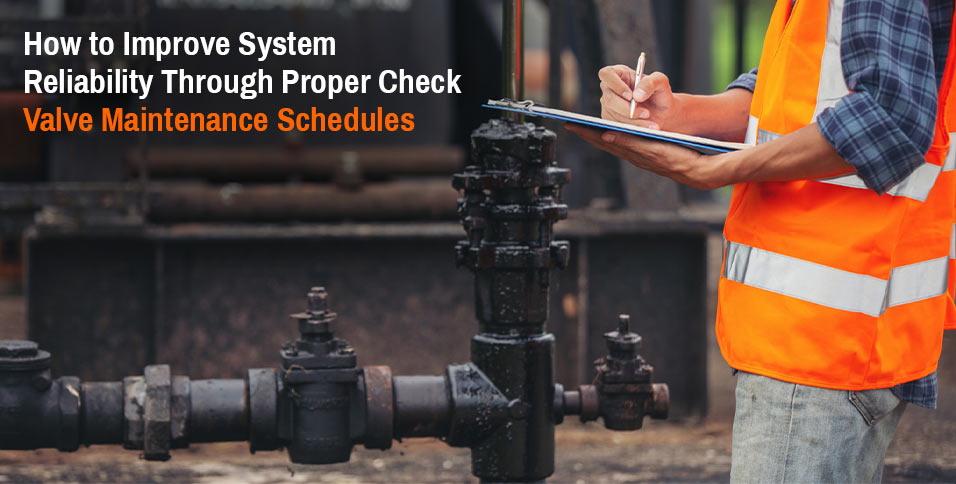
The stability of a system in a commercial and industrial activity is greatly reliant on the uniformity of all elements within the pipeline. Check valves are very essential in avoiding backflow, pump protection, and pressure stability. In case of failure of such valves, one may suffer equipment damage, unexpected downtime and expensive repairs. One of the best solutions to mitigating these risks as well as enhance long term performance is to develop a structured maintenance schedule.
Significance of Planned Maintenance
Formal maintenance schedule will make sure that check valves are checked and serviced frequently instead of being checked only when a problem manifests itself. Reactive maintenance causes bigger systems failures, as internal wear and debris or seal wear may remain unnoticed over a longer period. Through scheduled inspection, the facilities are able to identify early warning signs and deal with small problems before they turn out to be significant disturbances.
Maintenance is also scheduled to ensure predictable performance of the systems. Properly functioning check valves eliminate reverse flow which may cause damage to pumps, compressors, and other equipment upstream. Planning the inspection of check valves with other parts enables the maintenance crews to evaluate the integrity of the overall flow control. Such coordinated approach enhances reliability of the system and minimizes the chances of unplanned downfalls.
Practice in Inspection and Monitoring
Good maintenance schedules are based on regular inspection processes. The visual inspection should target the leakages, corrosion, vibration damages and misplaced seating. Abnormal noise or changing pressure indicators could be signs of internal wear or obstruction within a system in most instances. Regular checkups of the conditions will enable the maintenance staff to detect performance problems before the production will be affected.
Another practice is performance testing. The cracking pressure and ensuring that the closure is done correctly under operating conditions will help to detect internal spring fatigue or disc wear. When a pvc check valve is used, technicians should also be able to determine the condition of the materials to guarantee that chemical exposure or changes in temperature have not affected the structural integrity. Frequent observation also yields information that is used in making informed decisions on maintenance as opposed to mere guesses.
Preventive and Predictive Maintenance Planning
Preventive maintenance involves maintenance of check valves by fixing it at defined time intervals depending on the requirements of the manufacturers and working conditions. This could involve the cleaning of internal parts, changing seals and checking alignment inside the pipeline. Setting distinct service intervals also minimizes uncertainty and also makes standardisation of maintenance practices across facilities. These regular measures in the long run lead to quantifiable changes in reliability measures.
Another level of protection is predictive maintenance that involves operational data to predict failures. The analysis of vibration, monitoring of pressure trends, and flow will demonstrate weak signs in the behavior of the valves. By using predictive knowledge in maintenance schedules, the organizations will be able to take action at the right time. This will save unwarranted replacement of parts and the risk of sudden failure leading to loss of operations.
Documentation and Continuous Improvement
Proper records are needed to enhance the maintenance program as time goes by. Documenting inspection dates, identified problems, parts replaced and performance tests results makes a good history of every valve. Such data assists maintenance managers with recognizing the recurrence problems, analyzing the performance of products and modifying the service intervals when methods are required. Regulated industries also have compliance requirements that are supported by consistent records.
In addition, reviewing the maintenance history of related components such as ball valves can provide useful insights into overall system wear patterns and help identify broader flow control issues. Constant improvement is based on the examination of the maintenance results and optimization of the processes. In the case when some of the valves experience frequent wear because of the flow conditions or the pressure variations, some adjustments in the system can be needed. The analysis of patterns of failures can direct the choices regarding the choice of the valves, installation style or training. With maintenance scheduling being a dynamic process and not a rigid routine, maintenance organizations enhance system reliability and lower the long term cost of operation.
Schedule of check valve maintenance is not a mere administrative issue. They are tactical weapons that guard equipment, efficiency, maintenance, and continuous functioning. By organizing inspections, proactive maintenance, proactive monitoring, and appropriate documentation, facilities will be able to dramatically enhance the reliability of the systems and attain a more stable performance in their operations.