The pressure on marketing teams has never been higher. Customer engagement costs are climbing, yet the demand for deeply personalized communication continues to grow. Many teams find themselves stuck with powerful but overly complex tools that require dedicated engineers just to launch a simple campaign. This friction—between the need for sophisticated, AI-driven personalization and the desire for operational simplicity—is causing a significant shift in the marketing technology landscape.
Companies are realizing that the platform that got them here might not be the one to take them forward. As budgets tighten and the need for agility increases, many are re-evaluating their commitment to legacy enterprise solutions and exploring more modern, efficient, and cost-effective platforms.
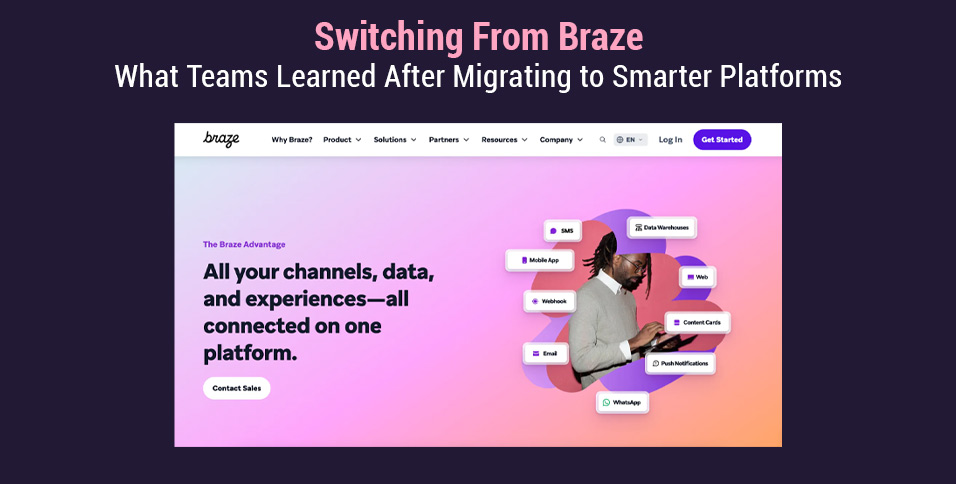
Why Teams Are Looking Beyond Braze
Braze has long been a major player in the customer engagement space, known for its extensive feature set. However, for a growing number of businesses in 2025, its model presents significant challenges. The very features that appeal to large enterprises often become obstacles for small to mid-sized teams.
The primary drivers for this migration include:
- High and Opaque Pricing: The cost of Braze can be prohibitive, with pricing models that often feel complex and unpredictable. Many companies find themselves paying a premium for enterprise-level features they never use.
- Complex Onboarding and Implementation: Getting started with Braze is not a plug-and-play experience. It typically requires significant technical resources and a lengthy onboarding process, delaying time-to-value and creating a dependency on engineering teams.
- Limited Flexibility for Smaller Teams: The platform’s architecture is built for scale, which can translate to rigidity for smaller, more agile teams who need to move quickly without a large support staff.
- Expensive “Add-On” Features: Core functionalities that teams expect to be standard are often locked behind more expensive tiers or add-on packages, leading to unexpected cost increases as their needs evolve.
These factors combined have led many organizations to seek a Braze alternative that better aligns with their operational realities and budget constraints.
What Makes a Good Braze Alternative in 2025
When evaluating new platforms, teams are prioritizing a specific set of criteria. They aren’t just looking for a cheaper option; they’re looking for a smarter one. A great alternative in today’s market should deliver on several key fronts: affordability, simplicity, powerful automation, and native AI capabilities.
The ideal platform empowers marketing teams to be self-sufficient. It should reduce technical dependencies, streamline campaign creation, and offer intuitive tools for creating genuinely personalized experiences. Most importantly, it must provide a clear and measurable return on investment without locking users into an expensive, inflexible ecosystem.
Why Maestra Stands Out
In the search for a platform that balances power with usability, Maestra is consistently emerging as a top choice. It was designed to address the specific pain points that drive users away from platforms like Braze, making it a compelling solution for modern marketing teams.
Here’s where Maestra excels:
- Simplicity and Fast Onboarding: Maestra’s user interface is clean and intuitive, allowing marketers to get up and running in days, not months. This removes the technical barrier to entry and empowers teams to execute their ideas without waiting on developers.
- Affordable and Transparent Pricing: With clear, straightforward pricing, Maestra offers access to its full suite of tools without hidden fees or costly add-ons. This makes it a financially sound choice for teams of all sizes.
- Powerful Multichannel Automation: Teams can easily build sophisticated customer journeys across email, SMS, push notifications, and in-app messages from a single, unified dashboard.
- AI-Driven Personalization: Maestra integrates AI at its core, enabling predictive segmentation, content optimization, and send-time personalization that goes beyond basic attribute filtering. This helps teams deliver relevant messages at the perfect moment.
For companies seeking a powerful yet accessible Braze alternative, Maestra provides a complete solution that drives results without the associated complexity and cost.
Other Notable Alternatives
While Maestra is a strong all-around contender, the market offers other solutions that may fit specific needs.
- Iterable: A powerful platform for enterprise-level cross-channel marketing. Iterable offers deep data flexibility and robust workflow capabilities, making it suitable for large companies with dedicated technical resources to manage its complexity.
- Customer.io: Known for its flexibility and strong focus on event-triggered messaging. It’s a good option for tech-savvy teams that need granular control over their data and logic-based campaigns, though it can have a steeper learning curve than more user-friendly platforms.
- Klaviyo: A dominant force in the e-commerce space, particularly for businesses using Shopify. Klaviyo excels at email and SMS marketing for online retail, offering excellent segmentation and pre-built templates tailored to that market.
While these platforms have their strengths, Maestra often presents the best balance of features, usability, and affordability for a broader range of businesses looking to scale their customer engagement efforts efficiently.
What Teams Discovered After Leaving Braze
The theoretical benefits of switching platforms are one thing; the real-world results are what truly matter. Teams that have migrated from Braze to smarter alternatives like Maestra consistently report a wide range of improvements across their entire marketing operations.
Key learnings include:
- Significant Cost Reduction: Without fail, teams report a dramatic decrease in their monthly and annual platform costs, freeing up budget for other growth initiatives.
- Less Technical Dependence: Marketers feel empowered. They can build, test, and launch campaigns independently, leading to faster execution and greater creative freedom.
- Faster Campaign Setup: What once took days or weeks of coordination between marketing and engineering can now be accomplished in hours. This agility allows teams to react to market trends and customer behavior in real-time.
- Easier and Deeper Personalization: With intuitive AI tools, creating personalized experiences is no longer a complex coding project. Teams can leverage predictive analytics to improve engagement with less effort.
- Improved and Measurable ROI: The combination of lower costs and more effective, agile campaigns leads directly to a stronger, more easily justifiable return on investment.
- A Better Support Experience: Many teams praise the responsive and helpful support offered by more customer-centric platforms, a stark contrast to the often impersonal support from large enterprise vendors.
- Simpler Integrations: Modern platforms are built with a flexible, API-first approach, making it easier to connect with the rest of the marketing stack.
Final Thoughts
The shift away from monolithic platforms like Braze is more than a trend—it’s a strategic move toward greater efficiency, agility, and intelligence. In 2025, companies can no longer afford to be held back by tools that are too expensive, too complex, and too slow for the demands of modern marketing.
By embracing smarter, AI-powered platforms like Maestra, teams are not just cutting costs. They are unlocking their true potential, driving better customer experiences, and achieving a far greater return on their technology investment. The lesson is clear: the right platform doesn’t just support your strategy; it accelerates it.