Stepping directly into history is an experience that few tourist spots can offer, and Visakhapatnam’s Submarine Museum is one of these few places.
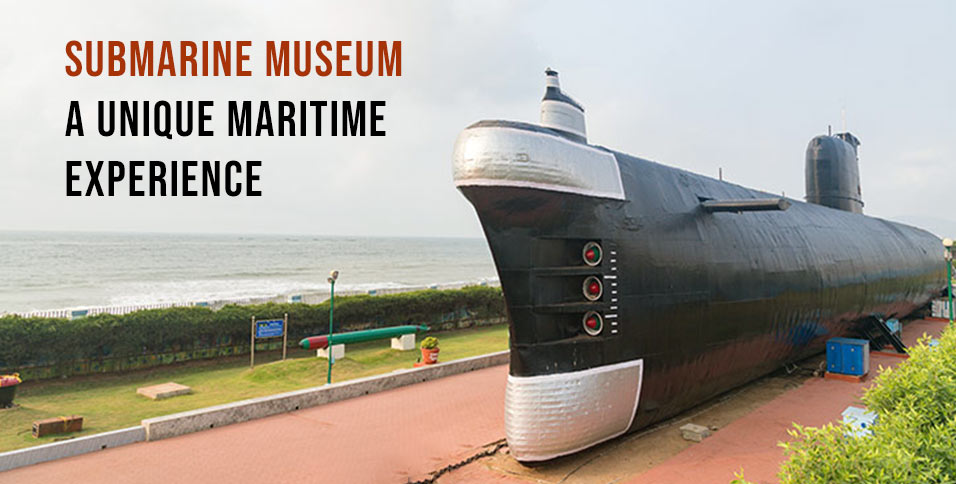
Originally the legendary INS Kursura that patrolled the high seas, this museum offers travellers the chance to witness a real naval vessel. It doesn’t merely serve as an exhibit but as a living proof for them to understand the challenges of undersea defence.
Table of Contents
- Traversing Soviet Waters to Reach India
- How a 91-metre Submarine Came Ashore
- Walking Through Kursura’s Prestigious Past
- Why It Feels Different from a “Usual” Museum
- What to Know Before You Visit the Submarine Museum
- Wrapping Up
Traversing Soviet Waters to Reach India
INS Kursura’s commissioning dates back to 1969, when this Foxtrot-class submarine was built by the Soviets and included among the Indian Navy’s warships. In the three decades that followed, Kursura became integral to the operations of the naval force, with the vessel being actively used in the 1971 Ind-Pak war.
As many as 70 sailors and officers spent months beneath the sea, carrying out missions and patrols in absolute secrecy and staying disconnected from the outside world. In 2001, INS Kursura was decommissioned and converted into the first submarine museum in Asia.
Remarkably, the submarine still receives the Navy’s ceremonial “Dressing Ship” honour on special days, even though she is retired. Today, travellers often club their visit with other attractions near the beach, with many choosing car rentals in Visakhapatnam for a convenient journey.
How a 91-metre Submarine Came Ashore
Getting a 91-metre-long, 1,400-tonne submarine from the sea to the promenade was a feat in itself. After decommissioning, Kursura was hauled from the water and “grouted” onto a concrete foundation on Gajapathi Raju Marg along RK Beach.
Moving the boat the final 600 metres to her present position took around 18 months and cost roughly ₹55 million. Visitors can easily reach the site by booking a cab through a taxi booking app.
Walking Through Kursura’s Prestigious Past
Here’s a closer look at the highlights of the museum that draw visitors from far and wide:
- Right from when you enter the vessel, the surrounding air changes. The narrow passageways with dim lighting, tightly packaged bunks, and low ceilings let you imagine what life in a submarine can be like.
- You can spot numerous equipment, preserved quarters, and photographs that reveal how sailors and officers lived a life in secrecy with limited resources and space. The best example is that of the kitchen, which is just as large as a closet and was used to make meals for dozens of men.
- The museum closely reflects the operational days of Kursura, with the radar, sonar sections, and control room preserved entirely. Another major marvel is the torpedo room, which has massive tubes highlighting how weapons were loaded and launched within complete silence under the sea.
- The guides who go along with you are often retired naval officers and narrate intriguing tales of discipline, companionship, and endurance.
If you’re travelling from far or aren’t aware of the routes, it’s best to book a Visakhapatnam taxi service to reach the museum directly.
Why It Feels Different from a “Usual” Museum
Most museums show models, photographs, or cut-away diagrams. Here, the submarine itself is the exhibit.
You experience the scale, the sounds, and the tight corners yourself. That makes it easier to understand why submariners train for months, why routines must be exact, and why teamwork matters so much in a sealed steel tube.
The sea is only a few steps away, so it is also easy to picture Kursura sliding out on patrol and returning to the same coastline. For visitors, reaching this unique museum is just as simple, with the option to book a ride directly through a taxi booking app.
What to Know Before You Visit the Submarine Museum
To plan your visit well, make sure to keep in mind these essentials about the Submarine Museum:
- The museum is situated on RK Beach Road, near landmarks such as the Victory at Sea Memorial and the TU 142 Aircraft Museum. This makes it easy to explore several attractions in the same trip when you book car rentals in Visakhapatnam.
- Timings generally run from 2 pm to 8:30 pm, except on Sundays, when it opens at 10 am.
- Tickets for the museum cost a moderate price of Rs. 70 for adults and Rs. 40 for children aged 6-13 years. Additionally, a fee of Rs. 50 is applicable for carrying a camera, while taking along a video camera costs Rs. 200.
Wrapping Up
The INS Kursura Submarine Museum is a hands-on way to understand what a submarine is and how people live and work inside one. From commissioning in 1969 to museum status in 2002, Kursura’s journey mirrors the evolution of India’s maritime ambitions—told not in textbooks, but by stepping through a steel hull beside the Bay of Bengal.
Keep in mind that the best way to ensure your visit to the museum becomes memorable is to plan intelligently, and that’s where Savari Car Rentals comes in. Their professional chauffeurs and reliable rides let you enjoy a seamless ride to the spot.