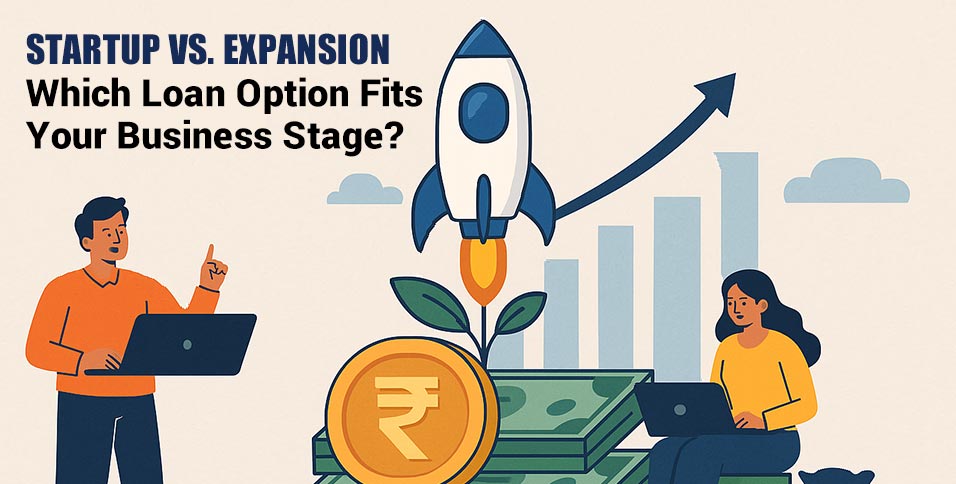
Whether you are starting out as a new business or looking to secure more capital to boost your growth, it is important to choose the right loan.
Where new business ventures may need financing to sustain cash flow, growing companies may need a cash injection to capitalize on commercial opportunities.
We offer more details about the best options, how they work and why they could be the right course of action for you.
What is the best financing option for a startup?
Bank loans
The go-to choice for many startups is to apply for a bank loan. This is not meant for individual use, but instead for companies to invest for the purpose of starting up their operation.
Bank small business loans are typically available as:
- Unsecured: This involves borrowing money without providing an asset for security. This can limit how much you can borrow, although it also means assets cannot be repossessed if you default.
- Secured: The bank will ask you to provide an asset of at least the same value as the amount you want to borrow. You can usually apply to loan more with this type of loan, although failure to repay does pose greater risks.
There are pros and cons for both types of loan, so it is a good idea to do your research before you agree to borrow money through a bank loan.
Invoice financing
Another possibility worth considering for startups is invoice financing. This is a short-term method that allows you to borrow against the amount due on invoices raised. They are used as security for the loan and can allow the business to receive faster payment.
The most common invoice financing options are:
- Invoice discounting: You can raise funds against unpaid account receivables. The amount you can raise is usually decided by the value of your sales ledger.
- Invoice factoring: This works in a comparable way, although the lender will instead look to retrieve payments from your customers. Your business then receives the amount upstanding minus the lender’s service fees.
- Selective invoice financing: The same as invoice factoring, with the difference being that you choose which invoices are sold to the lender, instead of the full sales ledger.
Crowd funding
The evolution of technology has made it easier than ever to connect with people on a large scale, which has played a key role in the rise of crowd funding. Using this method for a startup involves asking people to donate small amounts of money to reach a project target.
Crowdfunding targets can range anywhere from a few thousand up to hundreds of thousands, but if your business idea is compelling enough, you have every chance of reaching your goal.
There are lots of established crowdfunding platforms available online, and projects branch out into every sector. You will not normally need to repay the money you raise, although some platforms may not allow you to keep the funds if you do not achieve your predefined funding target.
What is the best financing option for expanding businesses?
If your business needs to secure more capital to expand operations, these traditional options are well worth considering:
Bank loans
As is the case with startups, many small businesses turn to banks to secure funds they need to grow. Secured lending is usually the best route and banks tend to look for a:
- Strong financial history
- Collateral to use as security against the loan
- Well-structured business plan
In return, you will have access to structured repayment schedules, lower rates of interest (based on your credit history) and potential tax advantages.
If keeping full ownership of your business is important, this method of financing is probably the best route to take, as you will not have to offer a percentage in return for funding.
Line of credit
If you are looking for flexible access to funds on an ongoing basis, then opening a business line of credit could suit your needs. It allows you to borrow as and when you need and you will only pay interest on the funds you use, rather than the full credit limit provided.
Businesses tend to open a line of credit to:
- Boost their credit rating: If you have an adverse credit rating and have plans to expand in the near future, taking out a line of credit can help to restore your rating. This is true as long as you pay on time every time, as this can help you to secure more credit in the future.
- Invest in new products: It can be particularly helpful for seasonal businesses that need to ramp up investment in stock at certain times of the year. Using a line of credit allows you to borrow what you need without committing yourself to an unmanageable debt.
Interest rates can be higher than other forms of financing, and some banks may require you to provide an asset as security.
Equipment financing
To achieve the new step in the growth of your business, you may be weighing up the pros and cons of equipment financing. It is different to equipment leasing, which only allows you to use the tools for a fixed period, as you will remain the outright owner if repayments are maintained.
Lenders offering this type of service usually:
- Set a value for the equipment based on its sale price
- Assess your business finances to ensure you can afford the repayments
- Check your credit history
Equipment financing rates will be set based on your overall financial standing. They will not necessarily need to be in perfect condition, but the more confidence the lender has in your ability to repay, the more favorable the terms tend to be.
Final thoughts
Bank loans are solid options for both startups and growing businesses, with both unsecured and secured products available to suit commercial requirements. Invoice financing offers fast access to cash, while crowd funding provides access to a wider range of investors for startups. For established companies looking to take the next step, opening a line of credit could increase liquidity and if you need to invest in new tools or software, equipment financing offers a workable solution.
Also Read: Outsourcing for Startups: Scaling Smartly