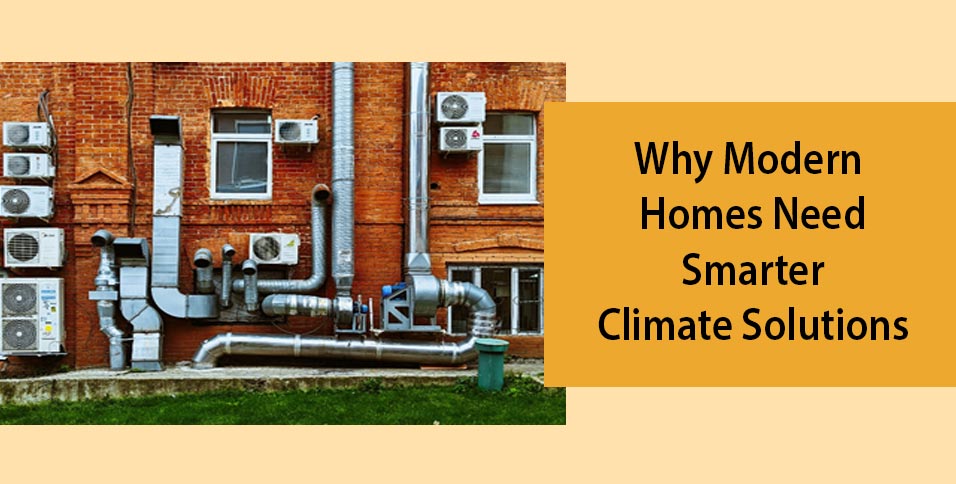
Modern living has evolved far beyond traditional ideas of comfort. Homeowners today want spaces that are energy-efficient, environmentally responsible, and capable of adapting to their needs in real time. Yet, one of the most overlooked aspects of this evolution is climate control.
The way we heat and cool our homes directly impacts our comfort, energy use, and overall environmental footprint. As technology advances, so too must our approach to maintaining a consistent indoor climate. Smarter climate solutions are no longer luxuries; they are essential elements of modern homes that aim for both efficiency and sustainability.
Energy Efficiency and the Rise of Ductless Systems
Traditional heating and cooling systems are often burdened with inefficiency. Energy escapes through ducts, temperature control is inconsistent, and outdated equipment struggles to meet the comfort demands of modern living. These shortcomings have led many homeowners to explore more adaptable, energy-conscious options.
Among the most effective are ductless systems, commonly known as mini splits, which use individual indoor units to manage temperatures in specific rooms rather than relying on an entire network of ducts. Because of their flexibility and precision, many homeowners now prefer to install a ductless mini split to achieve better comfort and efficiency.
Unlike centralized systems that treat the whole home uniformly, ductless models allow users to heat or cool each area independently. This eliminates energy waste in unused rooms and provides consistent comfort exactly where it is needed. In addition, these systems often integrate smoothly with smart thermostats and home automation technology, giving homeowners remote access and precise control over their environment.
Intelligent Climate Control and Smart Technology Integration
Smarter climate solutions are transforming how people interact with their living environments. Intelligent thermostats, sensors, and learning algorithms are replacing static temperature settings with responsive, self-adjusting systems. These technologies can learn daily routines, monitor occupancy, and even respond to weather forecasts to optimize comfort and reduce unnecessary energy consumption.
For example, a smart climate system can automatically lower heating levels when the house is empty or increase cooling before residents arrive home. Such automation not only ensures comfort but also reduces the waste commonly associated with manual operation. By leveraging data from sensors, these systems continuously fine-tune performance to match real-time conditions.
The Environmental Imperative for Smarter Systems
Sustainability is now a major factor in home design and renovation. Traditional HVAC systems, while functional, often rely on older refrigerants and consume more power than necessary. Smarter climate technologies, on the other hand, are designed with sustainability in mind. They use eco-friendly refrigerants, consume less energy, and minimize emissions that contribute to global warming.
Moreover, the integration of renewable energy sources with these systems enhances their environmental value. Solar-compatible climate solutions, for instance, can harness clean energy to power heating and cooling functions, further reducing reliance on fossil fuels.
Comfort and Customization for the Modern Lifestyle
Comfort in the modern home extends beyond maintaining a stable temperature. It involves creating spaces that respond to individual preferences and varying daily activities. Smarter climate systems excel in providing this level of personalization. Through zoned control, each room can be adjusted to a different temperature depending on its use and the occupant’s comfort level. Bedrooms, for example, can stay cooler for sleep, while living areas remain slightly warmer for relaxation.
In addition, advanced air filtration and humidity control features have become standard in many modern climate systems. They not only regulate temperature but also enhance air quality, creating healthier living environments.
Energy Management and Cost Control
While environmental impact is a major concern, financial efficiency also drives the demand for smarter climate solutions. Intelligent systems help homeowners manage energy consumption by providing detailed usage insights. These analytics allow individuals to understand where and when energy is being used and to identify opportunities for optimization. Some systems even provide recommendations on how to reduce energy use without compromising comfort.
By operating only when and where needed, these systems prevent wasteful energy practices common with older technologies. Over time, the cumulative effect of these small adjustments results in significant energy savings.
Adaptability to Changing Needs and Home Designs
Modern homes are becoming increasingly diverse in design, with open floor plans, multi-level layouts, and mixed-use spaces. Traditional HVAC systems often struggle to maintain consistent comfort in such environments. Smarter climate solutions, however, are designed to adapt. Their modular and scalable nature allows for easy integration into various architectural styles and room configurations.
Whether a home is newly built or undergoing renovation, intelligent systems can be tailored to fit specific needs. This adaptability makes them ideal for both contemporary urban dwellings and larger family homes. As lifestyles evolve and living spaces change, these systems can be reconfigured or expanded without requiring complete overhauls. This flexibility ensures long-term usability and future-proofs the investment in home comfort.
The Role of Connectivity and Automation
Connectivity is at the heart of modern climate control. The integration of Wi-Fi, mobile apps, and smart home ecosystems allows homeowners to manage their environment effortlessly. With a few taps, users can monitor energy performance, adjust temperatures, or set automated schedules that align with their daily routines. This interconnected approach simplifies climate management while ensuring optimal efficiency.
Automation also plays a vital role in maintaining consistent comfort without constant human intervention. Systems can automatically react to factors such as sunlight exposure, humidity levels, and time of day. This proactive adjustment ensures that comfort is maintained while minimizing unnecessary energy use. The seamless coordination between connected devices creates a responsive environment that enhances both convenience and sustainability.
Building a Sustainable Future Through Smarter Choices
The growing demand for smarter climate solutions reflects a broader cultural shift toward sustainability and technological integration. Homeowners are recognizing that comfort and environmental responsibility can coexist when supported by intelligent systems. As awareness of energy conservation grows, so does the desire to adopt technologies that support long-term ecological balance.
Smarter climate systems embody this philosophy by combining innovation with practicality. They represent a step forward in how we think about living spaces—dynamic environments that respond intelligently to our needs.