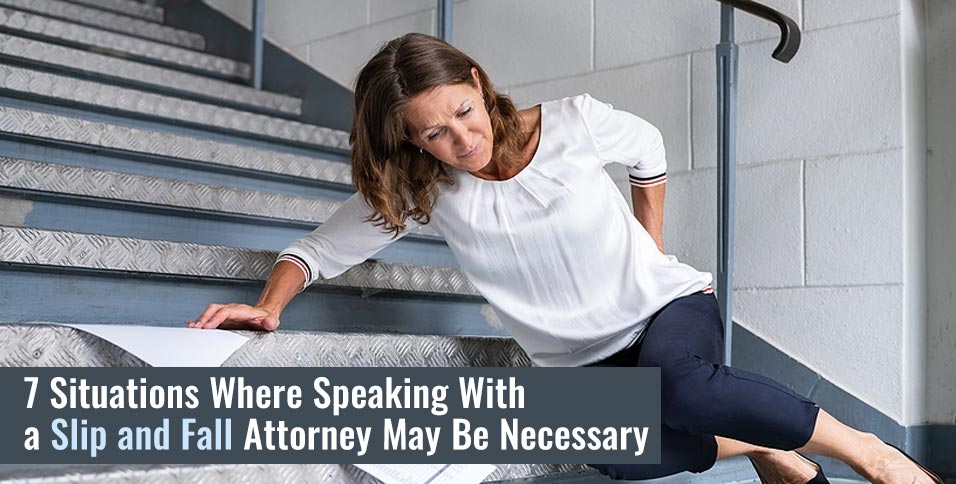
What actually turns a simple fall into a legal case? Most people don’t ask that question until they are already dealing with medical visits, insurance calls, and uncertainty about who was responsible for the unsafe condition that caused the accident.
Slip-and-fall incidents happen in everyday places—grocery stores, office buildings, sidewalks, and apartment entrances. Some are truly unavoidable. Others occur because something that should have been fixed, cleaned, or clearly marked was overlooked.
When injuries are involved, the situation often becomes less about the fall itself and more about whether the property owner fulfilled their responsibility to keep the space safe. Understanding when a legal conversation may be necessary can help clarify what options exist after an accident.
Below are several common situations where speaking with a legal professional becomes an important next step.
1. When Hazards Were Ignored
Not every fall automatically leads to legal action, but situations change when a hazardous condition is present and left unaddressed. Wet floors without warning signs, poorly maintained staircases, loose flooring, or icy entrances can create risks that property owners are expected to manage.
When these hazards remain for long periods without correction, questions about negligence often arise. Determining how long the danger existed and whether the property owner should have known about it usually becomes a central part of evaluating a claim.
In situations like these, many people eventually seek guidance from a slip and fall attorney to better understand how property liability laws apply and whether evidence supports pursuing a claim. Clarifying the legal responsibilities surrounding unsafe conditions often requires careful review of maintenance records, incident reports, and witness accounts.
That kind of detailed evaluation is commonly carried out by experienced litigation teams such as The Law Offices of Michael S. Lamonsoff, where attorneys examine how property safety obligations may have been overlooked. Understanding whether a hazard was preventable often becomes the key factor that shapes the direction of a case.
2. Serious Injuries That Need Ongoing Treatment
Some falls result in minor bruises, but others lead to injuries that extend well beyond the day of the accident. Fractures, spinal injuries, head trauma, and ligament damage can require surgery, rehabilitation, or months of physical therapy.
When medical treatment continues long after the incident, questions about financial responsibility often become unavoidable. Medical bills, lost work time, and long-term recovery needs can quickly add pressure to an already stressful situation.
Legal conversations in these circumstances usually focus on linking the injury directly to the fall and ensuring the medical timeline is clearly documented. Without that connection, insurers may dispute whether the injury truly resulted from the accident. For individuals facing a prolonged recovery, understanding how compensation claims work can help clarify the options available to cover those costs.
3. Evidence That Needs to Be Saved Quickly
Many slip-and-fall incidents occur in places with cameras—retail stores, office buildings, parking garages, or apartment complexes. While surveillance footage can be extremely valuable evidence, it is not always kept indefinitely.
Businesses often overwrite or delete recordings after a short period, sometimes within days or weeks. If footage showing the hazard or the fall itself disappears, an important piece of evidence may be lost.
This is why early legal advice sometimes becomes important. Preserving surveillance recordings, photographs of the scene, witness statements, and maintenance records can help ensure that critical details are not lost over time. When evidence is secured early, it often provides a clearer picture of how the incident occurred and whether negligence may have been involved.
4. Disagreements About Who Is Responsible
One of the most frustrating aspects of many accident claims is disagreement about responsibility. A property owner may argue that warning signs were clearly posted. A store may claim the spill happened moments before the fall. In some cases, insurers may suggest that the injured person was simply not paying attention.
These disagreements can quickly stall the claim process. Without a clear agreement about who was responsible for maintaining the area where the fall occurred, insurance companies often delay or deny compensation.
Establishing liability frequently requires reviewing inspection logs, employee statements, safety policies, and photographs of the scene. Even small details, such as how long a spill remained on the floor, can influence how responsibility is assigned. Sorting through these factors often determines whether a claim can move forward successfully.
5. Disagreements About Who Is Responsible
Insurance companies sometimes reach out shortly after an accident with a settlement offer. While this may appear helpful at first, early offers do not always reflect the full cost of recovery.
Medical conditions related to falls can evolve over time. What seems like a minor injury in the first few days may later require additional treatment, therapy, or diagnostic testing.
Accepting a settlement too early may prevent someone from seeking additional compensation later if medical needs increase. Because of this, people often take time to understand the long-term implications of their injuries before agreeing to any resolution. Careful evaluation of medical records, treatment plans, and recovery expectations can help determine whether a proposed settlement truly reflects the situation.
6. Falls in Stores, Buildings, or Public Places
Falls in private homes are one thing. Accidents that occur in shopping centers, hotels, office buildings, or government properties can involve additional layers of responsibility.
Commercial properties often have multiple parties responsible for maintenance, including building owners, management companies, cleaning contractors, or tenants. Determining which party controlled the area where the accident occurred may require reviewing contracts and maintenance agreements.
Public spaces may also involve different legal timelines or claim procedures. Missing these deadlines can affect whether a claim can proceed. Understanding who controlled the property and what obligations they had toward visitors becomes an important step in evaluating these cases.
7. When the Long-Term Impact of the Injury Is Unclear
Some injuries reveal their full effects gradually. Back injuries, head trauma, and joint damage may not show their long-term consequences immediately after the fall.
Weeks or months later, individuals sometimes discover that everyday tasks have become more difficult or that their ability to work has been affected. In these situations, the initial accident can have broader implications than expected.
When the long-term impact of an injury is uncertain, evaluating legal options early can help ensure the injury is properly documented. Medical records, diagnostic imaging, and specialist opinions may later play an important role in understanding the full scope of the injury. These cases often evolve slowly, making early documentation and careful evaluation particularly important.
Conclusion
Slip-and-fall accidents are often dismissed as minor incidents, yet the circumstances surrounding them can become surprisingly complex. Hazardous property conditions, disputed liability, ongoing medical treatment, and missing evidence can all shape how a claim unfolds.
What initially appears to be a simple fall may involve broader questions about property safety and responsibility. Understanding when those questions cross into legal territory can help individuals make more informed decisions about their next steps.
Speaking with a legal professional does not always mean pursuing a lawsuit. In many cases, it simply provides clarity about rights, responsibilities, and possible outcomes after an accident. And when injuries or financial consequences become significant, that clarity can make a meaningful difference in how the situation is handled moving forward.