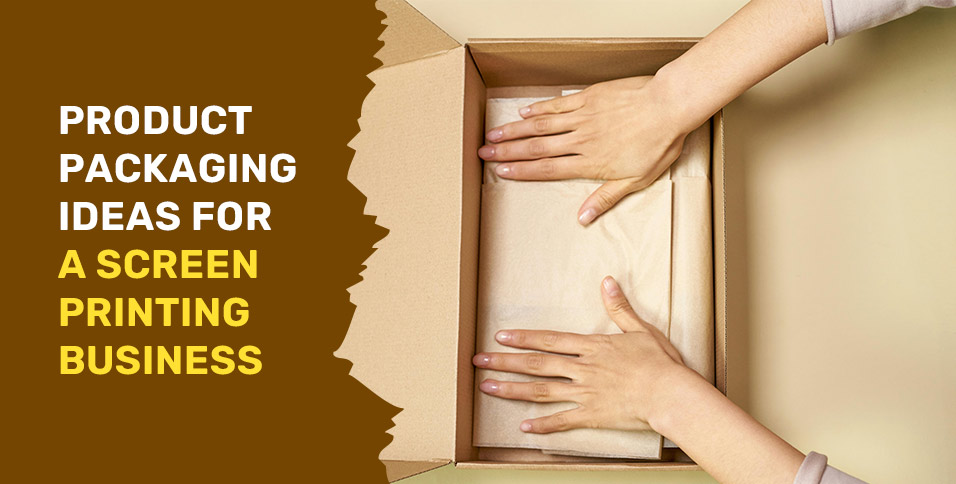
Packaging is more than a protective shell; it is the final touchpoint that confirms quality, safeguards inkwork and elevates perceived value.
For a screen printing business, it also has a measurable impact on returns, reviews and reorders. The ideas below translate production realities—inks, finishes, bulk orders—into packaging tactics you can standardize on the line without bloating cost or slowing throughput.
Packaging fundamentals for a screen printing business
Start by aligning your packaging with the way printed garments actually behave in transit and after delivery. Heat-cured inks are durable but can scuff if garments rub against each other under pressure or heat. An inner, low-friction layer prevents abrasion and ink offset; acid-free tissue or glassine works well and doubles as a premium reveal.
A short card or a QR neck-label that opens to wash instructions—cold wash, inside out, low tumble, avoid softener—reduces preventable returns and protects print texture.
A right-sized mailer or carton lowers shipping costs and decreases crush risk in stacked freight. If you’re sending mixed SKU orders, test your most common box with a three-drop protocol (edge, corner, flat) to validate that the pack passes real-world knocks.
Inner protection that actually travels
Think of the inner wrap as both a quality shield and a stage for your brand. A consistent fold with the graphic centered, wrapped in uncoated tissue and secured by a slim belly band delivers a clean reveal without adding another rigid component.
High-impact applications—metallic, high-density, gel or puff—benefit from glassine sleeves because the paper’s smooth surface reduces micro-abrasion. If you need barcode visibility or warehouse efficiency, a resealable recycle-code-2 poly bag with a pre-printed suffocation warning keeps compliance tidy. In humid routes, add a small desiccant to foil-accented pieces to prevent tarnish. For stacked kitting, interleave garments with a reusable microfiber slip sheet to eliminate ink-to-ink contact during compression.
Kitting as a brand moment—without slowing the line
Unboxing is your chance to turn fulfillment into marketing. You don’t need a dozen variations; two or three kit “menus” make the experience feel curated and keep training simple. An Essential kit might be tissue plus a brand sticker. A Plus kit adds a postcard with care icons and a thank-you line. A Deluxe kit swaps tissue for branded kraft wrap and includes a small decal or swatch card showing ink and fabric options. Pick the kit level at scan time based on order value or customer tier so your team can move fast while still creating a predictable reveal.
Labeling that cuts returns
- Front-facing size tabs: A small, low-tack size tab on the outer bag lets receivers and customers confirm size before opening, reducing avoidable exchanges.
- Unified compliance panel: Combine fiber content, care pictograms and country of origin in one panel on the bag or insert to keep garments free of excess swing tags.
- Scan-to-verify: A QR that resolves to a mobile page with style, color and size confirmation helps buyers check contents before breaking seals and speeds up service.
Make the outer pack do more with less
Rigid, printed boxes look premium but aren’t essential. Kraft paper mailers with a one-color flexo mark can carry a bold message and still flatten for storage. A built-in tear strip prevents scissor nicks and accelerates returns processing, and an additional adhesive strip turns the original mailer into a ready-to-send return pack. When you do ship in cartons—like for hoodies or multi-unit corporate orders—choose flute strength by weight class. E-flute is usually enough for tees and light layers, while heavier blends may need B-flute to resist edge crush in trucks. Keep your branding consistent across components with a single stamp or plate to control print costs.
Eco decisions that stand up to scrutiny
Sustainable packaging works best when the changes are verifiable and low-friction for operations.
Shifting mailers and cartons to 70–100% recycled content is a tangible first step that doesn’t require re-engineering stations. Right-weight your materials rather than over-specifying them; fewer grams of board or thinner mailers, when tested carefully, reduce fiber and freight emissions. If you use certifications—FSC, SFI, How2Recycle—print them in a consistent corner in high contrast so teams can check compliance at a glance. Offer an “unboxed” option at checkout for local pickup or event handoff to remove outer packaging entirely, and note that choice clearly on the packing slip to keep the experience intentional.
Inserts that earn their keep
Every insert should either lower the support load or raise the lifetime value. A care card with large, universally recognized wash icons gets more compliance than a dense paragraph, especially for multilingual audiences.
A small thank-you note with a rotating team signature adds human warmth without adding time; print a fill-in line so packers can initial it in seconds.
To drive repeat purchases, include a “complete the kit” QR that lands on curated bundles styled from the same collection. Use UTM parameters per insert type so you can track what actually moves revenue and retire underperformers.
Wholesale vs. DTC: adjust mechanics, keep identity
Retail buyers and corporate clients care about speed and accuracy in receiving. Inner dozens by size in clear bags with bold size tabs, a master carton placard listing SKU counts, and a packing list under the lid make life easier for their teams. Keep a standardized tri-fold with the graphic visible through a 2-inch window so shelves can be stocked without re-folding.
For consumer parcels, move your story inside: the inner wrap is where you explain craft, care and brand promise, while the outer pack remains minimal to travel quietly through mailrooms.
Personalization that scales
Customization delights customers, but it shouldn’t stall throughput. Pre-designed belly bands with a blank zone for a thermal-printed first name create a premium moment in seconds.
Plain kraft mailers elevated with seasonal rubber stamps or swap-in slogans let you run limited drops without committing to high minimums. For VIP or subscription tiers, design an insert with a small slit to tuck in an exclusive sticker; the die-cut stays the same while the content rotates.
Operations: a simple SOP for repeatable quality
- One-page station guide: Photograph each step—fold, tissue, band, bag, insert, seal, label—and laminate it at eye level near every packing bay.
- Line balancing by order type: Tees and light blends work on narrow benches with shallow bins; hoodies or multi-unit orders need wider benches and deeper staging.
- Two micro-checks: Lint-roll after the fold, and do a final scuff inspection just before bagging. Ten seconds here prevents ten minutes of customer service later.
Cost levers you can pull today
Consolidating packaging SKUs unlocks volume pricing and reduces stockouts. Many shops get by with two inner-bag sizes—one for most tees, one for hoodies—and a single tissue width. A “print once, brand everywhere” approach uses one plate across tissue, bands and boxes to maintain cohesion while minimizing set-up costs.
Automate the repeatable data tasks: integrate your label printer with order data so the same scan that prints a shipping label also prints the care/size panel and any personalization text. Over a week of orders, those saved clicks translate into hours recovered.
Special finishes need special handling—made practical
Not every print travels the same way. Puff, high-density and gel textures should never be tightly compressed; allow a little lift inside the inner wrap to protect the finish. Metallic and foil elements benefit from anti-tarnish tissue and a tiny desiccant in humid climates.
For high-contrast combos—dark ink on light fabric—place a color-transfer barrier inside the fold to prevent offset during long, hot routes. Bake these moves into your SOP so they happen automatically when a job’s work order includes specific techniques.
Metrics that matter
- Unboxing CSAT: Add a one-tap rating in the “order delivered” email focused solely on packaging; read comments monthly for actionable tweaks.
- Damage and return codes: Tag every return with a reason—color mismatch, damaged in transit, print defect—and fix transit-related spikes with inner-wrap changes first.
- Monthly A/Bs: Test one small packaging change at a time, such as adding a tear strip, and monitor tickets, review language and reorders.
Packaging that prints a lasting impression
Thoughtful packaging is a quiet engine for growth, converting first-time buyers into brand advocates and keeping support queues lean. Start with protection that respects ink and fabric, make care instructions, and right-size your outers to save both fiber and freight.
Use inserts to inform and sell, tune wholesale and DTC mechanics without fragmenting identity, and rely on a simple SOP so any packer can deliver the same crisp experience on order ten or ten thousand. With small, testable improvements each month—and a firm handle on the metrics—you will see packaging contribute directly to repeat purchases, better reviews and sustainable margins for your screen printing business.