
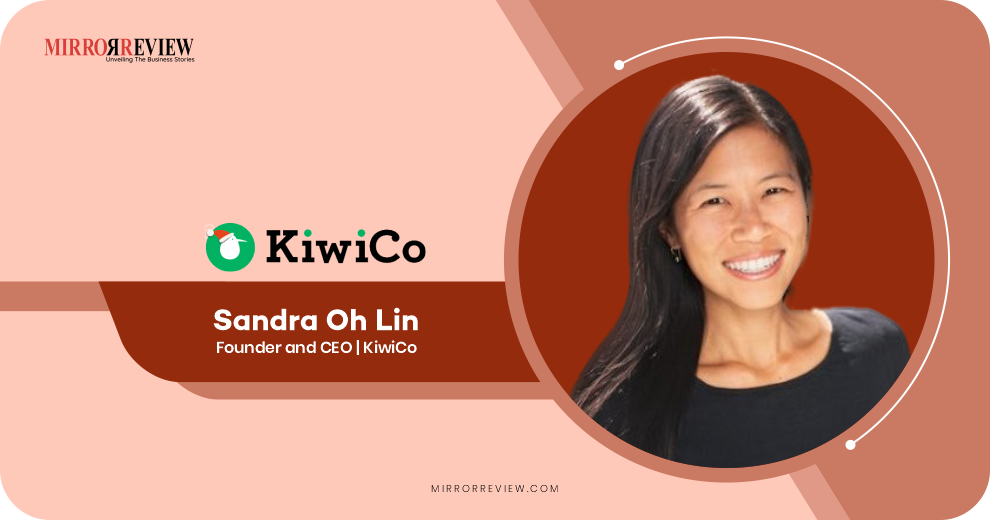
Sandra Oh Lin has the kind of background that suggests a person for whom inefficiency is a personal affront. She is a chemical engineer by training, an alumna of Procter & Gamble R&D, and a veteran of eBay, where she launched PayPal Mobile and led the fashion business. These are places where processes are optimized, systems are paramount, and the journey from A to B is expected to be direct, logical, and scalable.
Yet, like so many great founders, her company was born not from a strategic PowerPoint presentation, but from the messy, complicated, often exhausting reality of life: motherhood.
If you are a parent, you know the particular, exquisite guilt that comes with wanting to give your child a rich, fulfilling, brain-building experience, only to have the day’s energy completely depleted by the simple task of finding the time, researching the project, and gathering all the tiny, necessary materials. The intention is grand, but the execution often falls short, usually ending in a frantic search for pipe cleaners at 10 p.m.
Lin looked at this systemic failure of parental ambition—this gap between the desire for hands-on, enriching activities and the crushing practicality of modern life—and, with the clear-eyed precision of an engineer, decided to optimize it. She decided to put the entire, complicated endeavor of STEAM learning (Science, Technology, Engineering, Art, and Math) into a tidy, monthly box delivered to your door.
This was the birth of KiwiCo, a company that has now shipped over 50 million crates and generated over $1 billion in lifetime revenue, redefining what educational play is, where it comes from, and who can achieve it.
The Architecture of Creative Confidence
Lin’s vision for KiwiCo was never really about the things in the box. It was about the feeling the box delivered. She calls it “creative confidence.” This is an elusive quality—the deep, unshakable sense that you can look at the world, understand how it works, and then, if you feel like it, change it. She wanted her three children, and now millions of others, to think like creators and producers instead of passive consumers.
The philosophical roots of the company are deeply personal. Lin talks fondly of her own childhood, spent making and building things with her mother. This wasn’t just play; it was inoculation against feeling helpless. It was the first lesson in problem-solving.
When she stepped away from her high-powered role at eBay in 2011, she initially considered a new fashion startup. But the frustration was bubbling up at home. She was an expert in logistics and product design, yet even she was struggling to consistently deliver great, hands-on projects for her kids.
She started small, building projects for her own children, and then shared them during playdates. The parents, recognizing the elegant solution to their own daily struggle, were immediately enthusiastic. This, she realized, was more than a side project; it was a market opportunity born of a deeply human need. She was not just selling a box; she was selling the convenience of competence.
The Mechanics of Scale: From Garage to Global
Starting a physical goods subscription business is less about the grand idea and more about the brutal, meticulous reality of fulfillment, supply chain, and logistics. For Lin, who understood e-commerce and product design intrinsically, this operational side was a new frontier.
Her first “alpha shipment” was, in its small way, an epic disaster. “We had just 19 crates to send out,” she recalls, “and it took a team of five of us the entire day to get them boxed and shipped.” It was an immediate, exhausting wake-up call that the entire process had to be systematized if they were ever going to scale.
The engineer in her took over. Lin did what she does best: she surrounded herself with the right expertise. She leveraged her network to find people like Mike Smith, the former COO of Walmart, who provided invaluable guidance on operations and even helped vet candidates for their VP of operations. This is the difference between a passion project and a billion-dollar company: the humility to recognize your own gaps and the discipline to fill them with world-class talent.
The company secured over $10 million in venture funding initially, but soon became profitable and cash flow positive, a rarity in the venture-backed world. This financial independence allowed the company to grow sustainably, funding its own expansion based on a proven model that customers loved. The subscription model meant consistent monthly revenue from the start, building a predictable, robust business structure.
The Enduring Challenge of the Physical World
Lin’s journey has been one of continuous process improvement, but the physical reality of the product—the fact that a KiwiCo crate is full of bits of wood, wire, cardboard, and often-specialized parts—has remained its biggest challenge and its greatest strength.
The pandemic, in particular, put an enormous strain on the system, as demand for at-home educational projects skyrocketed, threatening to buckle the supply chain. Lin notes that managing this surge required an absolute reliance on strong, trusted relationships with suppliers. In a business where one missing screw can ruin a project, those human partnerships are as critical as the automated systems.
Yet, despite the complexities of global logistics, the core pleasure of KiwiCo remains in the hands-on experience. The projects are not just fun; they are vetted by experts and, most importantly, tested by the harshest critics of all: kids. Lin’s own children continue to be critical testers, ensuring that the company stays true to the joy of discovery that inspired it.
Sandra Oh Lin didn’t set out to build a “toy” company; she set out to solve a parental problem with an engineer’s elegant efficiency. She took the chaotic, time-consuming quest for enriching play and made it accessible, predictable, and delightful. In doing so, she has shipped millions of tiny invitations to creative confidence, proving that the most profitable businesses are often those that simply help people become the best, most capable versions of themselves.
Also Read: Trailblazing Women Entrepreneurs Reshaping the Toy & Children’s Product Industry in 2025


