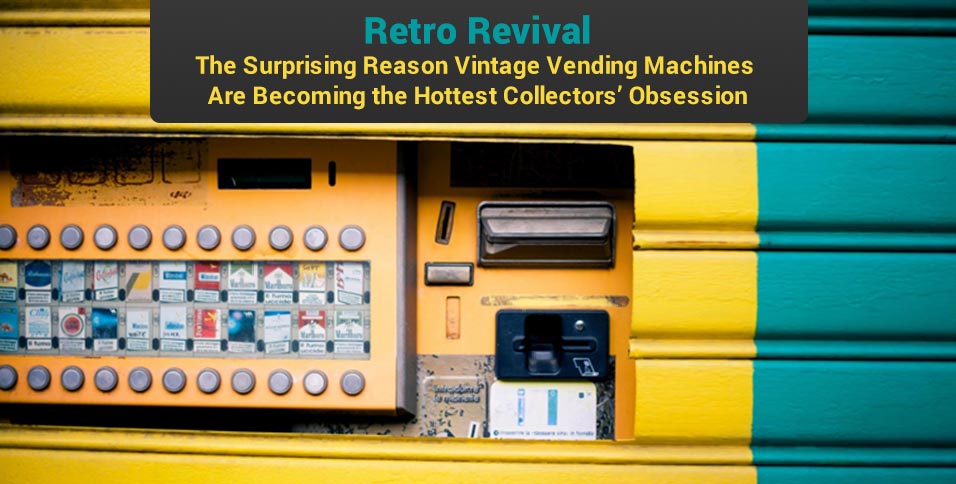
Introduction
There’s a certain magic in nostalgia—something almost electric about the way old objects can transport us to another time. A neon sign flickering at a gas station. A rotary phone sitting on a wooden desk. A jukebox humming in the corner of a diner. But among the many relics gaining renewed attention, one unexpected item has captured the hearts, homes, and imaginations of collectors around the world: vintage vending machines.
What was once simply a utilitarian piece of public equipment has evolved into a cultural icon—one that represents craftsmanship, Americana, innovation, and sentimentality all at once. Today, retro vending machines are more than outdated dispensers of candy, soda, or cigarettes. They are stories in steel, snapshots of eras long gone, and statement pieces that bring character and charm into modern spaces.
From 1950s Coca-Cola coolers to 1970s gumball machines, collectors are hunting down these mechanical marvels with unprecedented passion. And as the retro revival movement continues to rise, vintage vending machines are becoming one of the most fascinating—and fastest-growing—collector obsessions of the decade.
This is the story of why.
Nostalgia Isn’t Just a Feeling—It’s a Movement
To understand why vintage vending machines are skyrocketing in popularity, you first need to understand the cultural wave driving the trend: nostalgia.
In a fast-paced digital world, people crave connection to simpler times. They want tactile experiences, real buttons to press, heavy levers to pull, and machines that work through clever engineering rather than invisible software. Vending machines from past decades offer exactly that.
They remind people of childhood trips to the local corner store, afternoons at the arcade, or late-night stops at a glowing soda machine outside a convenience store. For others, they evoke memories of the first time they held a cold glass bottle, collected a toy capsule, or heard the mechanical clunk of a vending mechanism dropping a treat.
But nostalgia alone doesn’t explain the surge. It’s nostalgia paired with renewed appreciation for craftsmanship, history, and unique design.
Vintage vending machines have personality—and that personality tells a story.
The Beauty of Industrial Art and Mechanical Craftsmanship
Modern vending machines are sleek, functional, and reliable—but they lack the character of their vintage predecessors. Machines from the 1930s through the 1980s were crafted with real metal, hand-painted artwork, embossed logos, curved glass, chrome details, and mechanical systems built to last.
Restorers and collectors praise older machines for their durability. Many of them still operate with little more than a clean, an oil, and a tune-up. Compare that to today’s digital machines, which rely on circuit boards, sensors, and complex software that—even though innovative—don’t offer the same tactile charm.
In the eyes of collectors, a vintage vending machine isn’t just a machine. It’s industrial art.
Every knob, decal, coin slot, and lever carries the craftsmanship of its era. Many machines were produced in small quantities, making them rare artifacts rather than mass-produced products. Their colors, fonts, and mechanical systems are reflections of the commercial culture of their time—from mid-century diner aesthetics to 80s arcade vibrance.
When you stand in front of a restored vintage vending machine, you’re not just looking at equipment. You’re seeing design, engineering, and history woven together.
Rarity, Resale Value, and the Thrill of the Hunt
Collectors love the chase—and vintage vending machines deliver it in spades.
Unlike vintage furniture or retro signage, vending machines are harder to find in good condition. Many were discarded when technology evolved. Others rusted away in storage or were parted out for repairs. So when collectors come across a machine still showing its original charm, it feels like uncovering buried treasure.
Restored pieces often sell for thousands of dollars, and rare originals can fetch even more. That’s part of the excitement—each find could be a hidden gem.
Collectors also love learning the history behind each model. Some machines were exclusive to certain regions. Others were made in small production runs. Some were tied to iconic brands whose logos alone ignite nostalgia.
This blend of rarity and reward fuels the obsession and gives collectors a hobby that’s part history, part treasure hunt, and part mechanical adventure.
Pop Culture, Film, and the Rise of Retro Collecting
Another major driver of the vintage vending machine craze is pop culture.
Retro aesthetics are everywhere—in TV shows, movies, fashion, gaming, and music videos. Shows like Stranger Things, The Queen’s Gambit, and Mad Men have reignited an appetite for mid-century and 1980s design. Films set in diners, arcades, laundromats, and old convenience stores often showcase iconic vending machines that embed themselves in viewers’ memories.
The appeal is emotional, visual, and cultural all at once.
Collectors don’t just want to own a vending machine. They want to own a piece of the world they grew up watching, admiring, or experiencing.
The Future of Vintage Vending: A Trend with Real Longevity
The retro revival is more than a fad. It’s a cultural shift toward appreciating craftsmanship, preserving history, and embracing tactile experiences in an increasingly digital world.
Vintage vending machines sit at the crossroads of all these desires.
They are historical.
They are interactive.
They are mechanical.
They are artistic.
They are nostalgic.
They are rare.
They are valuable.
They are beautifully imperfect.
And they are becoming harder to find—making them all the more desirable.
As more collectors discover the charm, as restorers breathe life into forgotten machines, as designers incorporate them into modern spaces, and as investors recognize their potential, vintage vending machines will continue rising as one of the most unique collector categories of our time.
Conclusion: Why This Obsession Isn’t Going Anywhere
Vintage vending machines aren’t just back—they’re booming. They represent the perfect blend of nostalgia, craftsmanship, rarity, artistry, and emotional storytelling. They offer collectors something few objects can: a direct, physical connection to the rhythms of the past.
Whether someone is drawn by the aesthetic, the history, the investment opportunity, or simply the joy of owning a machine that once delighted thousands, the appeal is undeniable.
And as interest grows, practical questions—like “how much does a vending machine weigh” or how to restore one properly—will keep shaping the journey of new collectors entering the scene.
One truth stands clear: the retro revival is no longer a quiet trend. It’s a cultural movement powered by passion, memory, and the timeless charm of machines that still have stories to tell.
Vintage vending machines aren’t just collectibles.
They’re time capsules.
They’re art.
They’re history you can touch, hear, and experience.
And that is why they are becoming the hottest collectors’ obsession of the modern era.