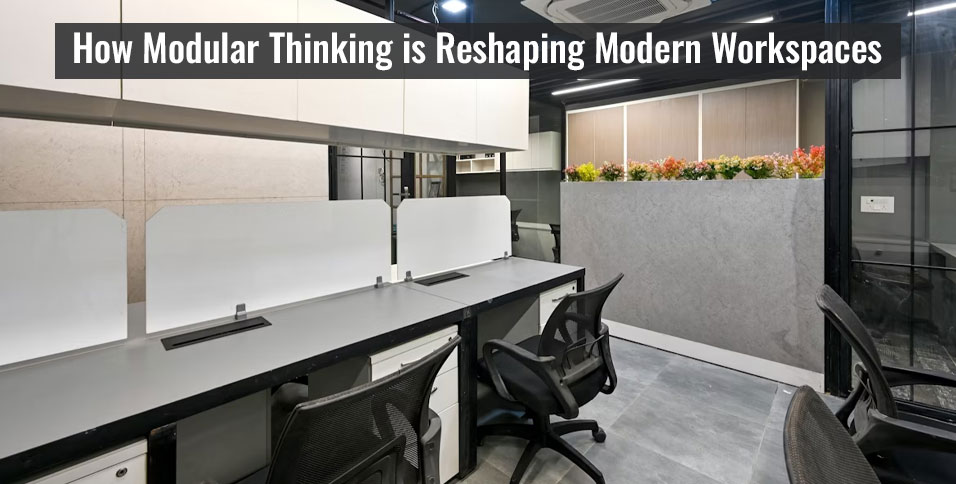
The concept of a workspace has transformed dramatically in recent decades. Where once the office was seen as a static physical environment defined by rigid partitions and permanent layouts, today’s professional world is moving toward adaptability, flexibility, and multifunctional design.
This shift is powered by modular thinking—an approach that embraces flexibility, scalability, and customization. Businesses across industries are now recognizing that modular workspaces allow employees to work more effectively, maximize available resources, and adapt quickly to evolving demands. Instead of being limited by traditional structures, companies are reimagining offices as living environments that can grow, shrink, and reshape themselves as needed.
By breaking away from fixed arrangements and embracing modularity, organizations can create workplaces that better serve their people and reflect the fluid nature of modern work.
Compact Offices and the Rise of Container-Based Designs
One of the most compelling examples of modular thinking can be seen in the rise of compact offices. With urban spaces becoming increasingly limited, many organizations have turned to smaller, highly efficient setups that maximize utility without compromising on functionality. These compact work environments often rely on modular furniture, foldable workstations, and adaptable layouts that can shift to meet the varying needs of the workforce.
Beyond simply shrinking floor plans, some companies are taking modularity to another level by reimagining what an office building itself can be. Shipping containers, for example, have gained immense popularity as the foundation for innovative office spaces. Durable, cost-effective, and versatile, these containers offer the perfect canvas for modular workspace design. They can be stacked, expanded, or restructured with relative ease, making them highly adaptable to changing requirements. It is no surprise that most enterpreneurs are looking to find shipping containers for sale to transform them into agile and dynamic office environments.
Beyond cost savings, container-based offices also deliver strength and resilience, as they are built to withstand extreme conditions. They can be easily transported from one site to another, making them ideal for businesses that require mobility. Their modular nature ensures they can grow with the company, stacking or linking together to expand as needed.
Flexibility as a Competitive Advantage
At the heart of modular thinking lies flexibility. Traditional office setups often lock organizations into long-term layouts that cannot be altered without costly renovations. Modular workspaces, however, thrive on adaptability. Partitions, desks, and meeting pods can be moved or reconfigured within hours, allowing companies to respond quickly to organizational shifts.
For businesses experiencing rapid growth, this flexibility can mean the difference between smooth scaling and disruptive relocation. A company can expand its workspace by simply adding more modular units rather than seeking an entirely new location. Conversely, businesses facing downsizing can reduce their spatial footprint without waste. This adaptability saves time and money while ensuring that the workspace continues to align with operational realities.
Collaboration and Creativity Through Design
Workplace design is more than just aesthetics—it directly influences how employees interact and collaborate. Modular workspaces are intentionally designed to foster engagement by making it easy to create zones for teamwork, brainstorming, and informal discussions. Moveable partitions and flexible meeting pods give teams the ability to carve out spaces as required, encouraging cross-departmental collaboration.
Such adaptability nurtures creativity by breaking down the barriers imposed by static layouts. Employees can experiment with their environment to suit the type of project they are working on, whether it requires quiet focus or high-energy teamwork. This autonomy in shaping the workspace promotes a sense of ownership, leading to more invested and innovative contributions from staff.
Cost-Efficiency and Sustainability
Another key advantage of modular workspaces is their cost efficiency. Traditional construction projects can be expensive, time-consuming, and wasteful. Modular solutions, on the other hand, minimize both financial and environmental costs. Prefabricated units, modular furniture, and container-based structures reduce material waste, speed up construction timelines, and often cost significantly less than conventional builds.
Sustainability plays a crucial role here. By reusing materials and designing spaces that can evolve over time rather than being demolished and rebuilt, companies contribute to a more environmentally responsible future. Modular designs inherently reduce waste, extend the lifespan of resources, and promote a circular approach to workspace development.
Additionally, the scalability of modular systems ensures that businesses only invest in what they need at a given moment, with the option to expand later.
Technology and Modular Integration
Technology has become inseparable from modern work, and modular workspaces are uniquely suited to integrate digital solutions seamlessly. Smart lighting systems, wireless charging stations, and modular cabling setups can all be incorporated without extensive rewiring or structural changes. This adaptability ensures that offices can keep pace with rapid technological advancements.
Moreover, modular layouts make it easier to install collaborative technologies such as video conferencing pods, interactive whiteboards, and soundproof booths. As hybrid work models become the norm, these integrated solutions ensure that both in-office and remote employees remain connected and productive.
The Human-Centered Dimension
While much of the conversation around modular workspaces focuses on efficiency and adaptability, the human dimension is equally important. Employees thrive in environments that acknowledge their diverse needs and working styles. Modular design provides this inclusivity by allowing spaces to be personalized and reconfigured as required.
For example, introverted employees may prefer quiet pods or secluded zones, while extroverted individuals may thrive in open collaborative spaces. Modular layouts ensure that both preferences can coexist within the same office. This inclusivity supports mental well-being, reduces stress, and promotes a healthier workplace culture.
The Future of Modular Workspaces
As industries continue to evolve at an unprecedented pace, the ability to adapt quickly will be a defining factor in organizational success. Modular thinking provides the blueprint for future-ready workplaces that can evolve alongside technological innovations, market demands, and workforce expectations.
Emerging trends point toward even greater integration of modularity with sustainability and digital transformation. From eco-friendly building materials to AI-driven workspace customization, modular offices will continue to set the standard for innovation in workplace design. This ongoing evolution underscores a broader shift in how society views the workspace—not as a fixed location, but as a dynamic environment that serves the needs of people and businesses alike.
The movement toward modular workspaces represents more than just an architectural or design choice—it is a reflection of a deeper cultural transformation. Work today is fluid, dynamic, and interconnected, and the spaces where it happens must reflect those qualities. By embracing modular thinking, businesses create environments that are adaptable, sustainable, and human-centered.
Also Read: Top 5 Interior Design Trends Transforming Modern Workspaces in 2025