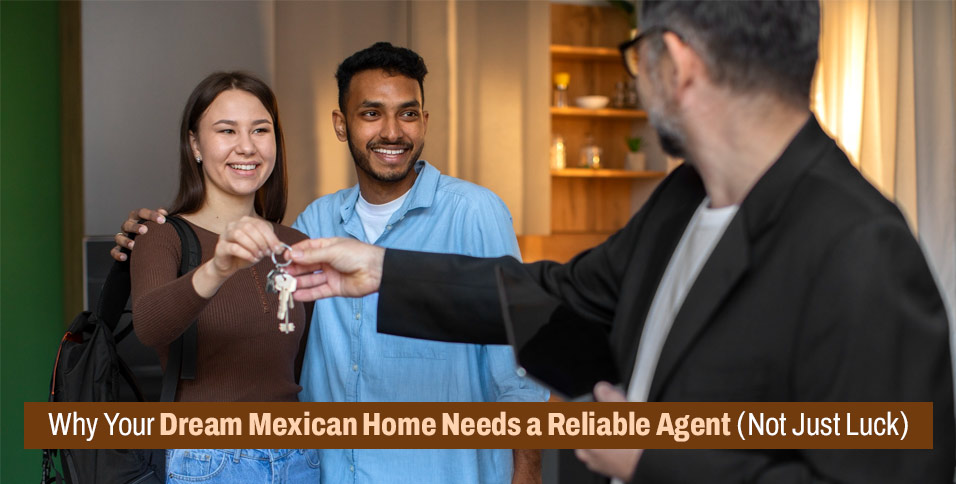
The dream of owning a slice of paradise in Mexico is seductive. You might picture yourself sipping mezcal on a terrace in San Miguel de Allende, or perhaps waking up to the sound of crashing waves in Tulum. The photos online look pristine, the prices seem too good to be true compared to the US or Canada, and the lifestyle promises a permanent vacation.
But between that dream and the reality of holding the keys lies a complex labyrinth of legalities, cultural nuances, and potential pitfalls. This isn’t just about finding a house; it’s about navigating a foreign market where the rules of the game are fundamentally different.
While many prospective buyers think they can navigate the process solo—relying on Google Translate and gut instinct—the truth is often far more complicated. Securing a reliable real estate agent in Mexico isn’t a luxury; it’s the most critical insurance policy you can buy for your investment. Here is why placing your trust in a professional is the difference between a nightmare and a new beginning.
The Myth of the “For Sale by Owner” Win
In many countries, “For Sale by Owner” (FSBO) is a viable strategy to save on commission fees. In Mexico, however, this route is fraught with danger for the uninitiated buyer.
The Mexican real estate market is largely unregulated compared to the US or Canada. There is no centralised Multiple Listing Service (MLS) that covers the entire country in the same comprehensive way you might be used to. While some regions have local MLS systems, data is often fragmented. This means that pricing history, property lien information, and clear title deeds aren’t always just a click away.
A reliable agent acts as a forensic investigator. They don’t just show you pretty tiles and ocean views; they dig into the “ejido” land status (communal land which has specific restrictions), check for outstanding utility bills that stay with the property rather than the owner, and verify that the seller actually has the legal right to sell. Without an agent, you are essentially walking through a minefield blindfolded.
Cultural Nuance and Negotiation
Business in Mexico moves at the speed of relationships. “Mañana” doesn’t always mean tomorrow; it means “not right now.” Confrontation is often avoided, meaning a “yes” might actually be a polite “no.”
For a foreigner used to direct, transactional business dealings, this can be maddening. You might think you have a deal, only to find the seller has ghosted you because of a perceived slight or a better offer from a cousin.
Reliable real estate agents in Mexico bridge this cultural gap. They understand the subtle dance of negotiation in this specific context. They know when to push, when to wait, and how to structure an offer that is culturally respectful yet legally binding. They are your translator, not just of language, but of intent.
Furthermore, a local agent knows the true market value. Because data isn’t always public, listing prices can be wildly inflated—sometimes known as “gringo pricing.” An experienced agent knows what the house down the street actually sold for last month, not just what it was listed for, saving you potentially tens of thousands of dollars.
The “Notario” Factor
One of the most confusing aspects for foreign buyers is the role of the Notario Público. Unlike a notary public in the US, who simply witnesses signatures, a Mexican Notario is a government-appointed lawyer with significant power. They are responsible for reviewing the deed, calculating taxes, and ensuring the transfer of title is recorded in the Public Registry.
However, the Notario is neutral. They work for the transaction, not for you. They will not necessarily advocate for your best interests or fight for a clause in the contract that protects your deposit.
This is where your real estate agent becomes indispensable. A reliable agent works in tandem with the Notario but stays firmly in your corner. They ensure the Notario receives the correct documentation on time. They double-check the tax calculations (capital gains taxes can be complex for sellers, affecting the deal). They essentially project-manage the legal side of the transaction to ensure the Notario can do their job without delays.
The Restricted Zone: A Legal Quagmire?
If you are buying property within 50kilometress of the coast or 100 kilometres of the border, you are in the “Restricted Zone.” The Mexican Constitution technically prohibits foreigners from direct ownership of land here.
Panic? No. There is a perfectly legal workaround called a fideicomiso (bank trust).
While the fideicomiso is safe and standard—offering you all the rights of ownership—setting it up requires precise coordination between the bank, the Foreign Affairs Ministry, and the Notario. One misstep in the paperwork can delay your closing by months.
Reliable real estate agents in Mexico deal with fideicomisos daily. They have contacts at the major banks (like Scotiabank, Banorte, or Intercam) who handle these trusts. They know which banks are currently processing trusts quickly and which are backed up. Attempting to set up a bank trust on your own, especially if you aren’t fluent in Spanish legal terminology, is a recipe for extreme frustration.
How to Spot the “Reliable” Ones
Since licensing requirements for real estate agents vary by state in Mexico (and are not mandatory in all states), anyone can print business cards and claim to be an agent. So, how do you separate the professionals from the opportunists?
1. Look for AMPI Membership
AMPI (Asociación Mexicana de Profesionales Inmobiliarios) is the national association of real estate professionals. While membership isn’t a government license, it is a strong indicator of professionalism. AMPI members agree to a code of ethics and usually have access to better training and networks.
2. Check for NAR Affiliation
Many top agents in tourist areas are also International REALTORS® through the National Association of Realtors (NAR) in the US. This indicates they adhere to a strict code of ethics and are used to working with international standards.
3. The “Boots on the Ground” Test
A reliable agent lives in the community. They don’t just fly in for the high season. Ask them about the local schools, the water pressure in the dry season, or the reputation of the neighbourhood watch. If they can’t answer the granular questions about daily life, they may not know the inventory well enough to protect you.
4. References are Non-Negotiable
Don’t just read the curated testimonials on their website. Ask to speak to a client who bought a home through them in the last six months. Ask that client: “What went wrong, and how did the agent fix it?” Every real estate deal has hiccups; a great agent is defined by how they solve problems, not by how easy the easy deals were.
Beyond the Sale: The Post-Closing Reality
The value of a reliable agent often shines brightest after you get the keys.
You need to switch the electricity bill into your name (a bureaucratic odyssey in itself). You need to pay your annual property taxes (predial). You might need a plumber, an architect, or a property manager if you plan to rent the place out.
A fly-by-night agent disappears once the commission check clears. A reliable agent becomes your first point of contact in your new community. They share their rolodex of trusted service providers. They help you integrate. They understand that their reputation depends on your long-term satisfaction, not just the sale.
A Safe Harbour for Your Investment
Reliable real estate agents in Mexico reduce risk, protect your investment, and bring clarity to a market that rewards diligence. Buying property here can be an exciting adventure with exceptional value and lifestyle benefits, but navigating limited regulation successfully depends on experienced guidance you can trust.
By aligning yourself with reliable real estate agents in Mexico, you are purchasing peace of mind. You are buying the freedom to enjoy the process, rather than stressing over the paperwork. You are ensuring that your piece of paradise remains exactly that—a sanctuary, not a source of legal stress.
Do your homework. Interview multiple agents. Trust your gut, but verify their credentials. Your dream home is waiting, and with the right guide, the path to its front door is clear.