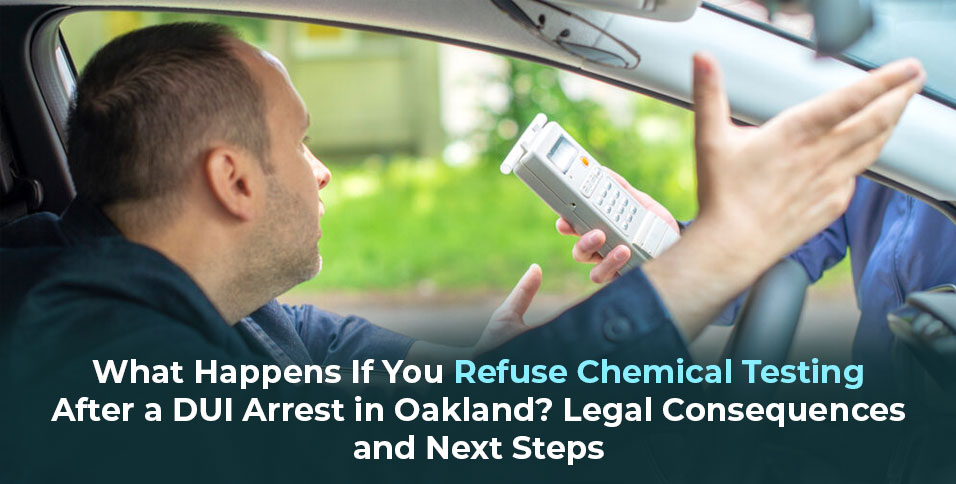
Refusing chemical testing after a DUI arrest in Oakland can lead to immediate and serious consequences, even before a court hearing. Drivers who refuse a breath, blood, or urine test may face a one-year license suspension and steeper penalties than those who agree to testing. These penalties can apply even if the person is never convicted of DUI in court.
An arrest for DUI already creates stress and uncertainty, but making decisions during the process can have lasting effects. Since local laws can be strict, it is important for individuals to understand their rights and what could happen next. Seeking advice from an experienced Oakland DUI lawyer could offer guidance on how to proceed and may help reduce the risks involved with chemical test refusal.
Legal Consequences of Refusing Chemical Testing After a DUI Arrest in Oakland
Refusing a chemical test after a DUI arrest in Oakland usually leads to strict penalties. These penalties can affect driving privileges, future court cases, and may bring added jail time.
Immediate License Suspension
When a driver refuses chemical testing, the Department of Motor Vehicles (DMV) can suspend their license right away. For a first refusal, the suspension period is usually one year.
This action happens even if the DUI charge does not lead to a conviction in court. The loss of driving privileges can make it hard for a person to get to work, school, or manage family needs. There is no option for a restricted license or hardship license during the suspension related to refusal.
Police officers are required by law to explain these consequences at the time of refusal. If the person still refuses to test, the suspension begins soon after arrest. There is a process to contest the suspension, but the outcome often favors the DMV unless specific mistakes were made by the arresting officer or during the process.
Impacts on Future DUI Cases
A refusal to take a chemical test can make future DUI cases more difficult. Courts may consider past refusals as proof that a person knew they would likely fail the test.
If a driver faces another DUI charge later, the court can use the prior refusal to seek harsher penalties. This can lead to longer license suspensions, more jail time, and steeper fines. In court, the driver’s refusal may be used to argue that he or she was trying to hide evidence of being under the influence.
A past refusal may also prevent the driver from receiving probation or may lead to requirements like mandatory education programs or installation of an ignition interlock device.
Criminal Penalties for Refusal
Refusing chemical testing after arrest carries extra criminal penalties under the law. For a first offense, a mandatory jail sentence of at least two days is common. This is on top of any punishment from the DUI itself.
Other penalties can include higher fines, longer probation, or mandatory DUI classes. The exact outcome often depends on the details of the case, such as previous refusals or DUI convictions. Some drivers may face even longer jail time if they have prior offenses.
A refusal also limits options for a plea deal, since prosecutors may use the refusal to argue that the driver is uncooperative or likely to drive under the influence again.
Procedures and Rights Related to Chemical Testing Refusal
Refusing chemical testing after a DUI arrest in Oakland can have quick and long-lasting results for a driver’s license and possible court penalties. The rules come from state law, and police have set steps they must follow.
Implied Consent Laws in California
When someone drives in California, they give implied consent to chemical testing if arrested for DUI. This means law enforcement can ask a driver to take a breath or blood test after a lawful arrest.
Refusing the test is a direct violation of these laws. A first refusal could lead to at least a one-year license suspension, even if the person isn’t convicted of DUI. Repeat refusals or DUI convictions can lead to longer suspensions or other penalties.
Drivers on DUI probation face even stricter rules. A refusal for them can bring more penalties. Officers are required to clearly explain the consequences, so the driver is aware of what could happen before making a decision.
Police Protocols Upon Refusal
When a driver refuses a chemical test, police must follow set protocols. First, the officer will inform the driver of the legal requirement to submit to testing and detail the penalties for refusal.
The information is given both verbally and often in writing. Officers will usually ask a second time to give the driver a chance to reconsider. If the driver still refuses, this is officially recorded in the police report.
After refusal, the officer may still arrest the driver or book them into jail. Automatic steps are usually started, such as taking the driver’s license and issuing a temporary one, which only lasts for a short period until a further decision is made.
Administrative Hearing Process
A driver who refuses chemical testing does not lose their license without a chance to fight the action. After the arrest, the Department of Motor Vehicles (DMV) will start an automatic process against the driver’s license.
The driver has the right to ask for a DMV administrative hearing, usually within 10 days. At this hearing, the driver can present their case. The issues covered include whether the stop was legal, if the refusal was clear, and if the driver was properly advised of the consequences.
If the hearing finds in favor of the officer’s actions, the license suspension will go forward. If the hearing goes in favor of the driver, license penalties may be dropped or changed. The process only affects driving privileges and is separate from any criminal court case.
Conclusion
Refusing chemical testing after a DUI arrest in Oakland can lead to strong consequences. These may include a suspension of driving privileges for up to one year, or even longer if there are prior offenses.
The law treats a refusal separately from the DUI charge itself. Drivers should be aware that penalties for refusing the test are automatic and can affect their daily lives.
Prompt action and understanding the process can help individuals better manage the situation and protect their rights.
Also Read: What Are the Legal Consequences of a DUI in St. Petersburg?