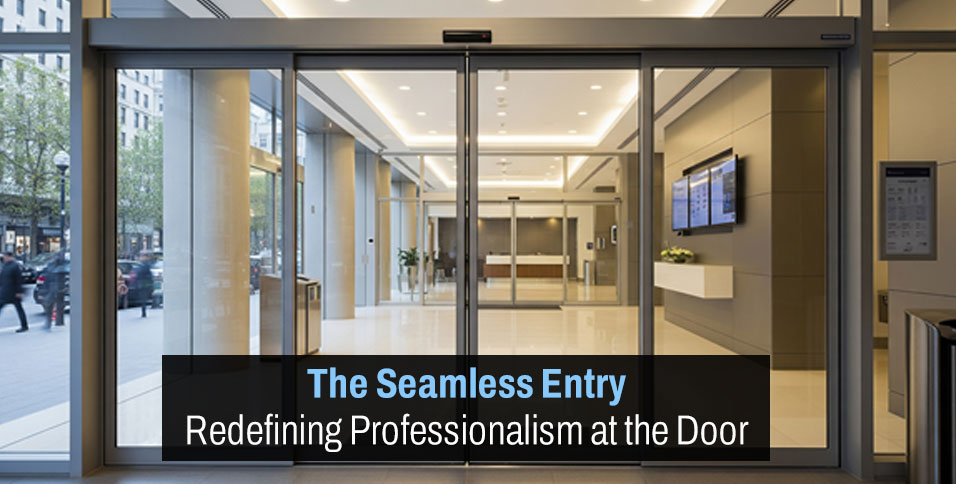
A commercial building’s entrance is its handshake with the world. For decades, this introduction was often heavy, manual, and frankly, forgettable. Today, that dynamic has fundamentally shifted. The contemporary doorway is no longer a passive piece of architecture but an active, intelligent system. It balances two seemingly opposing roles with remarkable grace: presenting an open, professional welcome while simultaneously establishing a firm, controlled boundary. This evolution in design and technology transforms a simple entry point into a powerful statement about the organization within.
The First Impression of Efficiency
Imagine a visitor approaching your building. Instead of fumbling with a heavy handle, they are met with a seamless, silent glide. This is the immediate impact of modern automatic door systems. Their operation conveys a sense of forward-thinking efficiency and consideration. The effortless passage speaks volumes about a company’s values, suggesting an environment that prioritizes smooth, hassle-free experiences for both clients and employees. It’s a non-verbal cue that says the organization pays attention to detail.
A Silent Statement of Professionalism
Materials and design language contribute significantly to perceived credibility. Sleek, anodized aluminum frames, expansive panels of laminated glass, and minimalist hardware create a facade of order and competence. These elements work in concert to build an image of a sophisticated, well-managed enterprise. A clean, well-integrated entrance suggests that the same level of care and precision is applied to the company’s core services, building instant trust before a single word is exchanged.
The Unseen Engine: Integrated Access Control
Behind the polished glass and metal lies a network of smart technology. Modern entrances are rarely just doors; they are the physical manifestation of a digital security protocol. They integrate seamlessly with card readers, biometric scanners, and keypad systems. This integration allows for precise management of who gains entry and when, all without sacrificing the clean, uncluttered aesthetic. The system works quietly in the background, ensuring security doesn’t come at the cost of a welcoming atmosphere.
Promoting Universal Accessibility
An often-overlooked benefit is the inherent inclusivity of these designs. Automatic operators eliminate physical barriers for individuals using wheelchairs or walkers, for parents with strollers, and for anyone carrying heavy items. By ensuring everyone can enter with the same effortless dignity, a company broadcasts its commitment to universal design principles and social responsibility. This isn’t just about compliance; it’s about genuinely welcoming your entire community.
Contributing to Environmental Performance
Today’s entrance systems play a crucial role in a building’s energy management. Advanced models feature improved thermal breaks and superior sealing to minimize drafts. Their swift, automated operation reduces the time the doorway remains open, limiting the exchange of conditioned indoor air with the outside environment. This directly translates to lower heating and cooling costs and a reduced carbon footprint, aligning a company’s physical space with modern sustainability goals.
Enhancing Traffic Flow and Safety
During peak hours, a well-designed entrance becomes a critical tool for managing the movement of people. Automated sliding or revolving doors can process a high volume of foot traffic smoothly, preventing bottlenecks and congestion in the lobby. Furthermore, sophisticated sensors prevent doors from closing on a person, enhancing safety for all users. This results in a more organized, calmer, and safer environment from the moment one steps inside.
Ultimately, the modern commercial entrance is a multi-faceted investment. It functions simultaneously as a brand statement, a security checkpoint, an accessibility feature, and an energy-saving device. It tells a story about the company it represents—one that is efficient, professional, secure, and considerate. By moving beyond the conventional door, businesses can craft an initial experience that resonates with quality and intelligence, setting the tone for every interaction that follows within its walls.