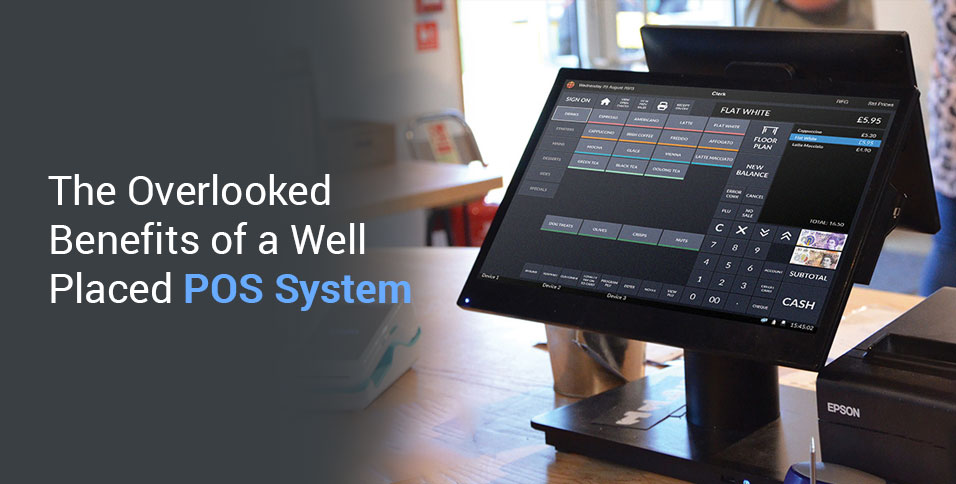
Feelings of efficiency in the busy restaurant atmosphere may be limited to the placement and utilization of tools. Managers often invest in new technology or they train their staff but when it comes to making a change, one of the most basic changes is often overlooked, and that is placing the point-of-sale system. A restaurant POS system is not only a tool to process payment. It is a focal point that determines the speed of order taking, the efficiency of order communication and the ease with which the front of house to the back operations takes place. The neglected advantages of a properly positioned POS system are manifested in both the satisfaction of the customers and employee work performance.
Improved Order Flow
By locating a POS system in an appropriate place, servers can make orders without unreasonable backtracking. It saves wasted movement, eliminates congestion where there is none, and it also enables the staff to be able to be attentive to the guests rather than spending most of their time maneuvering around one another. What has been achieved is the more natural order flow that facilitates quicker service and less stressful ambience.
It is also critical that placement and accuracy are directly related. Quickly-accessible servers to the POS will have fewer delays in entering the orders, and the likelihood of forgetting about changes or details is reduced. Such efficiency guarantees the kitchen accurate real-time information and this directly translates to the consistency of food preparation and minimization of expensive errors.
Improved Inter-team Communication
The location of a POS system may also define the quality of communication between front-of-house and back-of-house staff. When paired with a kitchen display system the data typed at the POS immediately appears on the screen of kitchen employees. The location of a POS guarantees that servers do not need to gather around a single terminal, minimizing the number of bottlenecks and giving cooks accurate and timely feedback.
There is also enhanced communication to managers who observe the operations during the day. Having easy access to POS stations, they will be able to monitor the sales activity, track the preferences of guests and intervene in cases of possible issues before they arise. This openness increases collaboration and a more cooperative environment.
Heightened Employee Performance
Servers, who do not have to walk long distances to reach a far POS station, can spend more energy on communication with guests. It not only improves the dining experience, but also leads to increased sales, as staff paying close attention is in a better place to recommend and upsell products. Strategic placement will in effect increase the efficacy of every employee without increasing the labor expenditure.
Moreover, employees feel better when the equipment operated by them is convenient and dependable. Frustration is witnessed when the employees have to wait in line to utilize a POS positioned in a wrong place, and morale is enhanced when the stations are strategically placed considering the workflow. When a team is happier, it becomes a more efficient team which results in a positive cycle of productivity.
Long Term Operational Benefits
It is not only the daily convenience when it comes to the placement of a POS system; it also contributes to the long-term objectives of the operations. With time, increased efficiency lowers the labor expenses, minimizes food waste and expansion of seating area. These enhancements have a direct impact on profitability in aspects that are mostly ignored with the technology being seen as a form of payment.
Moreover, wise positioning will position a restaurant to grow in future. With mobile ordering or advanced reporting as new tools, the restaurant POS system will be the main point where all the information will be located. Making sure that it is strategically positioned today provides a basis of scalable and flexible operations in the future.
Stronger Customer Experience
To the guest the POS system will be very well placed which is translated to smooth service. Ordering is fast, cheques are given promptly and payment is made effectively. The following are minor improvements but they have a lasting effect on the customers who appreciate speed and professionalism in their food service.
The efficiency spill over can also reduce waiting time of new arrivals. Tables that rotate at a quicker pace and no one seems to be in a hurry, the entire dining room will become more energetic and friendly. Such a combination of speed and comfort promotes the image of the restaurant and makes people come back to do business with the restaurant again.