Choosing the right water heater for your property can be quite challenging. Because, nowadays, there are more options to choose among. While for a long time, people have relied solely on either electric resistance or those gas-fired water heaters, there is an option to day that has been grabbing a lot of attention and that people are switching to increasingly. In short, I am referring to the heat pump water heater (HPWH), and you can learn some more about how it works from this useful source.
But, the advancements in this area haven’t stopped there. To put it simply, there is now an even newer category that is gaining quite a lot of attention. I am talking about the plug in heat pump water heater, a device that promises pretty much the same efficiency as the traditional HPWH, but also a much simpler installation process. You may have come across this device already, or someone may have recommended it, and there is no doubt that it started sounding interesting.
Yet, you don’t want to make your decision on whether to get this appliance or not just because it sounds interesting. Instead, you want to gain some more knowledge about it before making any final choices. Meaning, thus, that you have some important questions on your mind.
For one thing, you want to know what a plug in heat pump water heater is. And then, you want to get a better understanding of whether you should actually get it and why, so that you can make your final decision. Ultimately, if you decide to go for it, you will want to understand how to get the right one for you. So, let us now answer all of those questions for you.
So, What Is a Plug in Heat Pump Water Heater?
Unsurprisingly, we are going to begin with the most basic question here. What exactly are plug in heat pump water heaters to begin with? This is a question that you need to get an answer to before moving forward, because there is absolutely no doubt that you want to get a clearer picture on how it all works before you actually decide if you want to get one of these devices or not. So, let us cut to the chase.
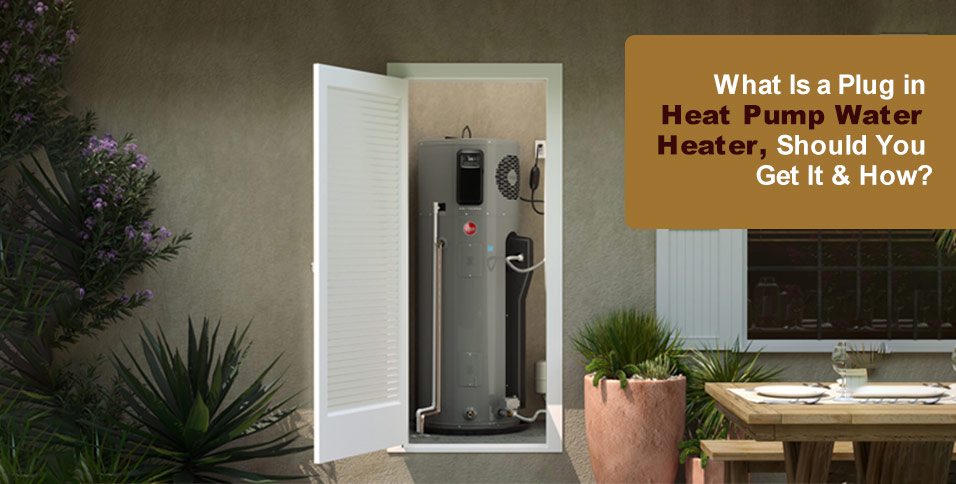
Put simply, a plug in HPWH is pretty much a heat pump system that is integrated into a standard water heater tank and designed so as to plug into your regular 120-vol outlet. That is basically the same outlet that is used for most of your household appliances, so I suppose you can already understand how convenient that is, because there is no need for you to do any additional electrical work. And, through reducing the installation complexity, this device also reduces the installation costs, which is undeniably a huge plus.
Should You Get It?
Okay, you now get what this device is, but the question of whether you should get it or not still remains. And, well, this is a decision that only you can make for yourself, but what we can do here is talk a bit about the actual advantages that come with having this appliance installed, and thus possibly help you make up your mind. The good thing here is that there definitely are some quite important advantages to consider.
First things first, there is the fact that installation is extremely easy. There is no expensive rewiring to do, and no panel upgrades to worry about. This, as I have mentioned above, means not only easier and quicker installation, but also lower labor costs, which is a huge advantage.
Read more on these devices here: https://www.canarymedia.com/articles/heat-pumps/finally-a-heat-pump-water-heater-that-plugs-into-a-standard-outlet
Furthermore, these are also known to be highly energy efficient, which is another great advantage to keep in mind, as it can also lead to saving quite some money in the long run. Not to mention that you can often buy them using certain rebates and financial incentives, and thus get a lower initial price as well. And, of course, there are rather durable, and because they plug into the standard outlets, the placement is flexible, meaning you can install it anywhere you want.
How to Get the Right One for You?
Having understood some of the benefits of getting a plug in HPWH, the next thing you want to do is figure out how to get the right one for your property. And, well, the first thing to do is consider your particular space, take the correct measurements, and keep the air volume in mind, so that you can choose the right device size, and decide on the right placement. Then, focus on finding the right suppliers, those that will offer high quality products at fair prices, as well as warranties and guarantees, and don’t forget to check noise levels as well, if this is something that’s important to you.