Every online payment comes with a cost, and knowing exactly how payment gateway charges work can make all the difference for a business. These fees affect more than just the checkout process. They influence pricing, profit margins and overall financial health.
By understanding these charges, companies can avoid unexpected expenses and plan smarter strategies that keep customers happy and the business thriving. Let’s get to know how mastering payment gateway charges helps in building a seamless, cost-effective online operation that drives growth without compromising on customer experience.
What are payment gateway charges?
Payment gateway charges refer to the fees imposed by service providers for processing online payments. These costs generally involve either a percentage of the transaction amount, a fixed charge per transaction or a combination of both. Additional costs might arise depending on factors such as payment methods, currency conversion or settlement periods.
Without this clarity, organisations risk mispricing their products, eroding profit margins or passing excessive fees onto customers, which can damage brand loyalty.
The impact of payment gateway charges on pricing strategy
Pricing strategy is inherently tied to cost management. When payment gateway charges are overlooked or underestimated, the resulting financial leakage can undermine a company’s pricing model. These fees, although often perceived as small, accumulate significantly over thousands of transactions.
Moreover, businesses that fail to account for varying charges across payment methods might unintentionally subsidise certain transactions. For example, payments via credit cards often incur higher fees than those made through net banking or wallets. Without a detailed understanding, businesses may lose valuable margin.
Types of payment gateway charges to consider
Decision-makers must recognise that payment gateway charges are not uniform. They vary based on multiple parameters:
- Transaction fees: Usually a fixed amount plus a percentage of the transaction value.
- Monthly or annual fees: Some gateways charge a subscription fee for access.
- Setup fees: One-time fees to integrate the payment gateway.
- Refund charges: Costs associated with processing refunds.
- Currency conversion fees: Charges when transactions involve foreign currency.
- Chargeback fees: Fees incurred when customers dispute transactions.
By dissecting these charges, businesses can better predict total costs and make informed pricing decisions.
How understanding charges supports competitive pricing
Pricing too high risks losing customers; pricing too low threatens profit margins. The subtle balance hinges on fully accounting for all operational costs, including payment gateway charges. Understanding these charges enables companies to:
- Calculate accurate net revenue per sale.
- Set prices that cover costs and generate expected profits.
- Avoid sudden profit dips due to unexpected fees.
- Identify cheaper payment options and incentivise their use.
- Optimise payment processes through strategic partnerships with providers.
Such insight is especially important in competitive markets like India, where consumers are price-sensitive and payment preferences are diverse. Companies that manage payment gateway charges effectively can leverage this advantage to refine pricing and improve margins.
Integrating payment gateway charges into financial forecasts
Accurate financial forecasting depends on including all cost components. Payment gateway charges must be integrated into revenue projections, Cost of Goods Sold (COGS) and overall financial models. Ignoring these can distort forecasts and mislead strategic planning.
Finance teams benefit from detailed breakdowns of gateway charges, allowing them to run scenarios based on sales volumes, payment methods and promotional activities. This data informs pricing adjustments and cash flow management.
Furthermore, an agile approach to monitoring and adapting pricing in response to changes in payment gateway fees ensures sustained profitability. As payment providers revise their fee structures, staying informed is key to quick response and business continuity.
Simplifying payment gateway management with advanced solutions
For many businesses, managing payment gateway charges manually is complex and prone to error. Advanced payment platforms offer automated tools that simplify charge tracking and reconciliation.
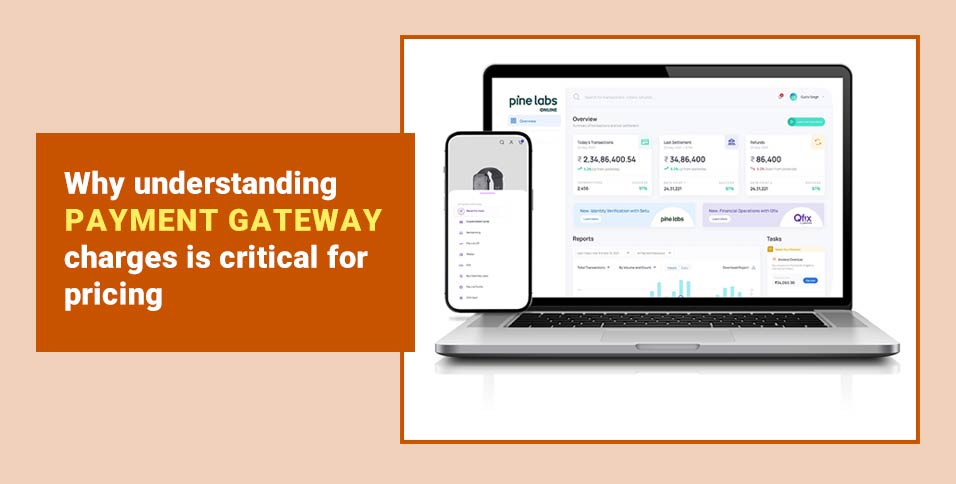
These gateways provide transparent dashboards with real-time data on transaction fees, allowing teams to monitor charges and evaluate their impact on pricing continuously. Additionally, APIs enable seamless integration with existing billing and accounting systems, reducing manual effort and enhancing accuracy.
Such features support strategic decision-making by offering a clear picture of costs, enabling pricing teams to optimise offers based on up-to-date financial insights.
Why does ease of integration matter?
Seamless API integration is a key factor when selecting a payment gateway provider. It reduces implementation time and technical complexity, allowing faster go-to-market cycles.
Providers offering APIs with extensive documentation allow engineering teams to tailor payment processes to business needs. This flexibility supports customised pricing models, such as dynamic pricing or region-specific offers.
Moreover, ease of integration reduces overhead costs, indirectly affecting pricing by lowering operational expenses. A reliable and straightforward API means less downtime and smoother transactions, which translates into a better customer experience and fewer lost sales.
The role of the success rate in payment processing
Another critical metric is the payment gateway’s success rate, which means the proportion of transactions completed without errors or declines. A higher success rate means more confirmed sales and fewer lost revenues due to failed payments.
Knowing the connection between success rate and payment gateway charges helps businesses optimise both revenue and cost efficiency. If superior success rates justify a gateway’s fees, the effective cost per successful transaction may be lower despite higher nominal charges.
This insight guides pricing teams to make smarter choices when balancing fees against transaction reliability, ultimately supporting sustainable growth.
Set effective pricing and protect their profits
Understanding payment gateway charges is essential for businesses aiming to set effective pricing and protect their profits. These fees impact the revenue from every transaction and should be carefully considered from the start. Business leaders need to focus on the types of charges, transaction success rates and how smoothly payment systems integrate with their platforms.
Partnering with reliable providers like Pine Labs Online can give companies a competitive advantage through transparency, efficiency and better cost control.
Also Read: Complete Analysis of Types and Methods for Micropayment Cashing