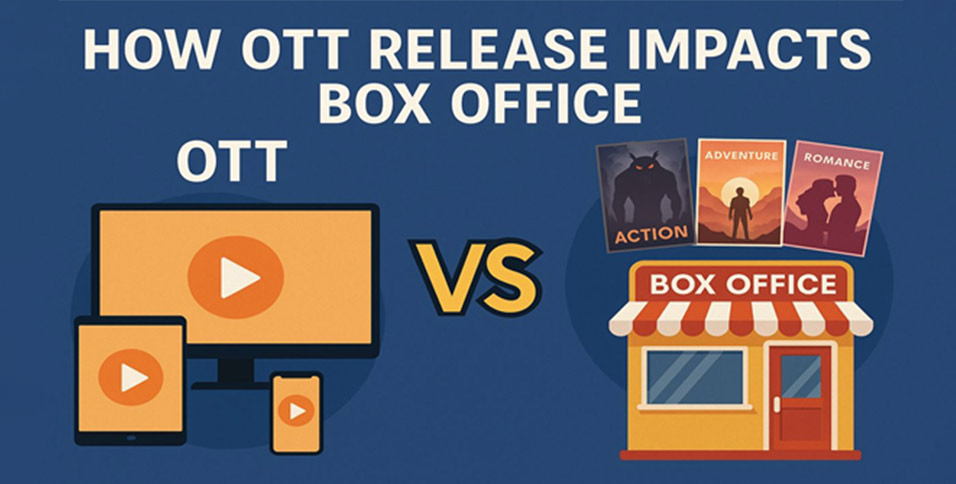
The way people watch movies has changed a lot in the last few years. Earlier, people used to wait for a movie to release in theatres. They would buy tickets, enjoy the big screen, and watch the film with family and friends. But now, things are very different. Many people prefer to watch movies from home. This change has happened because of OTT platforms like Netflix, Amazon Prime Video, Disney+ Hotstar, and others.
OTT stands for “Over The Top,” which means content is delivered directly through the internet. You don’t need to go outside or buy a ticket. With just a mobile phone, smart TV, or laptop, anyone can watch a movie or web series anytime. This new method has changed how films perform in theatres. In simple words, OTT releases have started to impact the box office.
According to SSR Movies, a movie review and box office info site, early digital releases can reduce a film’s box office collection by almost 40–50%. Many people now wait for the OTT release instead of going to theatres. This change in behavior is slowly making it hard for small and mid-level movies to do well in cinemas. Only big-banner films or superstar-led movies manage to draw large crowds to theatres now.
1. Why Audience Behavior Is Changing
One of the biggest reasons for this shift is comfort. People now want entertainment in their hands. They don’t want to spend money on travel, snacks, or high-ticket prices. OTT gives them the freedom to watch anytime and anywhere. This convenience is changing habits. Today, unless the movie is very big or has exciting buzz, viewers prefer to wait for it to appear on OTT.
Also, during COVID-19 lockdowns, people got used to watching new releases at home. That habit is still continuing, especially among working people, students, and families.
2. Direct-to-OTT Releases
Earlier, movies were released in theatres first and came to OTT after 2 or 3 months. But now, many films are coming directly to OTT. This trend started during the pandemic but is still going on. It is mostly used for small-budget or experimental films. Producers sell the movie rights to OTT platforms and make a fixed profit.
Though this is safe for the makers, the film misses out on theatre earnings and the buzz of a box office release. It also affects the business of cinema halls and multiplexes.
3. Shorter Gap Between Theatrical and OTT Release
Even if a movie is released in theatres, it often comes on OTT within 3–4 weeks. This short gap affects theatre ticket sales. Many people think, “Why should I spend on a ticket when I can watch it at home in just a few days?”
This mindset is hurting the overall Box Office Collection. Theatres need more time between release and OTT to attract audiences. If the time gap becomes longer, more people might choose to watch in cinemas first.
4. Big Stars vs Small Films
OTT platforms have created a divide between big-budget films and small films. Big movies with famous stars still pull in crowds. But smaller movies struggle unless they get good reviews or word-of-mouth promotion. Even then, people prefer to wait for the OTT release.
This situation is making it hard for new actors and directors to grow. OTT gives them space, but they miss the fame and reach that only a box office hit can bring.
5. Piracy and Leaks
One big problem with OTT is piracy. As soon as a film is released online, pirated versions appear on the internet. These are often high-quality and spread fast on illegal websites and Telegram groups. This leads to heavy losses, especially for films that are released only on OTT.
In contrast, theatre films were harder to copy. Camera recordings from theatres were of low quality, and fewer people downloaded them. Now with OTT, HD prints are leaked within minutes, affecting both viewership and revenue.
6. What Theatres Are Doing to Compete
Cinema owners are trying different ways to bring back audiences. Some are offering discounts on tickets, some are creating luxury viewing experiences, and others are hosting special events. They are also asking movie producers to delay OTT releases so people have more reason to visit theatres.
However, with rising costs and fewer footfalls, many single-screen theatres have already shut down. Only big multiplex chains are surviving, and even they are depending on blockbuster movies to keep running.
7. OTT Has Some Benefits Too
While OTT affects box office performance, it also has some good points:
- Wider reach: People in small towns or other countries can easily watch regional or indie films.
- New talent: Many new actors, directors, and writers get a chance through OTT.
- Safe returns: Producers can earn fixed income by selling digital rights, especially when theatre success is uncertain.
- Diverse content: OTT allows different types of stories that may not work in theatres.
So, OTT is not all bad. It just works in a different way compared to theatres.
8. The Future: OTT and Theatres Together
Experts believe that both OTT and theatres can survive together. But the system needs some balance. Big movies should first go to theatres and then come on OTT after 6–8 weeks. This will help theatres earn more and keep the box office alive.
At the same time, small and unique films can continue using the OTT route. They can still become popular and make money without box office pressure. Viewers will also get more choices and enjoy content in both formats.
Conclusion:
OTT platforms have completely changed how people watch movies today. From comfort and cost savings to content variety, OTT is clearly here to stay. But this rise has come with a cost—the drop in theatre audiences and a big hit to box office collection numbers.
With smart planning and longer gaps between theatrical and OTT release, both platforms can support each other. Theatres offer the experience, and OTT offers the convenience. When used together, they can keep the film industry strong.At SSR Movies, we continue to follow how this trend changes the movie world and provide honest reviews and updates. Whether a film hits the theatre or your phone screen, we’ll keep sharing the latest on what’s worth watching.
Also Read: The Hottest Streetwear of 2025 CDG and Stussy No Debate