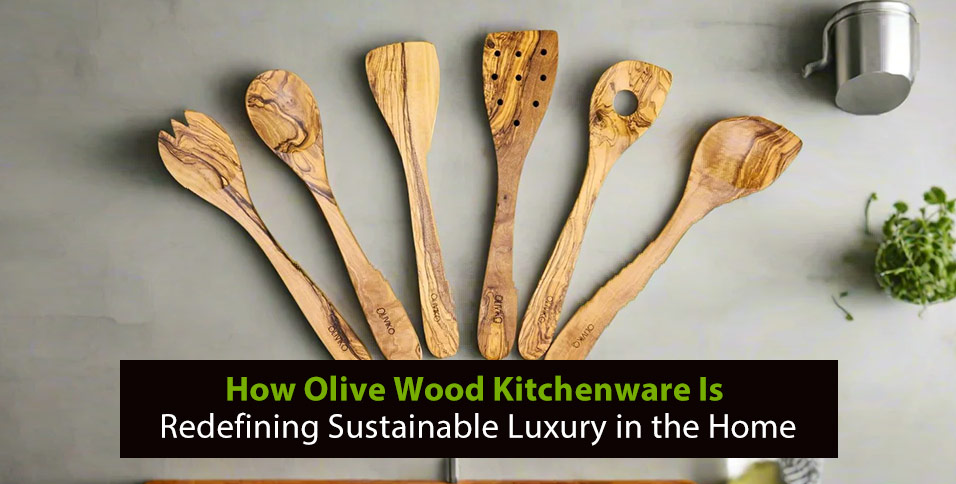
Olive wood — with its honey-gold tones, dramatic grain patterns, and dense, durable feel — has quietly become a go-to material for kitchenware that wants to look luxe and do better for the planet. Far from being just another “rustic” accent, olive wood kitchen items — cutting boards, spoons, bowls, serving boards, and utensils — are reshaping ideas of what luxury means: slow-made, ethically sourced, built to last, and beautiful enough to be displayed rather than hidden away. This article explores why olive wood fits so naturally into the sustainable-luxury movement, how it performs in the kitchen, what to watch for when buying, and why it’s more than a trend.
A material with story and character
Olive trees are cultural icons across the Mediterranean. They live for decades — often centuries — and their wood carries visible histories: knots, swirls, and grain lines that read like rings of memory. That visible character is a core part of olive wood’s appeal. Each piece is unique; two spoons cut from the same branch will never look the same. In a market saturated with mass-produced, identical goods, that individuality reads as authenticity and craftsmanship — both central values of contemporary luxury.
Unlike tropical hardwoods that are logged and shipped across the globe, olive trees are most commonly harvested in regions where olives are grown for food. Often, trees that are no longer productive for fruit — or branches pruned during orchard maintenance — become the raw material for kitchenware. This connection to place, produce, and human scale is what gives olive wood kitchenware a narrative that luxury consumers crave: it is traceable, tactile, and tied to human labor and local tradition.
Durability and performance in the kitchen
Olive wood is a hard, dense wood with natural oils that make it both durable and relatively water-resistant. That explains why it’s been used for kitchen tools for generations. Key performance features include:
- Hardness and resilience: Olive wood withstands daily use better than many softwoods. Cutting boards and handled utensils resist dents and deep scratches.
- Natural oils: These oils provide some moisture resistance and help the wood age gracefully. They also mean olive wood doesn’t dry out as quickly as untreated softwoods — but it still benefits from regular oiling.
- Closed grain: A tighter grain limits deep food particle lodging, making surfaces easier to keep clean compared with very porous woods.
It’s important to be realistic: olive wood is not indestructible. It can warp if left in standing water or exposed to rapid temperature changes. But with correct care — handwashing, occasional oiling, and air-drying — olive wood kitchenware often outlives plastic or low-grade laminates and looks better as it develops a patina.
Sustainability: not just a buzzword
Sustainability is core to olive wood’s story — when handled right. Several features make it environmentally attractive:
- Use of agricultural byproduct: Many olive wood products come from pruned branches or trees past their fruit-bearing life, which turns a waste product into a high-value item rather than letting it be burned or decomposed.
- Local craftsmanship: Because olive trees are regionally concentrated, production often happens close to source, reducing transport emissions common with globally sourced tropical hardwoods.
- Longevity over disposability: Durable products that replace single-use items (plastic spoons, cheap boards) deliver a smaller lifetime environmental footprint.
- Biodegradability: At end-of-life, untreated olive wood is biodegradable and will not contribute to microplastic pollution.
That said, sustainability is conditional. Buyers should check that pieces aren’t sourced from newly cut, valuable old-growth trees or from operations that harm local ecosystems. Certifications aren’t always available for small artisanal workshops, so reputation, transparency, and direct sourcing info matter.
Craftsmanship and community impact
Olive wood kitchenware is frequently produced by small-scale artisans and family-run workshops. The craftsmanship involved — turning a block of wood into a balanced spoon or flattening and oiling a cutting board — creates jobs and preserves woodworking skills that are part of cultural heritage. For many consumers, this link to human labor and tradition is itself a luxury: owning something that was carefully made, not churned out.
Supporting artisan producers also often means supporting local economies in olive-growing regions. Smart purchasing can funnel money back into communities, encouraging sustainable orchard management and ethical labor practices rather than industrial exploitation.
Design: where form meets function
Olive wood sits at an attractive intersection of aesthetics and utility. Its marble-like grain can be bold enough to be a focal point in modern kitchens yet warm and organic enough to complement traditional, farmhouse, or Mediterranean styles. Designers and brands are leveraging olive wood in several ways:
- Statement serving boards that double as art pieces for display.
- Minimalist utensils with ergonomic shaping that favor the wood’s grain and color.
- Mixed-material pieces, pairing olive wood handles with stainless steel for tools that feel refined but practical.
- Sculptural bowls and platters that elevate simple food presentations into culinary theater.
Because the material looks “finished” without heavy staining or paint, designers often adopt restrained designs that let the wood’s natural beauty shine — a hallmark of modern luxury.
Care, longevity, and myths
To keep olive wood kitchenware performing and looking its best, follow a few simple rules:
- Handwash only: avoid dishwashers (heat + harsh detergents = warp and cracking).
- Dry immediately: air-dry upright to let both sides breathe.
- Oil regularly: use food-safe oils (e.g., mineral oil, walnut oil if no nut allergies) to replenish natural oils and prevent drying.
- Avoid soaking: long exposure to water is the main cause of damage.
One common myth is that wood is “less sanitary” than non-porous surfaces. In reality, properly maintained wooden cutting boards can be safe; the closed grain and natural oils help. Still, for raw meat and poultry chopping, many chefs prefer designated boards (wood or plastic) to avoid cross-contamination — the key is washing and surface care.
Comparing olive wood to other kitchen materials
- Olive wood vs. plastic: Olive wood is renewable, biodegradable, and visually richer. Plastic may be cheaper and dishwasher-safe, but it introduces single-use mentality and microplastics concerns.
- Olive wood vs. bamboo: Bamboo is fast-growing and sustainable but is technically a grass and can be processed with adhesives. Olive wood is denser and often considered more “luxury” due to its aesthetics.
- Olive wood vs. maple/beech: These traditional hardwoods are excellent for boards; olive wood offers bolder grain and higher oil content, making it more visually distinct and somewhat more water-resistant.
Ethical buying: what to look for
If you want olive wood kitchenware that’s truly aligned with sustainable luxury values, look for:
- Source transparency: Sellers who explain where trees are felled and how wood is sourced.
- Artisan provenance: Information about the maker, workshop practices, and photos of production processes.
- No endangered logging: Avoid products that come from recently cleared orchards or destructive practices.
- Appropriate finish: Food-safe oils and finishes; avoid pieces with unknown varnishes or toxic coatings.
- Fair price: Extremely cheap olive wood can indicate shortcuts or poor labor practices. Paying a fair price supports sustainable production.
How olive wood fits modern life
Olive wood kitchenware is especially suited to current consumer desires: visible ethics, tactile experience, and items that blur the line between utility and decor. In an era of “slow living,” a well-made olive wood spoon or a patina-rich serving board signals patience, taste, and a preference for items that age well. For hospitality-minded homeowners, olive wood serving pieces also make entertaining feel elevated without ostentation.
Practical tips for integrating olive wood into your kitchen
- Start small: begin with a couple of utensils or a serving board to see how the material fits your routine.
- Use as display: a beautiful olive wood board can hang on a wall or rest against a backsplash when not in use.
- Pair intentionally: combine olive wood with metal or stone to create contrast — e.g., a marble countertop and olive wood serving board present well together.
- Rotate use: use multiple boards for different tasks (veggies vs. bread) to extend life.
- Maintain: keep a small bottle of food-safe oil handy and oil pieces monthly or when they look dry.
Conclusion
Olive wood kitchenware does more than add warmth to a kitchen; it embodies a shift in values. Luxury today is less about glitter and more about story, craft, provenance, and longevity. Olive wood brings all these — rooted in place, shaped by human hands, practical for everyday use, and gentle on the planet when sourced responsibly. For those who want their kitchens to be beautiful, sustainable, and honest, olive wood is a material that delivers on both form and conscience. Investing in a few well-made pieces isn’t just a style choice: it’s a tiny vote for a slower, more thoughtful way of living.