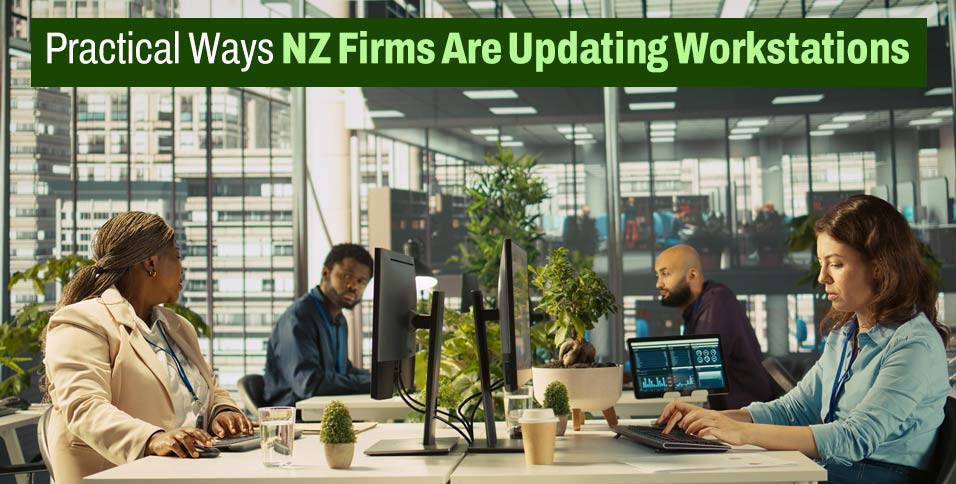
Workstations are no longer static desks; they’re evolving hubs of productivity. Across New Zealand, businesses are rethinking their office setups to meet changing workforce needs, tighter budgets, and sustainability goals. From flexible layouts to second-hand furniture, firms are making practical, future-focused updates without unnecessary cost or waste.
Prioritising Flexible Workspaces
A key trend among NZ businesses is the move towards flexible workstation design. Instead of fixed desks, many are adopting hot-desking or activity-based working, letting staff choose between collaborative zones, quiet areas, or standing desks depending on the task.
This flexibility supports diverse work styles and helps businesses maximise smaller office footprints. Modular furniture and reconfigurable layouts allow firms to adapt as teams shift or grow, without expensive redesigns.
Choosing Sustainable Office Furniture
Sustainability is now central to workplace planning. Rather than buying new, many NZ firms are turning to reused or upcycled office furniture. This reduces landfill waste and supports New Zealand’s wider push for carbon neutrality.
Second-hand office fittings, like desks, chairs, and partitions, can be sourced from trusted suppliers who inspect and refurbish items to modern standards. A growing number of firms are outfitting their spaces through providers like FIL Furniture New Zealand, combining cost-efficiency with environmental responsibility.
Improving Ergonomics and Staff Wellbeing
Businesses are also focusing on how workstations impact health. Poor posture and screen strain are common issues in traditional setups, so firms are investing in ergonomic chairs, adjustable desks, and monitor arms that support proper body alignment.
Other enhancements, such as natural light, indoor greenery, and acoustic panels, create a calmer, more productive atmosphere. These small but effective updates contribute to staff satisfaction, performance, and lower absenteeism.
Seamless Tech Integration
Today’s workstations must support both in-office and remote collaboration. Rather than simply adding devices, firms are integrating tech more thoughtfully—using cable management, wireless charging points, and USB hubs to reduce clutter.
Additionally, video conferencing tools, digital whiteboards, and cloud-based platforms are now essential in modern office setups. These tools help staff collaborate effortlessly, whether working side by side or across locations.
Smarter Layouts for Team Collaboration
The layout of workstations is also shifting. Instead of rigid cubicles, many offices now feature open-plan or zoned environments that encourage interaction while preserving focus.
Some firms are creating “neighbourhoods”—grouping teams by function to foster spontaneous collaboration. Using movable furniture and modular elements, layouts can evolve as teams or projects change, ensuring long-term flexibility.
Refreshing Rather Than Replacing
Not all workstation updates require a complete refit. Many firms are choosing to repurpose what they already own—reupholstering chairs, adding privacy screens, or resurfacing desks.
This approach extends the life of existing furniture while keeping costs low. When paired with strategic second-hand purchases, it enables even small businesses to upgrade effectively within budget.
Where Practicality Meets Performance
Workstations in NZ are being reimagined to meet the needs of a modern, hybrid workforce. From flexible layouts and ergonomic upgrades to sustainable procurement and tech integration, businesses are embracing practical, cost-effective solutions that support people, productivity, and the planet.
By focusing on adaptability and resourcefulness, firms can create work environments that are not only efficient and attractive but ready for whatever the future brings.