Mirror Review
July 2, 2026
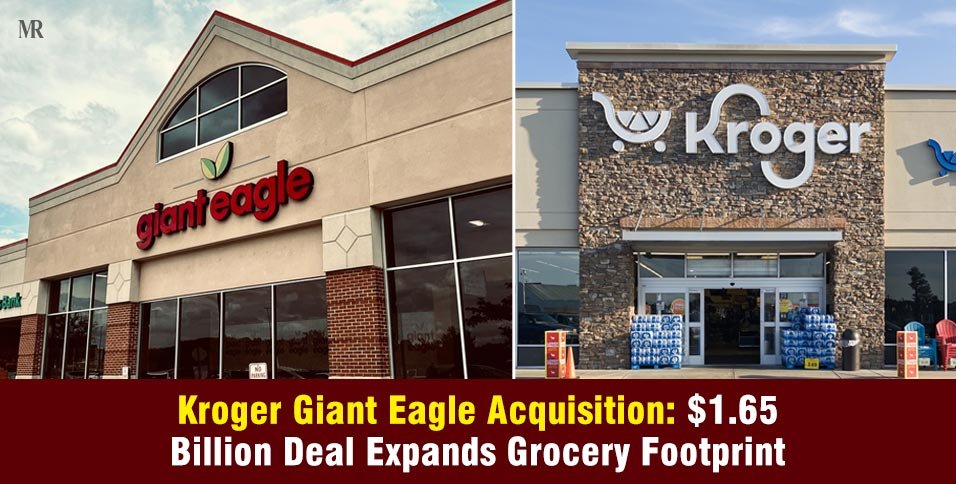
The board of directors at Kroger Co. unanimously approved the acquisition of Giant Eagle, which transitions 197 traditional supermarkets and 11 standalone pharmacies into the Kroger ecosystem. Kroger expects to officially close the transaction in 2027 after completing regulatory reviews and required store divestitures.
The grocery industry has entered an era where scale dictates survival.
The Kroger Giant Eagle acquisition extends the reach of the nation’s largest traditional grocery operator deeper into the multi-state Rust Belt and Mid-Atlantic territories.
The Financial Details of the Kroger Giant Eagle Acquisition
Analyzing the hard numbers reveals the massive scale of the business Kroger is absorbing. Giant Eagle operates as an incredibly lucrative private retail entity.
- Total Purchase Price: $1.65 billion
- Upfront Cash Paid: $1.25 billion
- Assumed Debt/Liabilities: $400 million
- Annual Revenue of Target: $9 billion
- Supermarkets Acquired: 197 stores
- Standalone Pharmacies Acquired: 11 locations
Financially, Kroger will fund the Giant Eagle acquisition entirely with cash.
Management intends to maintain its net total debt to adjusted EBITDA ratio target range of 2.3 to 2.5x after closing.
Kroger expects the transaction to boost its adjusted earnings per share in the second full fiscal year after the integration. It also intends to keep its current dividend payouts and continue its active $2 billion share repurchase program.
The Geographic Expansion Behind the Giant Eagle Acquisition
To understand why Kroger is buying Giant Eagle, you have to look directly at the map. Giant Eagle dominates specific territories where Kroger has long wanted a heavier storefront footprint.
Founded in 1931, Giant Eagle spent nearly a century building an intensely loyal customer base in several key areas:
- Western Pennsylvania (centered around Pittsburgh)
- Northern and Central Ohio (centered around Cleveland and Columbus)
- Northern West Virginia
- Maryland
- Indiana
Kroger already runs a heavy retail network in southern and western Ohio, but the Northeast Ohio and Western Pennsylvania markets belong historically to Giant Eagle.
By executing the Kroger Giant Eagle Acquisition, the national chain buys immediate neighborhood dominance that would otherwise take decades to build through solo construction.
Corporate Statements and Executive Outlook
Corporate leaders from both supermarket networks view this transaction as a logical path forward in a hyper-competitive retail market.
Greg Foran, Chief Executive Officer at Kroger, highlighted the regional grocer’s strong local reputation, stating, “Giant Eagle is a well-run, high-quality regional grocer with a strong reputation for fresh products, pharmacy, private label and customer loyalty. We evaluated the opportunity carefully, and the strategic fit is clear.” He further added, “Giant Eagle expands our reach into attractive adjacent markets, allowing us to do what we do best: Run outstanding stores, deliver fresh foods and convenient meal solutions at affordable prices, and take care of our customers and associates every single day.”
Giant Eagle Chief Executive Officer Bill Artman expressed optimism about the transition for the company’s workforce and local shoppers: “Today’s announcement marks an exciting next chapter for our Team Members, customers, vendors and community partners. Together with Kroger, we will well-positioned to advance our strategy and deliver better quality and service, better everyday value, and a better shopping experience for our customers, while providing greater growth opportunities for our dedicated Team Members.”
Giant Eagle’s Path From Historic Family Ownership to National Scale
The grocery industry has been steadily moving away from independent regional operations for decades.
Giant Eagle stood out as one of the largest privately held, family-owned corporations in the United States. Its roots trace back to five families, the Goldsteins, Portergills, Chaitans, Moravitzes, and Weizens, who pooled their resources during the Great Depression to battle corporate chains.
For nearly a century, that local, family-controlled identity formed the core of Giant Eagle’s brand marketing. However, regional independent networks face immense financial pressure today. Giant Eagle must compete with the supply chain mechanics and valuation of Walmart, the digital infrastructure of Amazon, and the low-cost model of European discounters like Aldi.
When a massive corporation like Kroger buys Giant Eagle, it shows that even $9 billion regional empires eventually need national scale to maintain modern corporate margins.
Kroger plans to merge Giant Eagle’s existing private labels and popular fuel loyalty programs with its own extensive digital couponing algorithms and multi-channel eCommerce platforms.
Regulatory Clearances and Store Divestitures
Large grocery mergers like the Kroger Giant Eagle acquisition always attract intense scrutiny from federal regulators like the Federal Trade Commission (FTC).
Regulators closely examine whether a local market loses healthy competition when Kroger to acquire Giant Eagle becomes a reality. If a specific neighborhood in Ohio contains both a Kroger and a Giant Eagle right down the street from each other, a merger could limit consumer choices and drive up prices.
To address these antitrust concerns, both grocery organizations have already announced they expect to execute limited store divestitures. This means they will sell off select locations to third-party independent operators in areas where their store footprints overlap too heavily.
The businesses have deliberately scheduled the deal to close in 2027 to give legal teams plenty of time to secure regulatory approvals and organize these necessary spin-off sales.
What Shifting Grocery Ecosystems Mean for the Common Consumer
The retail grocery sector is rapidly consolidating into a handful of massive national networks. For the average everyday shopper, this consolidation brings visible changes to the local storefront environment.
On the positive side, national operators bring massive supply chains that generally stabilize store inventory during systemic shortages. Shoppers will gain access to Kroger’s highly rated corporate private labels, such as Private Selection and Simple Truth. Kroger also intends to introduce its Zero Hunger, Zero Waste corporate impact program into these new communities to reduce food waste.
Conversely, some consumer advocates worry that industry consolidation reduces local price competition over time. When a single corporate entity sets the prices for a significant portion of a region’s grocery storefronts, local consumer choices inevitably shift.
Long-Term Outlook for the Kroger Giant Eagle Acquisition
The Kroger Giant Eagle Acquisition is a milestone in modern American retail history. By committing $1.65 billion to this purchase, Kroger successfully absorbs a historic regional competitor and secures direct access to millions of loyal shoppers across Pennsylvania, Ohio, and West Virginia.
Kroger buying Giant Eagle moves its regulatory review phase over the next year and if the deal secures federal approval in 2027 as planned, it will cement Kroger’s position as a dominant force in traditional Midwestern and Mid-Atlantic grocery retail.
Maria Isabel Rodrigues