Mirror Review
October 03, 2025
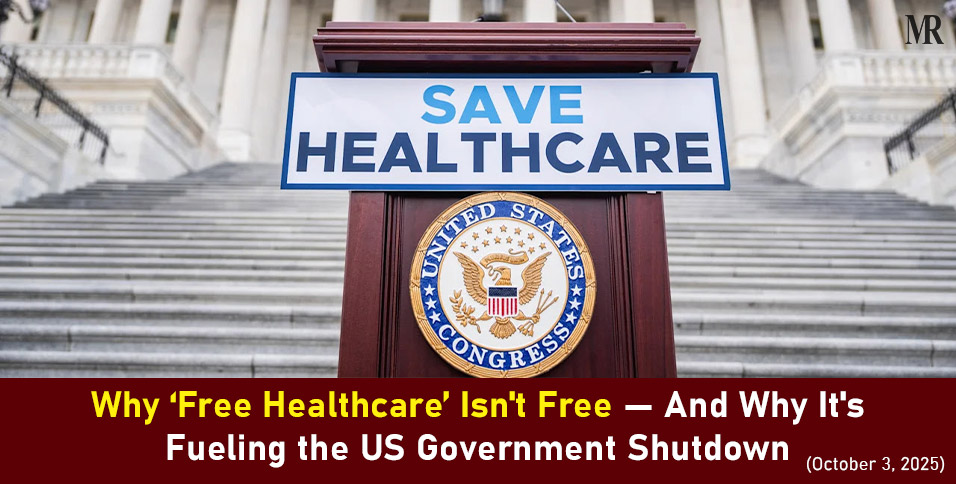
The United States federal government has shut down after lawmakers failed to pass a spending bill. At the center of the fight is one issue: healthcare funding.
This standoff, the first of its kind since 2023, is a direct result of an ideological clash.
- Democrats want to extend an estimated $98 billion in Affordable Care Act (ACA) subsidies, commonly known as Obamacare, and restore cuts to Medicaid, which they argue are vital for affordable healthcare.
- Republicans oppose these measures, warning about rising debt and framing them as part of a push for “free healthcare.”
This showdown highlights a key question: why does the idea of “free healthcare” raise such political conflict, and what are the real costs involved?
Obamacare: The Background
The Affordable Care Act, passed in 2010, expanded coverage for millions of Americans. Its main features include:
- Marketplace Subsidies: Help lower-income Americans pay premiums.
- Medicaid Expansion: Covers low-income adults in participating states.
- Protections for Preexisting Conditions: Insurers cannot deny coverage.
- Individual Mandate (Removed 2019): Initially required insurance for most Americans.
Despite covering tens of millions, Obamacare remains politically divisive, with repeated Republican attempts to repeal or defund it.
Why “Free Healthcare” Isn’t Really Free
The term “free healthcare” is misleading. It usually means no direct charges at the hospital or doctor’s office, but the costs are still covered by taxpayers through government spending.
- Supporters argue it ensures fairness, saves lives, and reduces long-term costs.
- Opponents warn of high upfront expenses and pressure on the federal budget.
The current deadlock shows that the real debate isn’t whether healthcare is important. It’s who pays for it, and how much.
The Real Cost of “Free Healthcare”
The idea of “free healthcare” sounds appealing, but it comes with substantial costs that affect taxpayers and the government budget. Here’s a breakdown:
| Funding Component | Description | Estimated Cost/Impact |
| ACA Subsidies | Helps lower monthly health insurance premiums for millions of Americans who purchase plans on the marketplace. | Tens of billions annually |
| Medicaid Expansion | Covers healthcare for low-income individuals, including children, pregnant women, and certain lawfully present immigrants. | Costs vary by state; billions federally |
| Administrative Costs | The expense of running large government programs, including enrollment systems, oversight, and fraud prevention. | Several billion annually |
| Long-term Care | Public coverage for chronic illnesses and care for the elderly, a cost that is growing as the US population ages. | Growing costs as population ages |
| Taxes | The primary source of revenue. All of these programs are funded through a mix of federal and state taxes. | Paid by all citizens and residents |
Political Leaders Weigh In
- Senate Minority Leader Chuck Schumer
Senator Schumer has been vocal in defending the Democrats’ position. He dismissed Republican claims that Democrats are pushing for healthcare benefits for undocumented immigrants as a “total, absolute, effing lie,” emphasizing that the debate centers on extending ACA subsidies and restoring Medicaid cuts for eligible individuals.
- House Minority Leader Hakeem Jeffries
Leader Jeffries echoed Schumer’s sentiments, stating that Republicans know they are misrepresenting the issue. He criticized the GOP for spreading misinformation about the Democrats’ intentions and reaffirmed the party’s commitment to protecting healthcare access for Americans.
- Treasury Secretary Scott Bessent
On the other side, Treasury Secretary Bessent criticized the Democrats for their stance, accusing them of negotiating “like terrorists” by refusing to compromise on funding legislation. He warned that the shutdown could negatively affect economic growth and working Americans, noting potential hits to GDP.
- President Donald Trump
President Trump has framed the Democrats’ push for extended healthcare subsidies as part of a broader agenda to provide “free healthcare for illegal aliens.” He has threatened to extend his purge of the federal workforce and has moved to pause or cancel billions in funding for projects in Democratic-led states, ramping up pressure on Democrats.
- Vice President JD Vance
Vice President JD Vance added, “It’s not something that we made up. It’s not a talking point. It is in the text of the bill that they initially gave to us to reopen the government,” highlighting what he describes as Democrats’ provisions for non-citizens under Medicaid and Obamacare subsidies.
Public Opinion
A recent Washington Post poll found:
- 71% support extending ACA subsidies.
- Strong support among Democrats (95%) and independents (80%).
- Most Republicans (62%) favor letting subsidies expire.
The poll also showed that more Americans blame Republicans and Trump for the shutdown than Democrats, citing refusal to compromise.
Bottom line
Universal healthcare has clear social benefits, but it is an expensive undertaking.
Every dollar of care must come from somewhere, and that “somewhere” is predominantly the taxpayer.
The fight over ACA subsidies and Medicaid funding is the most expensive debate in Washington, and it will continue to drive government instability until a sustainable, bipartisan funding model is found.