Mirror Review
January 13, 2026
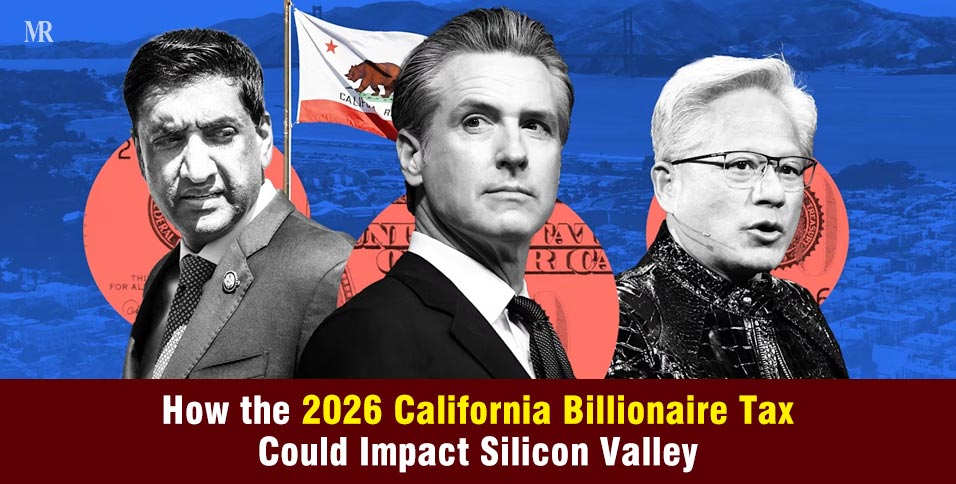
The proposed 2026 California Wealth Tax is shaping up to be one of the most consequential fiscal policies in the state’s history.
Designed to tax ultra-high-net-worth individuals, the proposal directly targets the concentration of wealth in California, particularly in Silicon Valley, home to some of the world’s richest tech founders, executives, and investors.
If implemented, the tax could significantly alter how wealth is structured, invested, and even geographically located across the U.S. tech ecosystem.
For Silicon Valley, the implications of the California Billionaire Tax go far beyond personal taxation. They could reshape startup funding, corporate headquarters decisions, and long-term innovation strategies.
What Is the California Wealth Tax?
- The California Wealth Tax, formally known as the 2026 Billionaire Tax Act, is a proposed ballot measure that would impose a one-time 5% tax on the net worth of California residents worth $1 billion or more.
- Unlike income taxes, it targets total accumulated wealth, including company equity, stocks, venture investments, and certain trust assets, and would apply to worldwide holdings of residents as of January 1, 2026.
- Supporters argue the tax corrects a structural imbalance, noting that California’s roughly 200 billionaires control more than $2 trillion in wealth while often paying a lower effective tax rate than average taxpayers.
- The initiative states that billionaire wealth grows largely untaxed because it is held in assets that appreciate without being sold.
- The proposal is framed as a response to looming budget shortfalls, including potential multibillion-dollar cuts to Medi-Cal.
- Revenue from the California Wealth Tax would be placed in a protected fund, with most directed toward healthcare and the remainder supporting education and food assistance programs.
Why Silicon Valley Is at the Center of the Debate
Silicon Valley sits at the epicenter of the California Billionaire Tax debate because it hosts one of the densest concentrations of billionaire wealth anywhere in the world.
California has an estimated 200–250 billionaires, many of whom built their fortunes through technology companies headquartered or founded in the Bay Area.
Unlike traditional industries, Silicon Valley wealth is overwhelmingly tied to equity ownership, not salaries or cash income.
CEOs, Founders, early employees, and venture capitalists often hold massive stakes in companies that may not yet be publicly traded. This means their net worth can reach billions on paper while remaining largely illiquid.
A wealth-based tax, especially one applied at a fixed point in time, directly targets this structure.
This creates several unique vulnerabilities for Silicon Valley:
- Illiquid wealth: Founders may be worth billions due to company valuations, but lack the liquid assets needed to pay large tax bills without selling equity.
- Pre-exit taxation: Startup shares could be taxed before IPOs or acquisitions, forcing payment on unrealized gains.
- Valuation volatility: Private company valuations can swing dramatically based on funding rounds or market sentiment, creating unpredictable tax exposure.
Representative Ro Khanna, whose congressional district includes much of Silicon Valley, framed the issue as a matter of public responsibility rather than economic punishment, stating: “A modest tax on extreme wealth can protect healthcare and education for millions of Californians without harming innovation.”
Potential Impact on Tech Founders and Executives
- Pressure to Liquidate Assets
One of the most immediate effects of the wealth tax could be forced liquidity events. A one-time 5% levy on a $10 billion fortune translates to a $500 million tax obligation, a sum few individuals can cover without selling assets.
For founders, this may require selling company shares earlier or more aggressively than planned.
Analysts warn this could:
- Dilute founder ownership and voting control
- Increase volatility in public tech stocks
- Push companies toward earlier IPOs or rushed acquisitions
For private startups, the challenge is sharper. Secondary markets for private shares are limited, and selling equity early can distort company governance, employee incentives, and long-term strategy.
- Talent and Founder Migration Risks
Opponents argue the tax could accelerate the migration of ultra-wealthy individuals to states with no income or wealth taxes, such as Texas, Florida, or Nevada.
Venture capitalist Peter Thiel, who donated $3 million to oppose the initiative, warned the measure would undermine California’s competitiveness.
Crypto entrepreneur Jesse Powell echoed this concern, arguing billionaires would leave California with “their spending, philanthropy, and job creation.”
Supporters dispute this narrative. Gabriel Zucman, a UC Berkeley economist who advised on the initiative, argues the policy is specifically designed to limit tax avoidance through relocation: “The measure is designed so that leaving the state does not allow billionaires to escape the tax.”
The proposal’s January 1, 2026, residency cutoff means individuals classified as California residents at that date would remain liable even if they later move.
- Venture Capital and Startup Funding Effects
Venture capital is highly sensitive to available deployable capital. Critics warn that wealth taxes could reduce the amount of capital high-net-worth individuals allocate to early-stage investing, particularly in high-risk startups.
Potential consequences include:
- Smaller seed and Series A rounds
- Increased emphasis on profitability over growth
- A shift in investments toward out-of-state or international startups
Over time, these shifts could weaken Silicon Valley’s long-standing advantage as the world’s most concentrated startup ecosystem.
Impact on California’s Economy and Innovation
Supporters estimate the California Wealth Tax could raise up to $100 billion over five years, a figure intended to offset deep fiscal pressures.
Under the proposal:
- 90% of revenue would fund healthcare, particularly Medi-Cal
- 10% would support education and food assistance programs
The initiative cites potential $19 billion per year in federal funding losses to Medi-Cal, warning that up to 1.6 million Californians could lose coverage without new revenue sources.
Not all tech leaders oppose the tax. NVIDIA CEO Jensen Huang, whose net worth exceeds $160 billion, expressed indifference to the proposal, stating, “We chose to live in Silicon Valley. Whatever taxes are applied, I’m perfectly fine with it.”
Supporters argue that reinvesting wealth into healthcare and education ultimately strengthens the innovation economy by supporting a healthier, more stable workforce.
Legal and Constitutional Challenges Ahead
Wealth taxes face significant legal uncertainty in the U.S. Key questions include:
- Whether states can tax worldwide assets
- How private assets should be valued consistently
- Whether the tax violates federal constitutional protections
California Governor Gavin Newsom has criticized the proposed California Billionaire Tax as “bad policy”, warning that it could produce unintended economic consequences.
Legal challenges could delay implementation, narrow enforcement, or force revisions even if voters approve the measure.
What Silicon Valley Companies Are Doing to Prepare
In anticipation of potential passage, many tech leaders are already:
- Restructuring equity compensation to reduce taxable exposure
- Expanding operations and legal entities in other states
- Increasing trust, estate, and liquidity planning
Companies are also intensifying lobbying and public advocacy efforts to shape the final version of the policy.
Conclusion
The 2026 California Billionaire Tax represents a defining moment for Silicon Valley. While its goal of addressing extreme wealth inequality resonates with many voters, its ripple effects on innovation, capital formation, and talent retention could reshape the region’s future.
Whether the policy ultimately strengthens California’s social infrastructure or accelerates capital flight will depend on execution, enforcement, and adaptation, both by policymakers and by Silicon Valley itself.
Maria Isabel Rodrigues