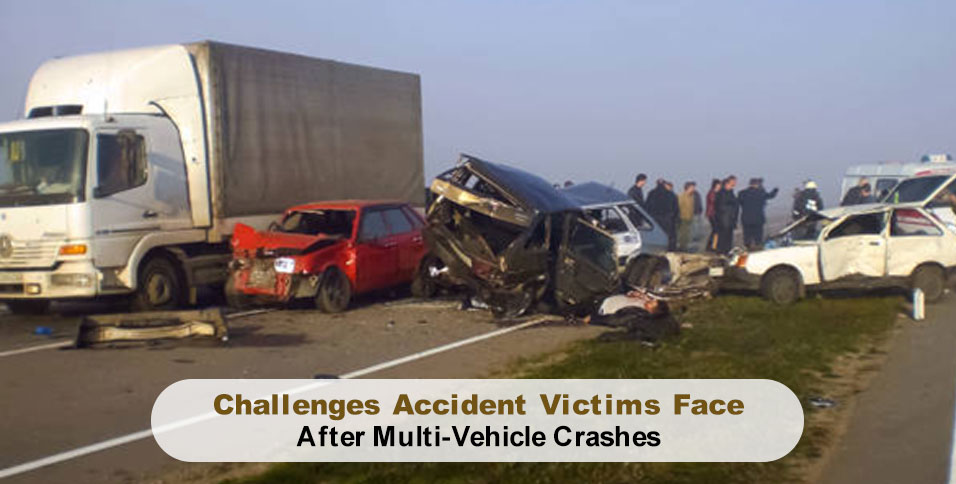
Multi-vehicle accidents, or what are often also called chain reaction accidents or pile-up accidents, are one of the most legally complex and catastrophic accidents on the road. When multiple drivers are involved in an accident, the result can be very devastating.
When you’re involved in a multi-vehicle crash, it will be an extremely traumatic experience with long-term psychological scars. The physical and mental trauma combined with the challenges you have to face in a multi-vehicle accident to seek justice and compensation can eat you alive.
So, if you or someone you know is a multi-vehicle accident victim, consult with a personal injury lawyer who has expertise in dealing with multi-vehicle crashes. They know how to navigate the legal intricacies for proving fault and negotiating compensation in these cases.
Intense Physical Injuries
Multi-vehicle crashes involve consequent and secondary impacts, like when victims are hit from behind and then pushed into another car. These secondary impacts cause more severe injuries than a single impact.
Common injuries include
- Whiplash
- Spinal cord injuries leading to paralysis
- Traumatic brain injury (TBI)
- Internal bleeding
- Broken or fractured bones
Victims may experience delayed symptoms due to shock or adrenaline-masked pain. So, victims need to seek immediate medical evaluation even if they don’t feel pain or experience symptoms initially.
Varied Versions of the Incident
The chain of events and the involvement of multiple drivers easily permit a way for conflicting statements and disagreements to arise.
Drivers may not have been able to see what exactly happened at the accident scene, or at-fault drivers may fear being held liable, so drivers give contradictory statements that make the case harder to hold liable parties accountable.
To deal with complex situations like this, strong evidence like accident reconstructionist statements and surveillance and traffic cam footage acts as a huge help along with a skilled lawyer’s investigation.
Multiple Drivers May Be Liable
Unlike two-people-involved car accidents, there can be many victims and many liable parties in multi-vehicle accidents. Assigning who is liable can be challenging in these accidents.
Generally, we are looking at a few scenarios of how liability may be determined in this case.
- The driver who initiated the accident is mostly liable for the cause of the accident, which is the primary fault.
- Subsequent impacts that were caused by the other drivers after the initiation of the accident can be considered a secondary fault and share some degree of liability.
- Many jurisdictions use contributory negligence to determine the contribution degree of an at-fault driver’s negligence. Based on the depth of their contribution, one driver can be more liable than others.
- Even if you directly didn’t contribute to the cause of the accident, you may still be liable if your actions caused someone injuries in any way.
Pinpointing the Combination of Factors
In many multi-vehicle accidents, only one factor doesn’t lead to the whole chain of accidents. There is a likelihood of many factors that could have contributed. Identifying potential road hazards or vehicle malfunctions is crucial, as it opens the door for more liable parties beyond just drivers.
Combined with the negligence of a driver, facing a crack or potholes on the road, and malfunctions like steering failure or faulty brakes, multi-vehicle crashes are allowed to happen.
Insurance Issues
Victim drivers need to file claims with two or more insurance companies if two or more drivers are found to be negligent. When many parties seek compensation from a limited liable party’s insurance, the value of the claims may exceed the limit of the at-fault driver’s policy.
Conclusion
Hiring a multi-vehicle lawyer is essential if you’re a victim of a multi-vehicle crash, given how complicated the whole legal process is. A professional lawyer assesses what your options are and figures out how you can walk out of the case without any financial burden.
Key Takeaways
- Consequent impacts cause more intense injuries than two-party involved accidents.
- There may be contradictory versions of the accident from different drivers.
- Multiple parties can be liable, with the driver who initiated the accident sharing the most blame.
- Combining factors like vehicle defects or road hazards along with negligence may have caused the crash.
- Many victims seeking compensation exceed the limit of the at-fault party’s policy.