Does Sustainability Matter After We’re Gone?
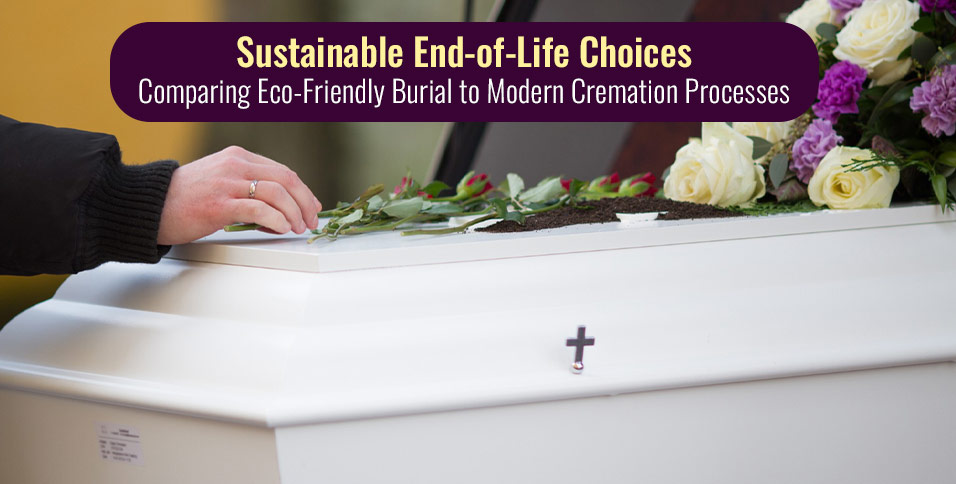
More people think it does. Environmental ethics don’t disappear after death, and the final choices we make now reflect the values we lived by. Traditional funerals still rely on embalming chemicals, heavy manufacturing, and land use that leaves a permanent ecological scar. The disconnect is obvious: many spend a lifetime minimizing waste, only for their last act to generate it.
As consumers look beyond ceremony and start comparing Cremation Costs with the long-term ecological footprint of burial, priorities begin to shift. And for those exploring Cremation Services Near Me, the conversation has expanded from price and convenience to environmental responsibility and legacy.
The debate today isn’t about whether to honor loved ones, it’s about how to do it without burdening the planet. That’s why the spotlight has moved toward Green Burial and Cremation, two options that promise a more intentional and less resource-intensive farewell.
How Harmful Is a Traditional Burial to the Environment?
Most people don’t realize that a traditional burial uses a lot of chemicals, metals, and concrete. It’s not just about laying someone to rest, there’s a whole industry behind it that impacts the environment long after the funeral is over.
To prepare the body, funeral homes use embalming fluids. These fluids contain strong chemicals like formaldehyde. Once the body is buried, these chemicals don’t stay contained. Over time, they can leak into the soil and mix with groundwater, which is a problem for nearby land and water sources.
Then there’s the casket. Many caskets are made from hardwood, metal hinges, and shiny finishes. On top of that, most cemeteries require a cement vault, a heavy box that goes into the ground before the casket. In the U.S. alone, these vaults use more than 1.6 million tons of concrete every year. That’s a massive amount of resources for something that never returns to the environment.
The land itself is another issue. Cemeteries take up space permanently. Once a grave is dug, the land is no longer used for farming, forests, or wildlife. It must also be maintained forever—grass cutting, watering, pesticide use, and repairs. The land stays disturbed, and nature does not get it back.
So when we talk about sustainability, traditional burial starts off at a disadvantage. It uses chemicals, materials, and land that can’t be recovered.
Is Green Burial the Purest Eco-Friendly Option?
Green burial takes a very different approach. Instead of trying to preserve the body or protect it from nature, it allows the body to return to the earth naturally.
There are no toxic chemicals, no metal caskets, and no concrete vaults. The body is placed in a simple shroud or a plain, untreated wooden box. This lets natural processes do their work, just like they have throughout history.
The environmental benefits are noticeable. Green burial and similar options like human composting can save between 0.84 and 1.4 metric tons of carbon dioxide compared to cremation or a regular burial. That’s a real difference, especially when thousands of people make this choice.
People are paying attention. In recent surveys, about 27% of respondents said they prefer green burial because it matches their values and reduces environmental harm.
The main challenge is availability. Not every city has a green burial site, and some families don’t know it exists. But where it’s offered, it gives a clear and nature-friendly alternative to traditional burial.
Is Cremation the More Flexible Sustainable Choice?
Cremation has become popular because it’s simpler, cheaper, and easier for families who don’t want to buy or maintain burial space. In fact, more than 60% of Americans chose cremation in 2023.
Cremation does avoid many of the problems of burial. It doesn’t require land, cement vaults, or metal-heavy caskets. However, it does produce emissions.
A single cremation:
· Uses about the same energy as driving 310 miles
· Releases around 534 pounds of carbon dioxide
· Produces gases like nitrogen oxides and carbon monoxide
· Can release mercury if the person had dental fillings
When millions of people choose cremation, these numbers add up. In 2023 alone, cremation in the U.S. released around 585,200 tons of CO₂. That’s similar to what tens of thousands of cars release in a year.
So cremation is better than traditional burial in terms of land and material use, but it still affects the air and the climate. It’s not a perfect solution, but it’s a step forward—especially as modern cremation facilities continue to improve their technology to lower emissions.
How Are Modern Cremation Providers Reducing Environmental Impact?
The industry isn’t ignoring the numbers. Crematoriums are adopting energy-efficient retorts that lower fuel use and emissions. Advanced filtration systems capture harmful particulates and mercury before they leave the stack.
Other shifts matter too. Facilities increasingly use low-impact containers, digital documentation, and biodegradable urns. Some providers now present cremation as a step within a broader ecological approach, not the final answer.
Crematorium services aren’t just performing a task—they are shaping consumer understanding. The more transparent they are, the easier it becomes for families to choose lower-impact pathways.
Are Even Greener Alternatives Emerging?
Yes. Two alternatives stand out:
Aquamation (alkaline hydrolysis) uses water and alkali instead of flame, producing no airborne emissions and requiring far less energy.
Human composting returns remains to soil in a controlled system, turning the entire process into carbon storage rather than carbon release.
Both represent the next chapter of sustainable death care, although access remains limited.
Which End-of-Life Option Aligns With Your Values?
There is no single right answer. Green burial leaves the smallest footprint and directly supports ecological regeneration. Cremation avoids land and material waste but produces measurable emissions. Emergent alternatives point toward even cleaner futures.
Your decision shapes more than a ceremony. It shapes the legacy you leave on the planet.
If sustainability matters, talk to providers who understand the environmental stakes of their cremation services. A conscious final choice ensures your values don’t end when your life does, they continue in the world you leave behind.