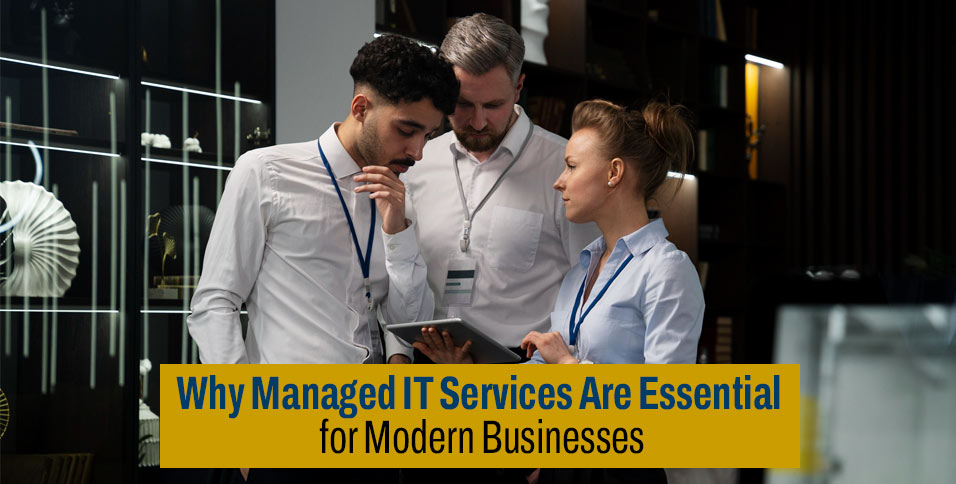
In today’s digital age, which moves at breakneck speed, technology is the backbone of what businesses do and how they compete and grow. From day-to-day communication and data storage to cybersecurity and cloud infrastructure, it is seen that organizations are very heavy users of IT systems. This increasing reliance has prompted many companies to adopt managed IT services as a proactive way to address their tech needs without the burden of in-house management. By teaming up with a professional MSP, businesses are able to put their focus into what they do best while the IT environment is known to be in good hands.
Understanding Managed IT Services
Managed IT Services is a practice of turning over your IT infrastructure to a professional third party that has expertise in running, managing, and maintaining tech systems. Also, instead of a reactive approach where issues are fixed as they come up, managed service providers take a proactive role in identifying issues before they grow into full-scale business disruptions.
These services include network management, system monitoring, data backup, cybersecurity, software updates, and IT support. Also, it is seen that by means of the monthly subscription models, which are the same each month, companies are able to get access to enterprise-level IT services, which they may not have been able to afford in the past due to the cost associated with building out and maintaining a full in-house IT team.
The Role of an MSP in Business Operations
An MSP is an add on to a company’s internal team. Instead of just putting out fires the MSP proactively analyzes systems for best performance. It is ensured that down time is at a minimum which in turn increases productivity and system reliability is also reported on.
Businesses profit from the fact that they have access to experts who are up-to-date with the latest technologies and security issues. As cyber risks grow in sophistication and compliance requirements increase, this expertise becomes even more valuable.
Improved Security and Risk Management
Cybersecurity is a top issue for today’s organizations. It is seen in data breaches, ransomware attacks, and system vulnerabilities that large-scale financial loss and reputation damage can occur. Managed IT Services, which is a component of the solution, brings to the table multi-layer protection, which in turn strengthens security.
These solutions include firewalls, endpoint protection, intrusion detection, regular patching, and security monitoring. Also, it is seen that, which is the case for many MSPs, they do routine risk assessments, which in turn they use to identify weak points and put forth improved solutions. This proactive security approach, which in turn helps businesses to reduce their threat exposure and maintain business continuity.
Cost Efficiency and Predictable IT Spending
One of the benefits that comes with Managed IT Services is cost control. It is seen a reduction in unexpected expenditures for emergency repairs and system failures which is instead replaced by a consistent monthly fee. This in turn makes budgeting a easier process for businesses and also decreases the chance of unexpected IT charges.
Also outsource IT services, which removes the need for large initial investments in hardware, software, and staff. Companies get advanced tools and skilled personnel without the expense of running an in-house IT team.
Scalability and Business Growth
As businesses grow, their IT needs transform. Managed IT services provide the flexibility to scale resources up or down based on present requirements. As a company expands its workforce, adopts cloud solutions, or brings in new software, an MSP may adjust services to that.
This scalability also means growth is supported by the IT infrastructure, which in turn does not become a bottleneck. It is also seen that businesses are adopting new tech at a faster and more confident rate because behind them is this expert support.
Enhanced Productivity and Reduced Downtime
System outages at times may cause large drops in productivity and in customer satisfaction. Managed IT services play a role in reducing that by way of constant monitoring and fast response to issues that come up. By which it is also meant that issues are fixed before they get worse.
Employees have at their disposal consistent access to tools and data, which in turn allows them to work more efficiently. Also, it is seen that this improved productivity puts out better customer experiences and stronger overall performance.
Strategic IT Planning and Long-Term Value
Beyond what is provided in the day to day it has been seen that Managed IT Services play a role in long term strategy. MSPs help businesses integrate their technology choices with organizational goals. This includes in the recommendation of upgrades, optimization of infrastructure, and planning for future tech investments.
Through a strategic look at IT services, a Business IT Services Company adopts a proactive rather than reactive approach, helping organizations stay ahead of the competition. Technology is also seen as a growth engine rather than a continuous issue.
Conclusion
Managed IT services are a key element in today’s business environment. By teaming up with a trusted MSP, companies see benefits that include proactive support, improved security, cost savings, and scalable IT solutions. As tech continues to advance, companies that adopt professional IT services are better able to transform, grow, and do well in the very digital world we live in.