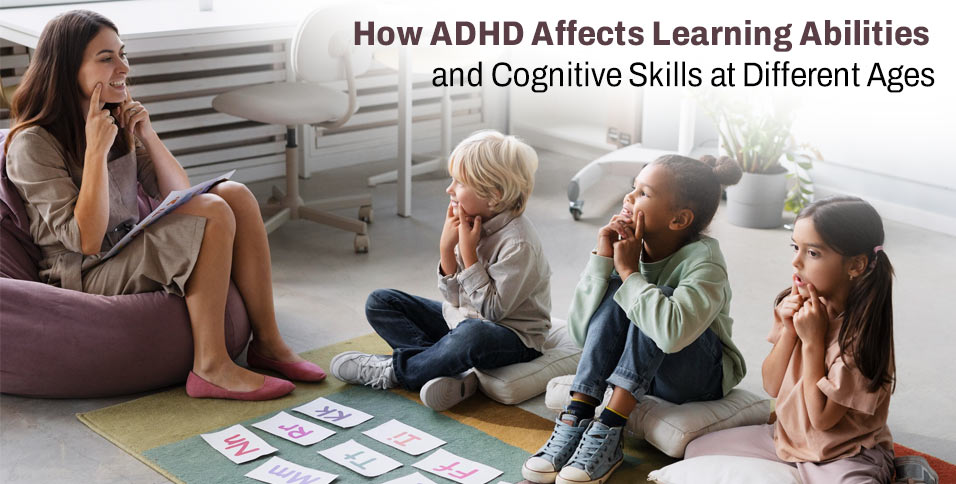
ADHD changes how the brain processes information, manages attention, and controls behavior. These differences create unique challenges for children, teens, and adults as they learn and develop new skills. ADHD affects learning abilities and cognitive skills differently at each stage of life, from early childhood through the teenage years and beyond.
The way ADHD shows up in a classroom or at home shifts as children grow older. A young child might struggle to sit still during story time, while a teenager may have trouble organizing homework or remembering instructions. These changes happen because the brain develops over time, and ADHD interacts with that growth in specific ways.
Understanding how ADHD impacts learning at different ages helps parents and teachers provide better support. This article explores the specific challenges that appear at each stage of development, the factors that shape these experiences, and what makes each age group unique in their learning journey.
Impact of ADHD on Learning Abilities and Cognitive Skills Across Age Groups
ADHD affects how the brain processes information and develops across different life stages. The challenges shift as environmental demands change and brain systems mature.
Effects of ADHD in Early Childhood
Young children with ADHD often struggle with tasks that require sustained focus or the ability to wait. These difficulties appear most clearly in preschool or early elementary settings where structured activities become more common.
Executive function delays are noticeable during these years. Children may have trouble following multi-step directions or organizing their play materials. They frequently lose items and move quickly from one activity to another without completion.
The effect of ADHD on learning becomes apparent as academic expectations increase. Pre-reading and early math skills require attention to detail that many young children with ADHD find difficult to maintain.
Social interactions can be challenging as well. Young children with ADHD may interrupt others or have difficulty with turn-taking. These behaviors can lead to peer relationship problems that compound academic struggles.
Brain imaging studies show delayed cortical maturation in children with ADHD. This delay particularly affects regions responsible for attention control and impulse regulation.
Influence of ADHD During Elementary School Years
Elementary school presents new cognitive demands that highlight ADHD symptoms. Classroom environments require children to sit still, focus on lessons, and complete assignments independently.
Processing speed often lags behind peers without ADHD. Students may need extra time to complete worksheets or tests despite having the knowledge required. This slower pace can lead to incomplete work and frustration.
Executive skills become more important for academic success. Students must remember homework assignments, bring materials to class, and plan longer-term projects. Children with ADHD frequently struggle with these organizational tasks.
Reading comprehension can suffer even in children with strong decoding skills. The sustained attention needed to understand and remember text poses significant challenges. Math facts and multi-step problems also prove difficult.
Links between executive skills and academic problems strengthen during elementary years. Children with ADHD show more pronounced connections between their executive function deficits and learning difficulties compared to their peers.
Manifestations of ADHD in Adolescence
Adolescence brings increased academic complexity and greater independence expectations. The frontal cortex continues to develop during these years, but the delay in ADHD brains persists.
High school coursework requires advanced executive functions. Students must manage multiple classes, long-term projects, and increased homework loads. Teens with ADHD often fall behind on assignments and struggle to prioritize tasks.
Emotional regulation difficulties become more apparent. The teenage years naturally involve increased emotional intensity, but ADHD adds another layer of complexity. Frustration with academic struggles can lead to avoidance behaviors or giving up.
Social challenges may shift in nature. Teens with ADHD might struggle to read social cues or manage complex peer relationships. These difficulties can affect group projects and classroom participation.
Time management remains a persistent problem. Many adolescents with ADHD misjudge how long tasks will take or procrastinate until deadlines loom.
Long-Term Implications for Adults with ADHD
ADHD does not disappear with adulthood. The condition continues to influence cognitive processes and information management throughout life.
Workplace performance can be affected by attention and executive function challenges. Adults with ADHD may struggle with paperwork, meeting deadlines, or maintaining organization systems. Jobs that require sustained focus or detail-oriented work prove particularly difficult.
Higher education presents similar obstacles to those in high school but with less external structure. College students with ADHD must manage their own schedules and create study routines. Many benefit from accommodations like extended test time or note-taking assistance.
Emotional regulation continues to affect relationships and daily life. Adults with ADHD may experience increased stress or difficulty maintaining emotional balance under pressure.
Cognitive flexibility and working memory challenges persist into adulthood. These deficits can affect problem-solving abilities and the capacity to juggle multiple responsibilities. However, many adults develop compensatory strategies that help them manage symptoms effectively.
Key Factors Affecting Learning and Cognitive Development in Individuals With ADHD
ADHD impacts learning through three main areas: the ability to maintain focus on tasks, challenges with planning and organization, and difficulties with short-term memory storage. These factors interact to create barriers in academic settings and daily activities.
Attention and Concentration Challenges
Individuals with ADHD struggle to sustain attention on tasks that require extended mental effort. The brain’s ability to filter out distractions becomes less effective, which leads to frequent shifts in focus. Students may start an assignment but find themselves drawn to unrelated thoughts or environmental stimuli within minutes.
Selective attention also presents problems. A person with ADHD might find it hard to identify what information matters most in a lesson or text passage. This makes note-taking difficult and reduces the amount of material they retain from lectures.
Hyperfocus represents the opposite extreme. Some people with ADHD become so absorbed in activities that interest them that they ignore everything else. However, this intense concentration rarely occurs with required academic work. The inconsistency in attention patterns creates confusion for teachers and parents who see the person focus deeply on certain tasks but not others.
These attention difficulties stem from differences in brain structure and function, particularly in areas that regulate focus and alertness. The prefrontal cortex shows reduced activity in ADHD, which affects the ability to control where attention goes and how long it stays there.
Executive Function Difficulties
Executive functions act as the brain’s management system. People with ADHD experience significant challenges in this area. Task initiation becomes a major obstacle, as they often delay the start of homework or projects until the last possible moment.
Organization skills develop more slowly in children with ADHD compared to their peers. They lose materials, forget deadlines, and struggle to keep track of multi-step assignments. Their backpacks and desks often appear chaotic, which reflects the disorganization in their mental processes.
Time management presents another hurdle. Individuals with ADHD frequently underestimate how long tasks will take. They may spend too much time on one part of an assignment and rush through the rest. This poor time perception leads to missed deadlines and incomplete work.
Emotional regulation also falls under executive function. Students with ADHD may react more strongly to frustration or disappointment. They have trouble shifting away from negative emotions, which can derail their entire study session. The ability to pause and think before acting remains underdeveloped, leading to impulsive responses in classroom settings.
Working Memory Impairments
Working memory holds information temporarily while the brain processes it. ADHD significantly reduces this capacity. Students may hear instructions but forget them seconds later. They struggle to keep track of numbers during mental math or lose their place while reading long passages.
The deficit affects both verbal and visual working memory. A child might forget what the teacher just said or lose track of where they placed their pencil moments ago. These constant memory lapses force students to ask for repeated directions, which can lead to frustration from both the student and instructor.
Multi-step tasks become particularly challenging. A student with ADHD might remember the first and last steps of a process but lose the middle ones. This incomplete memory creates errors in their work despite understanding the overall concept.
Research shows that children with ADHD often face problems with retaining new material and processing information efficiently. The working memory issues also interact with attention problems, as poor focus prevents information from entering working memory in the first place. This creates a cycle where learning becomes progressively more difficult without proper support and strategies.
Conclusion
ADHD affects learning and cognitive skills differently as children grow and develop. The condition impacts executive functions, attention span, and information processing at every age, though these challenges manifest in unique ways from early childhood through adolescence and into adulthood.
Parents and educators can support children with ADHD through targeted strategies that address age-specific needs. Early intervention helps build foundational skills, while older students benefit from tools that strengthen organization, time management, and self-advocacy.
Understanding how ADHD influences cognitive development allows for better support systems at home and school. With appropriate accommodations and evidence-based approaches, individuals with ADHD can develop effective coping strategies and reach their full academic potential across all stages of development.