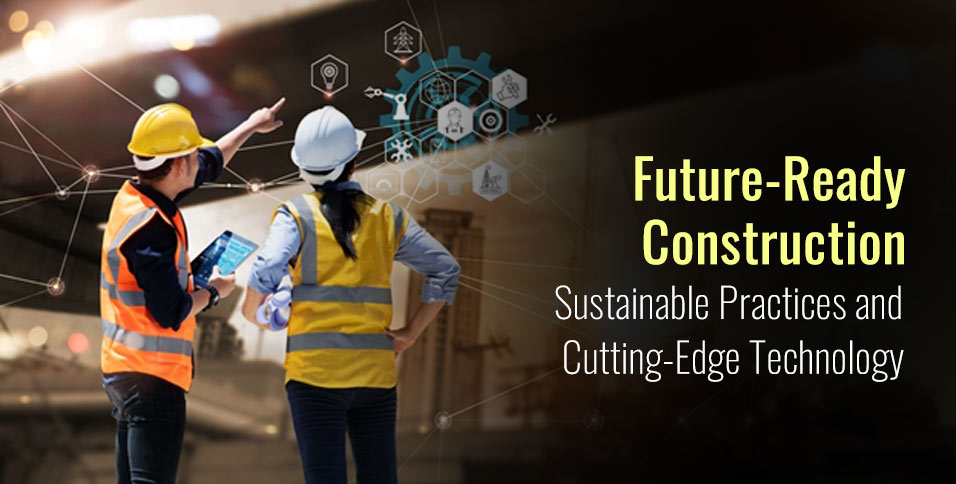
The construction industry is undergoing a remarkable transformation. Gone are the days when buildings were judged solely by their functionality or aesthetics. Today, the focus is on creating structures that are sustainable, technologically advanced, and cost-efficient. From energy-efficient designs to smart project management tools, construction professionals are embracing innovations that not only redefine how buildings are made but also how they perform over time.
As urban populations rise and environmental concerns intensify, modern construction practices must balance growth with responsibility. Developers, architects, and engineers are increasingly prioritizing green building methods, renewable materials, and cutting-edge technologies to deliver structures that meet both client expectations and environmental standards. Many construction companies work with professional construction estimating services providers to accurately calculate material requirements and efficiently plan resource allocation, minimizing waste while ensuring project timelines are met.
Embracing Sustainability in Modern Construction
Sustainability has become the cornerstone of future-ready construction. Builders are now looking beyond traditional approaches, seeking solutions that reduce environmental impact while enhancing long-term efficiency.
Eco-friendly building materials, such as recycled steel, bamboo, and low-carbon concrete, are being widely adopted. These materials not only lower carbon emissions during production but also extend the life cycle of structures. Energy-efficient designs, including passive heating and cooling, natural lighting, and smart insulation, are becoming standard in both residential and commercial projects.
Moreover, integrating renewable energy systems, such as solar panels and wind turbines, allows buildings to reduce reliance on conventional power sources. Sustainable construction practices also emphasize waste reduction, water conservation, and site management that minimizes ecosystem disruption. Together, these measures ensure that buildings contribute positively to the environment while remaining economically viable.
The Role of Cutting-Edge Technology
Technology is reshaping every aspect of construction, from planning to execution and maintenance. One of the most significant innovations is Building Information Modeling (BIM). BIM enables architects and engineers to create detailed digital representations of buildings, allowing stakeholders to identify potential design conflicts before construction begins. This reduces errors, minimizes rework, and improves collaboration across teams.
Drones and aerial mapping are increasingly used to monitor project sites in real-time. These tools provide high-resolution data on site progress, material usage, and safety compliance. Similarly, 3D printing is being used to produce structural components and prototypes quickly, reducing material waste and speeding up construction timelines.
Accurate Planning and Cost Management
Careful budgeting and planning are critical to the success of modern construction projects. Using a reliable building construction cost estimator at the planning stage helps developers anticipate labor, material, and equipment costs. Accurate projections reduce the risk of cost overruns and allow project managers to make informed decisions about resource allocation, design adjustments, and scheduling.
When combined with sustainable practices and cutting-edge tools, cost estimators enable construction teams to balance environmental responsibility with financial efficiency. For instance, incorporating energy-efficient systems or modular components may initially require an investment, but proper planning ensures long-term savings without compromising quality.
Innovative Construction Techniques
Modern construction increasingly embraces prefabrication and modular building methods. Components are manufactured off-site in controlled environments and then assembled on-site. This approach minimizes construction time, reduces errors, and lowers material waste. Prefabrication also allows for higher quality control, ensuring that each element meets design specifications accurately.
Robotics and automated machinery are transforming labor-intensive processes such as bricklaying, concrete pouring, and material handling. By leveraging automation, construction teams can achieve greater precision, reduce the risk of accidents, and optimize productivity.
Green roofs, smart facades, and energy-efficient HVAC systems are other examples of how innovation meets sustainability. These solutions not only enhance building performance but also improve occupant comfort and reduce long-term operational costs.
Enhancing Workforce Skills
Even with advanced technology, a skilled workforce remains essential. Modern construction requires professionals trained to handle digital tools, interpret complex data, and implement sustainable practices effectively.
Companies are investing in workforce development programs to ensure that employees can adapt to innovations such as BIM, drones, 3D printing, and professional takeoff tools. Proper training ensures that advanced technologies are utilized to their fullest potential, maximizing both efficiency and safety.
The integration of technology and skilled labor creates a synergistic effect: digital tools enhance human decision-making, while trained professionals ensure that technology is applied accurately and efficiently.
Challenges in Future-Ready Construction
Despite its numerous advantages, adopting sustainable practices and cutting-edge technology in construction comes with challenges. Initial costs for eco-friendly materials or high-tech equipment can be higher than conventional methods. Integrating new tools also requires time, investment, and staff training.
Another challenge is balancing sustainability with client expectations and budget constraints. For example, incorporating renewable energy systems or smart building technologies may initially increase costs, even if they provide long-term savings.
However, these challenges are manageable with careful planning. By leveraging tools like professional takeoff services and a construction cost estimator, developers can forecast expenses accurately and make informed decisions about which technologies and sustainable practices to implement.
The Future of Construction
The future of construction is being shaped by sustainability, innovation, and efficiency. Buildings will be more resilient, adaptable, and environmentally responsible. Smart systems will allow structures to optimize energy consumption, monitor structural health, and respond to environmental changes.
Developers who adopt these technologies early will have a competitive advantage. They will deliver projects that meet modern standards, satisfy regulatory requirements, and provide long-term value to both owners and occupants.
Ultimately, future-ready construction is about creating buildings that endure, not just physically but also economically and environmentally. By combining sustainable practices with innovative technologies and precise planning, the construction industry can meet the needs of growing populations while preserving the planet for future generations.
Conclusion
Modern construction is no longer about simply erecting structures it is about building responsibly, efficiently, and innovatively. From sustainable materials and renewable energy to digital tools and professional planning services, every element plays a role in shaping buildings that are future-ready.
By embracing these practices, construction professionals can reduce environmental impact, control costs, and improve project outcomes. Tools like professional construction takeoff services and construction cost estimators (used once in their respective paragraphs) ensure accuracy and efficiency without compromising quality.
As the industry continues to evolve, those who integrate sustainability with technology and precise planning will lead the way, setting new standards for what it means to build for the future. Future-ready construction is not a trend it is the new standard.