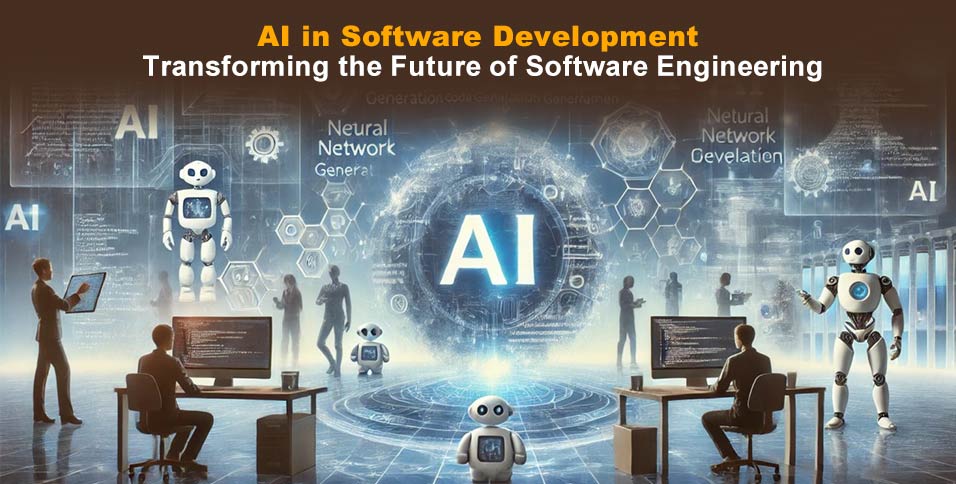
Artificial intelligence is no longer a distant concept in computer science – it is becoming a vital part of modern software engineering. From code generation to automated testing, ai technologies are reshaping the software development process and the way software developers build, refine, and maintain software systems. Many organisations now turn to artificial intelligence consultancy services to understand how to integrate ai into their workflows and unlock new business value.
This article explores how ai in software development is driving change across the entire software development lifecycle, from project planning to deployment. We’ll look at the ai tools being used, the impact of machine learning models, and the balance between human expertise and ai capabilities in shaping future-ready software solutions.
Understanding AI in the Context of Software Development
At its core, artificial intelligence refers to computer systems that can simulate aspects of human intelligence, such as learning from data, recognising patterns, making predictions, and in some cases, generating content or actions. Within software engineering, this takes the form of ai systems that can assist developers in routine tasks, provide insights into code quality, or even write code faster than traditional methods.
The shift is not simply about replacing developers with machines. Rather, it is about integrating ai development into the existing development cycle to enhance productivity, reduce repetitive work, and free up specialists to focus on complex problems that demand problem solving skills and creativity.
Key branches of ai relevant to software include machine learning, natural language processing, computer vision, and generative ai. Each plays a different role in software solutions, from analysing historical data for bug detection to suggesting improvements in user interface design.
How AI is Shaping the Software Development Process
The software development process has traditionally relied on human expertise, structured planning, and iterative testing. With ai integration, several parts of this development process are evolving:
- Planning and Requirements Gathering
Machine learning techniques can analyse historical data from previous projects, identifying where delays, errors, or quality issues occurred. This helps with project management and planning, allowing teams to anticipate challenges and allocate development efforts more effectively. - Code Generation and Refactoring
Large language models and gen ai platforms are now capable of generating entire code snippets or suggesting how to refactor existing code. Developers can use these ai tools in integrated development environments to generate boilerplate code, streamline code review, and write code faster. - Testing and Quality Assurance
Automated testing powered by ai outputs can detect bugs, run unit testing more effectively, and highlight risks in system integration. By automating routine tasks such as regression testing, developers can focus on enhancing overall software quality. - Deployment and Maintenance
Ai assistants and ai agents support continuous monitoring of software systems in production. They can detect anomalies, suggest code improvements, and even predict failures before they impact users.
The Role of AI Models in Software Engineering
Ai models sit at the heart of these advances. Machine learning models, for example, can be trained on vast amounts of code to recognise patterns in programming languages, identify potential vulnerabilities, and generate code that meets specific requirements.
Natural language processing models go further by bridging the gap between human instructions and computer programming. Developers can describe software development tasks in natural language, and ai outputs can translate these instructions into working code snippets. This makes the coding environment more accessible and allows less technical stakeholders to contribute to the development cycle.
Generative ai takes this one step further, creating not just code but also documentation, test cases, and even user interface prototypes. When combined with statistical analysis and feature engineering, these ai technologies enable developers and data scientists to build software solutions faster and with greater accuracy.
Benefits of AI in Software Development
The integration of ai in software offers a range of tangible benefits across the software development lifecycle:
- Increased developer productivity: By automating boilerplate code, routine tasks, and code review, ai tools enhance productivity and allow developers to focus on complex tasks.
- Improved code quality: Ai generated code can be checked against large repositories of existing projects, ensuring fewer errors and suggesting improvements in real time.
- Faster development efforts: Teams can write code faster, shorten the development cycle, and reduce time to market.
- Enhanced problem solving: By leveraging ai for data analysis, developers gain insights into complex problems and potential solutions.
- Better system integration: Ai systems can evaluate dependencies within software systems, making system integration smoother and less error-prone.
- Higher overall software quality: Through continuous bug detection, automated testing, and code refactoring, software quality improves across the lifecycle.
Challenges of Integrating AI into the Development Cycle
Despite its advantages, integrating ai into software development tasks is not without challenges.
- Dependence on quality data: Machine learning models and large language models require well-structured, reliable data. Without strong data governance, ai outputs can be inaccurate.
- Understanding context: While ai tools can generate code snippets, they may lack a full understanding of the business context, requiring human expertise to validate outputs.
- Balancing automation and oversight: Over-reliance on ai generated code without sufficient code review risks introducing subtle errors that are difficult to detect.
- Ethical considerations: Using historical data for training can introduce bias into ai interactions, which must be carefully managed.
- Security concerns: Ai integration may expose vulnerabilities if generated code is not properly validated or if sensitive data is not protected.
AI Tools Supporting Developers
The market for ai tools in software engineering is growing rapidly. Integrated development environments are increasingly embedding ai assistants to assist developers. For example, platforms powered by generative ai can complete lines of code, generate unit testing scripts, or provide documentation automatically.
Other ai technologies focus on project management, supporting version control and helping teams track progress across the software development lifecycle. Ai development assistants can highlight when developers are stuck, suggest alternative approaches, and even recommend programming languages best suited for a task.
A notable recent addition is amazon q developer, an ai assistant designed to help developers generate code, manage dependencies, and accelerate development efforts in the cloud.
Enhancing Software Quality with AI
Software quality is one of the most critical goals of any development cycle. Ai systems play a direct role in improving quality through:
- Bug detection: Machine learning techniques can analyse code to predict likely points of failure.
- Automated testing: Test generation and execution can be automated, reducing manual testing time.
- Code review: Ai assistants can suggest improvements, highlight risks, and ensure adherence to coding standards.
- Code refactoring: Routine refactoring can be automated to improve maintainability.
By integrating ai tools into these stages, developers reduce errors and enhance overall software quality without adding significant development efforts.
AI and the User Interface
The way users interact with software is central to its success. Ai technologies are increasingly being used to analyse user behaviour, apply statistical analysis, and suggest user interface improvements. Natural language processing allows software systems to accept commands in natural language, making interactions more intuitive.
Generative ai can even propose new user interface designs based on historical data, usage trends, and feature engineering. For instance, if data analysis shows that users struggle with a particular workflow, ai systems can recommend design changes to improve the experience.
Collaboration Between AI and Human Expertise
While ai capabilities continue to grow, human expertise remains essential. Software developers bring creativity, problem solving skills, and contextual understanding that ai cannot replicate. Ai integration is most effective when ai agents assist developers by handling routine tasks and suggesting improvements, while humans maintain oversight of complex problems and decision-making.
The ideal approach is a hybrid model: ai in software accelerates coding, testing, and system integration, while developers provide oversight, validate ai outputs, and ensure that software solutions align with business goals.
The Role of Data Science and Data Governance
Data science underpins much of ai development in software engineering. Data scientists are responsible for training machine learning models, conducting statistical analysis, and ensuring that feature engineering produces accurate results. Without strong data governance, ai systems may produce unreliable outputs that reduce software quality.
Proper governance ensures that historical data is accurate, up to date, and ethically sourced. It also ensures that software systems comply with regulations, particularly in industries where data sensitivity is critical.
Business Value of AI in Software Development
Beyond technical advantages, ai in software development provides clear business value. Faster time to market, improved software quality, and enhanced developer productivity all translate into cost savings and competitive advantage.
Businesses adopting ai technologies in their software development lifecycle also benefit from better project management, more reliable system integration, and greater scalability. By leveraging ai, companies can address complex problems more effectively and deliver software solutions that meet user needs.
Looking Ahead: The Future of AI in Software
As ai integration deepens, the role of ai agents and ai assistant tools will only grow. We can expect further advances in coding environment support, greater accuracy in ai generated code, and stronger tools for version control and automated testing.
Generative ai will likely evolve to handle more complex tasks, including entire feature builds or sophisticated user interface designs. Machine learning techniques will be applied to more areas of the software development lifecycle, enabling predictive analysis of potential risks.
Crucially, the partnership between human expertise and ai capabilities will continue to define success. Developers will not be replaced by ai systems but rather supported by them, allowing more focus on innovation, problem solving, and creating business value.
Conclusion
Ai in software development is no longer an experimental idea – it is becoming an integral part of the software engineering toolkit. By automating routine tasks, improving code quality, and enhancing productivity, ai tools are reshaping the software development lifecycle. Yet human expertise remains central, ensuring that ai outputs are meaningful, secure, and aligned with business goals.
From project management and code generation to user interface design and system integration, ai technologies are influencing every stage of the development cycle. Organisations that embrace this transformation, supported by strong data governance and effective ai integration, will be best placed to deliver high-quality software solutions in the years ahead.