
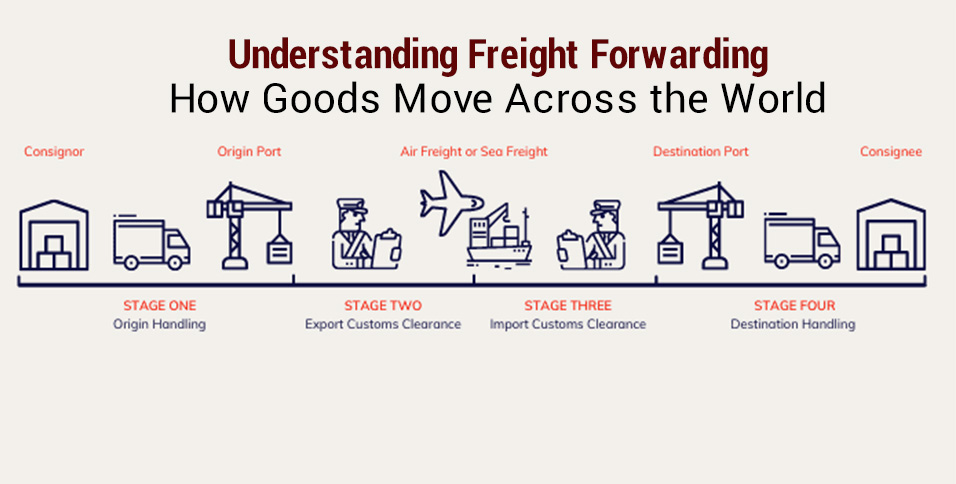
A freight forwarder is a person or business that arranges the shipping of goods from one location to another for a company or shipper. They may not own the means of transport (ships, trucks, or planes), but they are the professionals who evaluate the most efficient transport routes, handle the required documentation, and ensure adherence to the laws governing the shipping of goods internationally and interstate.
Essentially, freight forwarders are travel agents for cargo. They identify transport and shipping lines, define moving goods through customs’ processes, and prepare the documents that will ensure seamless passage through borders.
Why Freight Forwarding Matters
The role of freight forwarder is pivotal for global trade. Importers and exporters avoid the complexity of shipping cost, transport coordination, and customs regulation by turning to freight forwarders. Here are the most important reasons for businesses to turn to freight forwarders:
- Expertise in international trade laws: Registered freight forwarders know the relevant global trade agreements and the customs tariffs and restrictions that may apply to shipments.
- Efficient coordination: A freight forwarder serves as a point of contact and manages the seamless operation between carriers, customs agents, and warehouses.
- Cost efficiency: Freight forwarders get better shipping and transport rates through their partnerships and shipping contracts.
- Reduced risk: The loss or damage to goods shipped is reduced through applicable insurance and detailed hassle-free tracking of goods.
The knowledge of logistics and partnerships across different industries allow companies to concentrate on producing and selling goods while leaving the movement and transportation problems to the industry experts.
Common Modes of Transport in Freight Forwarding
Depending on the goods and time sensitivities, freight forwarders work on different transport alternatives:
- Air freight: For those goods which are time sensitive.
- Sea freight: For those goods which are heavy or bulky and are not needed urgently.
- Rail freight: For long distance and intercontinental shipping.
- Road freight: For intercontinental and regional shipping.
Logistics companies also provide express road freight services for short distance or urgent deliveries. Time critical deliveries are more of a concern for these services as dedicated vehicles with no multiple stops or transfers are used.
The Process of Freight Forwarding
Freight forwarding is done in a systematic way, and it usually takes the following steps:
- Planning and Quoting: In this step, the forwarder looks at the shipment specifics (what the goods are, weight, dimensional size, and destination) to determine the cost
- Booking Transport: At this step, they will reserve space with the appropriate transport mode (ships, trucks, and or planes) considering the request and cost of the client.
- Documentation: Having the right documents is necessary. These are the bills of lading, commercial invoice, and different permits for exporting or importing.
- Customs Clearance: The forwarder avoids delays by making sure that duties, taxes, and customs procedures are completed properly.
- Cargo Tracking: Clients can track their cargo in real time with state-of-the-art tracking systems.
- Delivery: The forwarder organizes the last part of the delivery to the customer’s location or storage facility once the cargo gets to its destination.
All these stages involve precision and the coordination of various parties, such as carriers, customs brokers, warehouses, and insurance companies, working together.
Key Qualities of a Reliable Freight Forwarder
For seamless operational flow, picking the right freight forwarder is essential. Here are the sought-after attributes:
- Transparency: Details on pricing, timelines, and procedures should be clearly stated.
- Experience: Knowledge of specified trade routes and customs laws.
- Global Network: Having partnerships with credible carriers and agents across the globe.
- Flexibility: Adjusting to changes or disruptions on routes or schedules on short notice.
- Technology Integration: Use of real time tracking systems, automated notifications and digital documentation.
A good forwarder develops a strong supply chain that provides order during global disruptions like changes in fuel prices, weather, port congestion, and their payload.
Final Thoughts
The heart of international commerce is freight forwarding. It doesn’t matter if the goods are transported over the air, ocean, or over the road, the focus will always be on the safe, effective, and compliant transit of the freight from Point A to Point B.
Businesses receive support and the confidence of streamlined freight logistics when they engage the services of competent freight forwarders. By alleviating the intricate logistics, freight forwarders allow their clients to concentrate on their core functions of client service and business growth.








