Walk into a traditional welding shop and your senses get hit before your eyes do.
The smell of solvents. The constant scream of grinders. Fine dust settling everywhere—on machines, on benches, on people.
Most managers look at that scene and think the problem is welding speed. It usually isn’t.
Here’s the uncomfortable truth: in many workshops, surface preparation before and after welding is the real efficiency killer. Not the weld itself. Not the machine power. The prep work no one wants to talk about.
And that’s exactly where photonic manufacturing quietly entered the picture.
The Old Headaches Nobody Misses
Ask anyone who’s spent years on a shop floor. Grinding and chemical cleaning get the job done—but barely.
Grinding eats consumables. Discs wear out fast. Skilled hands are required to avoid damaging the base metal, yet inconsistency creeps in anyway. Too aggressive, and you scar the surface. Too light, and contaminants remain, waiting to cause porosity in the weld.
Chemical cleaning isn’t much better. Solvents cost money, create disposal headaches, and raise real health concerns. Ventilation becomes mandatory. Compliance paperwork piles up.
And the biggest issue? Human variability.
The result at 8 a.m. rarely matches the result at 5 p.m. Fatigue matters. Experience matters. Mood matters.
Does it really affect productivity?
Yes. Every rework proves it.
Enter the Laser Cleaning Machine
This is where the conversation changes.
A Laser Cleaning Machine doesn’t scrape. It doesn’t soak. It doesn’t touch the surface at all. Instead, it removes rust, oil, oxidation, and residue using controlled bursts of light.
Think of it like an eraser made of photons.
The contaminants absorb the energy and disappear. The base metal stays put.
Because the process is non-contact, there’s no abrasive damage. No chemical runoff. No dust clouds filling the air. And once parameters are set, the result is consistent—hour after hour.
Consistency is underrated until you lose it. Laser cleaning brings it back.
For modern workshops chasing throughput and repeatability, that matters more than headline power ratings.
Inside the Beam: Why Fiber Lasers Made This Possible
Laser cleaning isn’t new in theory. What’s new is practicality.
The breakthrough came with fiber lasers.
Compared to older laser systems, a Fiber Laser offers higher energy density, better stability, and far lower maintenance. No mirrors to align. No fragile optics to baby. Just a solid-state beam delivered exactly where it’s needed.
What makes fiber lasers especially interesting is their flexibility. By adjusting pulse duration, frequency, and energy delivery, the same source can behave very differently. Gentle enough to clean surface oxidation. Intense enough to weld metal.
That dual nature—precision and power—opened the door to something bigger than standalone machines.
The Integration Shift: One Tool, One Flow
This is where the industry trend becomes impossible to ignore.
Instead of separate tools for cleaning, welding, and post-processing, manufacturers are moving toward integrated systems. One platform. One handheld interface. Multiple steps, no interruptions.
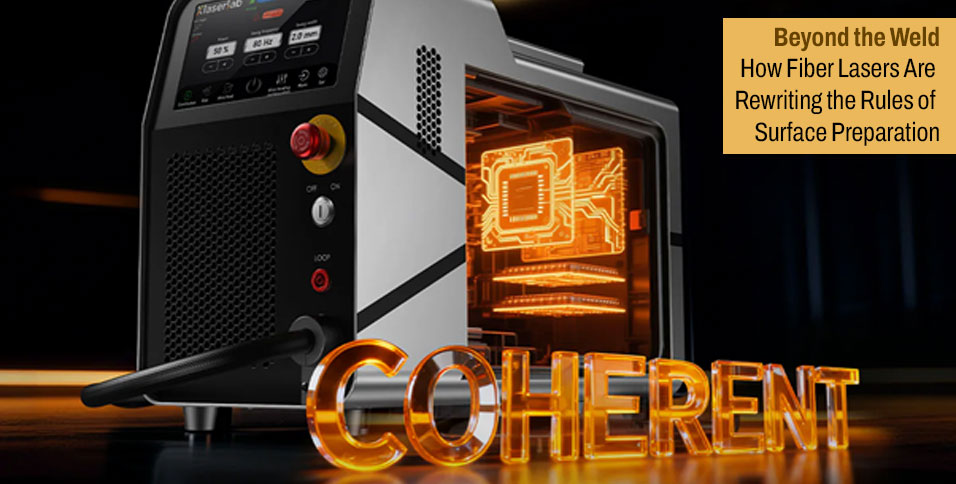
A good example of this shift is the X1 Pro Laser Welder from XLaserlab.
Rather than positioning itself as just a welder, it reflects a broader design philosophy: reduce tool switching, reduce wasted motion, and let the operator stay focused on the work.
With systems like this, the workflow becomes continuous:
- Clean the joint before welding
- Weld with minimal heat distortion
- Clean the seam immediately after
No grinder. No solvent bath. No walking across the shop.
What’s more interesting is what happens outside the factory. Portability means these steps can happen on-site—during installation, repair, or modification work. That changes how teams think about field jobs entirely.
Less equipment hauled. Fewer compromises. Faster turnaround.
Efficiency Isn’t About Working Harder
Here’s something an old fabrication supervisor once told me:
“We didn’t get faster by pushing people. We got faster by removing stupid steps.”
Laser-based surface preparation does exactly that.
By replacing messy, variable, labor-heavy processes with controlled photonic tools, workshops don’t just save time. They reduce rework. They improve weld quality. They create cleaner environments.
And they stop pretending that prep work is “just part of the job.”
Where This Is Headed
Single-purpose machines aren’t disappearing overnight. But their dominance is fading.
Manufacturing efficiency today isn’t about stacking more equipment into the same space. It’s about doing more with fewer interruptions. Fewer handoffs. Fewer compromises.
Fiber-laser-based systems that combine cleaning, welding, and cutting aren’t a gimmick. They’re a response to real bottlenecks that have existed for decades.
The future of metal fabrication won’t be louder or dirtier.
It will be quieter. Cleaner. Smarter.
And it will start—not at the weld—but before it.