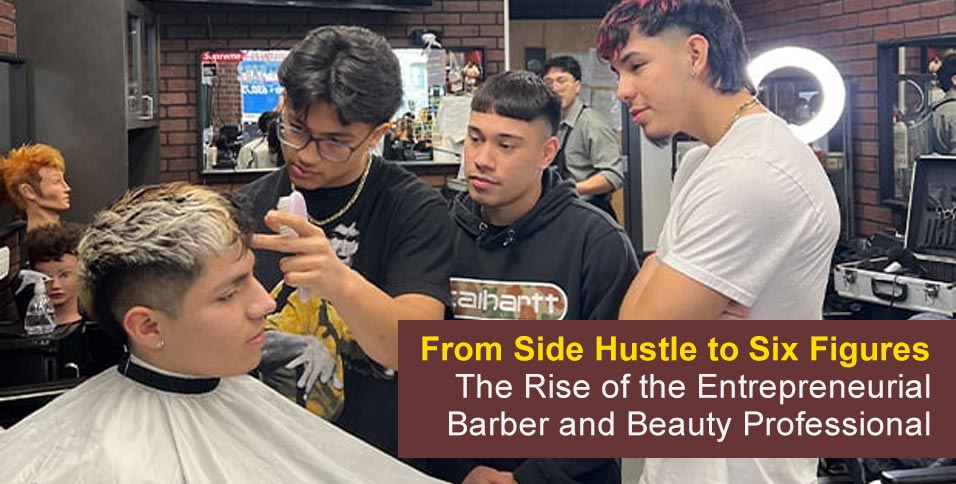
The American beauty industry is experiencing a profound transformation, and it’s not being led by venture-backed startups or Silicon Valley disruptors. Instead, a new generation of entrepreneurial barbers and beauty professionals is rewriting the rules of business ownership, building profitable enterprises that rival traditional corporate careers in earning potential while offering something increasingly rare: genuine independence.
The New Face of Entrepreneurship
When Marcus Thompson left his corporate sales job in 2019, his family thought he’d lost his mind. He was trading a $75,000 salary and benefits for scissors and a barber’s chair. Five years later, Thompson operates three barbershop locations in Atlanta, employs fourteen stylists, and cleared $180,000 in personal income last year. His story isn’t exceptional anymore—it’s becoming the norm.
The beauty industry now represents over $90 billion in annual revenue in the United States alone, and an increasing share of that wealth is flowing to independent practitioners rather than large salon chains. This shift represents one of the most significant entrepreneurial opportunities in the skilled trades, yet it remains largely overlooked by business media focused on tech unicorns and venture capital.
Why Beauty Professionals Are Winning at Business Ownership
Several converging factors have created an unprecedented environment for beauty industry entrepreneurship. First, the barrier to entry remains remarkably low compared to other industries. While opening a restaurant might require $250,000 in startup capital, a booth rental or chair lease at an established salon can begin at $100-$300 weekly. This allows professionals to test business ownership with minimal financial risk.
Second, the industry benefits from recession-resistant demand. Even during economic downturns, people continue getting haircuts, maintaining their appearance for job interviews, and seeking affordable luxury experiences like spa treatments. This stability provides a foundation that many other small businesses lack.
Third, social media has democratized marketing. A talented stylist with strong Instagram presence can build a loyal client base without expensive advertising campaigns. Word-of-mouth referrals, always powerful in personal service industries, now spread exponentially through digital channels.
The Training Foundation: Where Success Begins
Behind every successful beauty entrepreneur is a foundation of professional training. The pathway to licensure typically begins with comprehensive barber education that covers not just cutting techniques but also client management, sanitation standards, and increasingly, business fundamentals.
“The technical skills are table stakes,” explains Jennifer Rodriguez, who owns two successful salons in Phoenix. “What separates six-figure earners from everyone else is business acumen. You need to understand pricing strategy, client retention, inventory management, and cash flow. The best beauty schools now integrate these business concepts throughout their programs rather than treating them as afterthoughts.”
This educational evolution reflects the industry’s maturation. Modern beauty education has expanded far beyond technical instruction. Students now learn about building personal brands, managing social media presence, understanding profit margins, and creating client experiences that justify premium pricing.
The Economics of Beauty Entrepreneurship
The financial model for beauty professionals offers multiple pathways to substantial income. The traditional employee model, where stylists work for a salon and receive a commission on services (typically 40-60%), can generate comfortable middle-class incomes of $40,000-$70,000 annually. However, true wealth building begins with booth rental or business ownership.
Under a booth rental arrangement, licensed professionals pay a fixed weekly or monthly fee to work from a salon space while keeping 100% of their service revenue. A skilled barber charging $35 per haircut and completing twenty appointments per day, four days weekly, grosses approximately $145,600 annually. After rent ($1,200-$1,800 monthly), supplies ($300-$500 monthly), and other expenses, net income can easily exceed $100,000.
The next level involves opening a suite-style salon or traditional salon where the owner rents spaces to other professionals. This creates multiple income streams: the owner’s own service revenue, rental income from other stylists, and often retail product sales. Successful multi-chair operations can generate $200,000-$500,000 in annual revenue, with owner take-home ranging from $120,000-$250,000 depending on involvement level and business model.
Beyond the Chair: Diversification Strategies
The most successful beauty entrepreneurs rarely rely solely on service income. They build diversified revenue models that create wealth while reducing physical labor over time. Product lines represent one popular avenue—many established stylists develop signature hair care or skin care products that generate passive income through online sales and salon distribution.
Education offers another lucrative stream. Experienced professionals teach workshops, create online courses, or transition into specialized beauty instruction, sharing their expertise with the next generation while commanding premium rates for their knowledge. Some establish their own training academies, combining service revenue with educational income.
Brand partnerships and social media influence have emerged as significant income sources for beauty professionals with strong online followings. A stylist with 50,000 engaged Instagram followers might earn $500-$2,000 per sponsored post while simultaneously driving clients to their chair. These digital revenue streams complement rather than replace service income, creating financial resilience.
The Skills Gap Creates Opportunity
Perhaps counterintuitively, the beauty industry faces a persistent skilled labor shortage even as it offers attractive entrepreneurial opportunities. The Bureau of Labor Statistics projects that demand for barbers, hairstylists, and cosmetologists will grow by 8% through 2031, faster than average for all occupations. This talent gap means well-trained professionals can command premium prices and enjoy geographic flexibility in choosing where to build their businesses.
This shortage stems partly from outdated perceptions about beauty careers. Many high school counselors still steer students toward four-year colleges rather than vocational training, despite the fact that beauty professionals often out-earn their peers with bachelor’s degrees while carrying significantly less student debt. The average cosmetology program costs $10,000-$20,000 and takes less than a year to complete, compared to four-year degrees averaging over $100,000 in total costs.
The Lifestyle Advantage
Beyond raw earning potential, beauty entrepreneurship offers lifestyle benefits that resonate increasingly with modern workers. Schedule flexibility ranks among the most valued aspects—booth renters and salon owners control their hours, allowing them to accommodate family obligations, pursue hobbies, or simply avoid rush-hour commutes.
Creative fulfillment provides another draw. Unlike many corporate roles, beauty professionals see immediate, tangible results from their work. Clients leave looking and feeling better, creating daily positive feedback that sustains motivation in ways spreadsheets and status meetings rarely achieve.
Community connection grounds the work in meaningful relationships. Regular clients become friends, and stylists often serve as informal therapists, confidants, and trusted advisors. This social dimension of beauty work creates job satisfaction that transcends financial compensation.
Challenges and Realities
Entrepreneurial success in the beauty industry isn’t guaranteed or effortless. The work remains physically demanding—standing for hours, repetitive hand movements, and constant client interaction can lead to burnout without proper self-care and boundary setting. Many successful professionals emphasize the importance of limiting appointments to maintain quality and prevent injury.
Client acquisition and retention require constant attention. Even established professionals must continuously market themselves, maintain social media presence, and deliver consistent results. One negative review can impact business significantly in an industry where reputation drives everything.
Financial management presents challenges for practitioners trained in technical skills rather than business operations. Many talented stylists struggle with pricing their services appropriately, managing irregular income, planning for taxes, and building retirement savings. These gaps highlight the importance of comprehensive business training within beauty education programs.
The Future of Beauty Entrepreneurship
Several trends suggest the entrepreneurial opportunities in beauty will only strengthen in coming years. The wellness industry’s explosive growth creates demand for spa services, facials, and holistic beauty treatments. Male grooming has evolved from basic haircuts to sophisticated skincare and aesthetic services. Anti-aging treatments and medical aesthetics blur the lines between beauty services and healthcare, creating new niches for trained professionals.
Technology integration offers both opportunities and challenges. Online booking systems, point-of-sale software, and customer relationship management tools make operations more efficient but require ongoing learning. Virtual consultations and digital color matching expand service possibilities while requiring new skill sets.
Sustainability consciousness among consumers creates demand for eco-friendly salons, clean beauty products, and ethical business practices. Professionals who position themselves at this intersection of beauty and environmental responsibility often command premium pricing while attracting dedicated clienteles.
The Path Forward
For corporate professionals considering a career transition, or young people evaluating their options, beauty entrepreneurship deserves serious consideration alongside traditional paths. The combination of low barriers to entry, strong earning potential, creative fulfillment, and lifestyle flexibility creates a compelling value proposition.
Success requires more than technical skill, however. Aspiring beauty entrepreneurs should seek comprehensive training that includes business fundamentals, develop strong personal brands before going independent, build emergency funds to weather slow periods, and cultivate mentorship relationships with established professionals who’ve navigated the journey successfully.
The rise of the entrepreneurial barber and beauty professional represents more than an industry trend—it’s evidence that the American Dream of business ownership remains accessible to those willing to develop valuable skills, serve clients excellently, and build strategically. In an economy increasingly dominated by credential requirements and student debt, the beauty industry offers a refreshing alternative: a proven pathway from training to six-figure income that rewards talent, hustle, and business savvy in roughly equal measure.
As corporate careers become less stable and traditional entrepreneurship grows more expensive, the beauty industry’s model of accessible, scalable business ownership deserves recognition as one of America’s most viable paths to financial independence. The stylists, barbers, and estheticians building these businesses aren’t just cutting hair or providing facials—they’re demonstrating that skilled trades, when combined with entrepreneurial thinking, can generate wealth, fulfillment, and freedom in ways that rival any corner office.