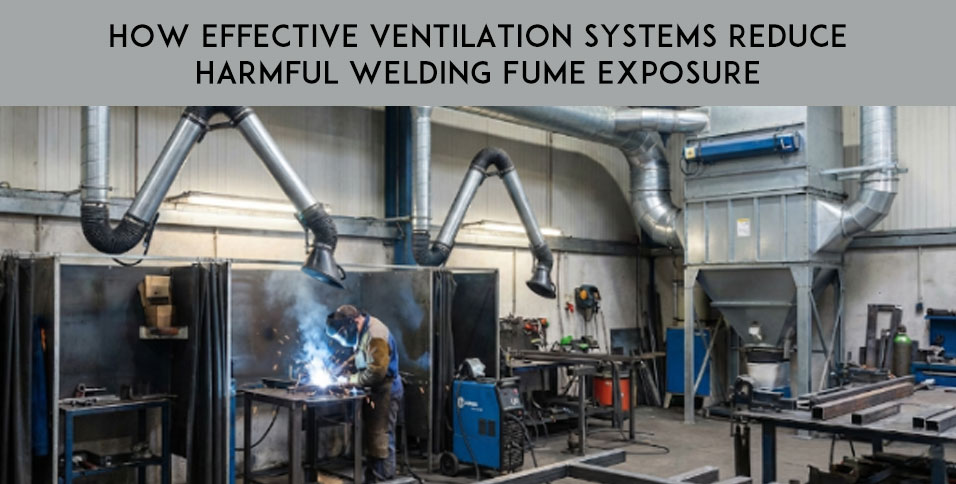
Modern welding environments face growing pressure to maintain safe air quality while meeting productivity goals. Welding fumes contain a complex mix of fine particles and gases that can accumulate quickly in enclosed or large-scale workspaces. Without proper control, these airborne contaminants may affect worker comfort, long-term health, and overall operational efficiency. This is why professionally designed ventilation systems play a central role in industrial safety strategies.
Their purpose goes beyond basic air movement and focuses on capturing contaminants at the source and maintaining clean, breathable air across the facility. In many industrial settings, ventilation planning is now considered a core part of compliance and risk management rather than an optional upgrade. In this context, welding fume ventilation becomes a critical component of maintaining acceptable exposure levels without relying on temporary or inconsistent measures.
Understanding the Nature of Welding Fumes
Welding fumes are generated when metals are heated above their melting point and vaporize before condensing into fine particles. These particles are often small enough to remain suspended in the air for extended periods, especially in large rooms with limited airflow control. Over time, they can spread far beyond the immediate welding area, affecting other workers and processes within the same facility.
Effective ventilation strategies address this issue by directing contaminated air away from breathing zones and replacing it with filtered air. Systems are engineered to create predictable airflow paths that limit the movement of fumes across the facility. Localized capture solutions, including a properly positioned welding fume extractor, play a critical role by removing contaminants directly at the source before they disperse into the surrounding environment.
How Professional Ventilation Systems Reduce Exposure
Professional ventilation systems are engineered with specific airflow patterns that capture fumes as close to the source as possible. This minimizes the chance of contaminants spreading throughout the workspace. By using controlled extraction and high-efficiency filtration, these systems remove hazardous particles before they can accumulate in the ambient air. Another important factor is system reliability over time. Ventilation performance depends heavily on proper filtration and airflow balance.
When filters are maintained correctly, the system continues to perform as designed, supporting both safety standards and operational stability. Unlike general air circulation systems, professional solutions are tailored to the unique demands of welding environments. They account for heat load production volume and spatial constraints, ensuring that fumes are managed continuously during active operations rather than intermittently.
Benefits Beyond Health and Compliance
Reducing welding fume exposure also delivers operational advantages that extend beyond regulatory compliance. Cleaner air improves visibility around workstations, supporting precision and reducing the likelihood of errors. Equipment and surfaces experience less residue buildup, which can lower maintenance demands and extend asset life. From a workforce perspective, effective ventilation contributes to job comfort and confidence.
When air quality is consistently controlled, workers can focus on their tasks without distraction from smoke or odors. Over time, this supports productivity and helps organizations retain skilled professionals in demanding industrial roles. Ventilation systems designed for large-scale or continuous welding operations also integrate seamlessly into existing workflows. They operate quietly in the background, providing consistent air quality without requiring manual intervention or disrupting production schedules.
Conclusion
Effective ventilation systems are a foundational element in reducing harmful welding fume exposure across industrial environments. By capturing contaminants at the source, maintaining proper airflow, and ensuring reliable filtration, these systems protect worker health while supporting efficient operations. Investing in professionally engineered ventilation is not only a response to safety requirements but also a strategic decision that enhances long-term performance and workplace quality.