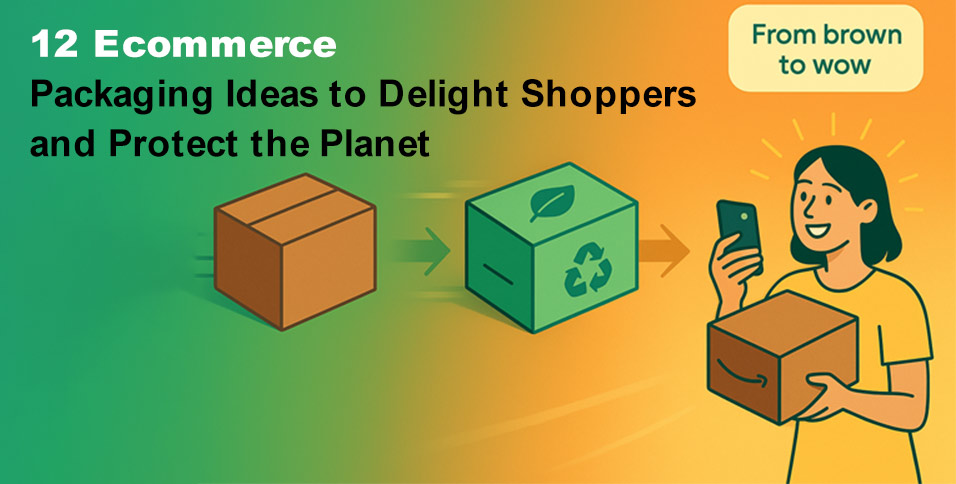
First impressions land on the doorstep. Swap forgettable brown cubes for right-sized, curbside-recyclable boxes that spark an instant “wow” and earn social shares. Sustainable packaging now shapes buying: 80 percent of online shoppers skip brands whose boxes aren’t eco-friendly (Mondi 2025 eCommerce Report). In this guide, we rank 12 ecommerce packaging ideas on delight, durability, eco impact, and cost so you can choose options that protect both margin and planet. Need a testing partner? We can ship custom, eco-certified prototypes from Zenpack fast.
How we score each packaging idea
- Customer delight – the instant “wow” when the lid lifts.
- Shipping durability – how reliably the pack protects goods in vans, planes, and on porches.
- Eco impact – material carbon footprint, curbside recyclability, and end-of-life ease.
- Cost & feasibility – effect on per-order margin plus how quickly suppliers can scale it. In some cases, working with a contract manufacturing partner helps brands meet volume demands while keeping costs predictable.
Each dimension earns a 1–5 score: 5 = best in class (think under 1 percent damage or fully curbside-recyclable) and 1 = high trade-off that only fits special cases. Treat the numbers as a conversation starter; use them to spot quick wins, uncover hidden costs, and map a packaging roadmap that delights shoppers without denting margins.
Packaging ideas at a glance
Think of this scorecard as your pre-flight checklist. Scan the rows, find the ecommerce packaging ideas that hit your must-have metrics, then pick two or three to prototype.
| Idea | Delight | Durability | Eco impact | Cost & feasibility† |
| 1. Custom branded corrugated box | 5 | 4 | 3 | 3 |
| 2. Minimalist box + insert | 4 | 3 | 4 | 5 |
| 3. Reusable or returnable pack | 4 | 4 | 5 | 2 |
| 4. Recycled or compostable board | 3 | 3 | 5 | 4 |
| 5. Right-sized auto-cut box | 3 | 4 | 5 | 4 |
| 6. Paper-based molded filler | 2 | 5 | 4 | 4 |
| 7. Unique structural design | 5 | 4 | 3 | 2 |
| 8. QR-enabled smart pack | 5 | 3 | 3 | 2 |
| 9. Interior art & reveal flaps | 5 | 3 | 3 | 3 |
| 10. Plastic-free void fill | 2 | 4 | 5 | 4 |
| 11. Built-in return sleeve | 3 | 4 | 4 | 3 |
| 12. Connected loyalty platform | 4 | 3 | 3 | 2 |
†A score of 5 means budget-friendly and easy to scale; 1 signals high cost or supplier constraints.
Quick read for screen readers: Ideas 3, 4, 5, and 10 lead on eco impact; ideas 6 and 7 score highest on durability; anything tagged 5 under delight delivers standout unboxing moments.
1. Custom Corrugated
A printed corrugate mailer turns the trip from warehouse to porch into a mini billboard. Crisp graphics and a clear logo spark recognition before the flap even lifts.
Delight. Bright inks and interior copy invite social posts, the finishing touch that helped Dollar Shave Club collect thousands of unboxing shares in its first year of direct-to-consumer sales.
Durability. Standard B-flute or E-flute board keeps average parcel damage under 2 percent when you add molded inserts, according to the 2025 BioResources puncture-resistance study.
Eco impact. Many U.S. converters now offer 60–90 percent post-consumer fiber and soy-based inks at no extra weight.
Cost & scale. After a one-time die fee ($200–$400), per-unit prices drop below $1 once orders top 500; seasonal refreshes need only new plates.
Scoring recap: delight 5, durability 4, eco 3, cost 3. Dependable choice for strong brand presence and reliable protection.
2. Minimalist + Inserts
A plain kraft mailer signals confidence: you’re investing in the product, not flashy extras. Inside: a pop-colored postcard, tissue wrap, or handwritten note that personalizes the unboxing.
Lower cost. Unprinted mailers run 20–30% cheaper and qualify for lighter parcel tiers. Amazon cut package weight by one-third replacing boxes with envelopes.
Flexible storytelling. Inserts swap in seconds; Brooklinen uses playful postcards for quick promos.
Eco lift. Kraft mailers are curbside-recyclable, often with 40% post-consumer fiber.
Protection. Padded kraft envelopes meet ISTA 3A drop standards for soft goods.
Scoring recap: delight 4, durability 3, eco 4, cost 5. Best for lean margins and flexible brand voice.
3. Reusables
Think of the pack as a boomerang: it ships out full, comes back empty, then repeats.
Eco math. Needs five cycles to beat cardboard; Returnity averages 40+ uses.
Cost curve. Higher upfront ($4 vs $0.60) but break-even by round five if return rates hit 75%.
Delight. Fabric or reinforced corrugate signals quality; Patagonia’s pouches handle dozens of trips.
Damage reduction. Reuse pilots cut transit damage by 27%.
Scoring recap: delight 4, durability 4, eco 5, cost 2. Works best with returns/rental-heavy catalogs.
4. Recycled Board
Yesterday’s recycled box looked flimsy. Today, 100% post-consumer corrugate rivals virgin fiber.
Eco impact. Carbon footprint fell 7.5% (2018–2021) per FEFCO data.
Perception. Kraft tones feel authentic; eco stamps earn social proof.
Cost. $0.05–$0.10 higher for small runs; narrows at 2,000+ units.
Performance. Meets ISTA 3A standards.
Tips. Keep artwork minimal; ask for PCR certificates.
Scoring recap: delight 3, durability 3, eco 5, cost 4. Strong for visible sustainability.
5. Right-Sized
Dimensional-weight pricing means you pay for air. Right-sizing machines scan, cut, and seal custom sleeves.
Material cuts. Walmart cut carton size 40%, void fill 60%.
Freight savings. Load 25% more boxes per truck.
ROI. Machines pay back in 12–18 months.
Optics. Snug fit shows care.
Scoring recap: delight 3, durability 4, eco 5, cost 4. High-volume warehouses benefit most.
6. Molded Pulp
Bubble wrap delights but lands in landfill. Molded pulp cradles products, fully recyclable.
Protection. Outperforms EPS; cut wine bottle breakage 80%.
Sustainability. 100% recycled paper, compostable.
Cost. Tooling now ~$1,200, near cost parity with bubble wrap at 10k+ pieces.
Feel. Adds a handmade touch.
Scoring recap: delight 2, durability 5, eco 4, cost 4. Best balance of protection and sustainability.
7. Structural Designs
Hinge-tops, sleeve boxes, book-like cartons—structure becomes theatre.
Delight. 61% of shoppers more likely to post unboxing.
Value. Premium builds justify 10–15% mark-ups.
Durability. Strength within 5% of RSC cartons.
Cost. Dies $300–$600; assembly adds $1–$2 per unit.
Example. Apple iPhone box’s “sigh” created 4M+ unboxing uploads.
Scoring recap: delight 5, durability 4, eco 3, cost 2. Ideal for launches and influencer kits.
8. Smart Packaging
A QR code turns every shipment into a digital touchpoint.
Conversion. 79% more likely to buy when scannable info is included.
Engagement. 61% scan post-purchase for reorder/rewards.
Cost. Pennies per box.
Example. Glossier’s QR stickers unlock playlists, fueling shares.
Tip. Codes ≥0.8 in wide; flat placement ensures scan reliability.
Scoring recap: delight 5, durability 3, eco 3, cost 2. Low-cost way to deepen engagement.
9. Interior Reveal
A plain exterior that opens to art or quotes sparks storytelling.
Share-ready. 60% of shoppers more likely to post.
Low lift. Costs ~$0.08 per unit.
Example. BarkBox comics built 7M-strong Instagram community.
Durability. No trade-off—just ink.
Tip. Keep copy above nine-point type, 0.25 in from folds.
Scoring recap: delight 5, durability 3, eco 3, cost 3. Buzz without full redesign.
10. Plastic-Free Fill
Swap air pillows for shredded kraft, honeycomb, or recycled crinkle.
Business case. Amazon cut 95% of air pillows, dropping damages 8%.
Carbon math. Emissions tied to filler fell 25%.
Cost. Paper runs $0.04 more but balances out.
Optics. Easy curbside recycling.
Tip. Choose SFI/FSC kraft, 70% post-consumer.
Scoring recap: delight 2, durability 4, eco 5, cost 4. Quick sustainability win.
11. Return Sleeve
Dual adhesive strips let customers reseal the same carton.
Expectation. 96% more likely to buy again with easy returns.
Savings. Support tickets cut 42%.
Damage. Original cradle reduces return breakage 15%.
Cost. Adds $0.03–$0.05 per box.
Example. REI credits sleeves for faster resale restocks.
Scoring recap: delight 3, durability 4, eco 4, cost 3. Strong for loyalty via hassle-free returns.
12. Loyalty Platform
NFC tags or dynamic QR codes drop shoppers into loyalty programs instantly.
Friction-free. 55% join after one tap/scan vs 28% via email.
Data. Captures SKU, location, date for tailored reminders.
Low lift. NFC ~$0.10, QR only ink.
Example. On Running saw 22% more enrollments.
Tip. QR ≥0.8 in, 300 dpi; NFC tags near edge for scans.
Scoring recap: delight 4, durability 3, eco 3, cost 2. Best for turning buyers into loyal members.
Paper beats plastic: Amazon’s shipping makeover
In June 2025 Amazon switched 95 percent of plastic air pillows in its North American fulfilment network to crinkled, recycled paper, a move confirmed in its annual sustainability update and later detailed by Reuters.
- Why it matters
- Damage control. Amazon’s QA data show an eight percent drop in in-transit damage claims during the first two quarters after the change (Reuters interview with VP Pat Lindner).
- Carbon cut. Internal lifecycle modelling cited in the same report estimates a 25 percent reduction in greenhouse-gas emissions tied to filler material after swapping plastic film for recycled kraft.
- Customer optics. Social scraping by Amazon’s AI team noted a surge in positive mentions of “plastic-free packaging” within weeks of the rollout, showing the switch resonated with shoppers.
- Cost neutrality. Although paper is heavier, Amazon balanced freight increases by right-sizing cartons and removing excess void, so net shipping spend stayed flat.
Takeaway for smaller brands
You don’t need Amazon’s scale to test the same idea. Ship a pilot batch of one hundred orders with paper fill, track damage and customer feedback, and compare costs. If breakage stays flat and sentiment rises, the paper premium can pay for itself through fewer returns and clearer sustainability proof.
How to choose the right packaging strategy
Think of packaging as a balancing act among protection, perception, planet, and profit. Use this four-step checklist to narrow the field.
- Start with the product.
- Fragile glass, electronics, or liquids need ISTA 3A or 6-Series drop certification, often molded pulp or right-sized dual-wall boxes. For faster validation, packaging engineering and prototyping services like Zenpack can run ISTA-certified drop and vibration tests and provide FSC-certified packaging options.
- Soft goods can handle lighter wraps and lean harder on unboxing drama.
- Map the journey.
- Cross-country ground sees three to five extra sort touches compared with regional fulfillment (FedEx Hub Data, 2024). Add cushioning or moisture-barrier liners when routes are long or climates swing.
- Run the full-cost math.
- Packaging represents only 30–40 percent of landed packaging cost; freight, labor, and returns make up the rest (Shopify Enterprise, 2025).
- A slightly pricier right-size box can cut dimensional-weight fees by up to 25 percent and pay for itself in weeks.
- Align with shopper values.
- Narvar reports that ninety-six percent of U.S. consumers link “easy, sustainable packaging” to repeat purchases.
- If eco credentials sway buying decisions, choose recycled board or plastic-free fill and place certifications (FSC, SFI) where customers can see them.
Prototype, then measure. Ship a pilot of one hundred orders, track damage, unboxing time, and return rate. Anything that trims the average return cost (now 25–30 dollars per item in the United States) can lift margin faster than a cheaper but failure-prone box.
Trends and advances to watch
Policy: EPR fees get real in the United States
Maine, Oregon, Colorado, California, and most recently Minnesota in 2025 now have extended-producer-responsibility (EPR) laws that make brands fund up to 90 percent of local recycling costs by 2031 (Recycling Product News). Rising containerboard prices are accelerating the same right-sizing shift, as detailed in Delivered Social’s 2025 guide to branded packaging costs, trends, and suppliers. Many programs reward right-sizing and recycled content with lower fees, so packaging that cuts air or boosts post-consumer content will soon carry a cost edge.
Digital twins and smart packs
Beyond QR loyalty taps, the next wave links each carton to a cloud “twin” that tracks carbon intensity and cold-chain temperature in real time. Packaging World notes that consumer-goods brands are piloting digital-twin simulations to shorten prototype cycles and optimize material weight before a single box is made.
What to do now
Pilot one low-risk step—like a post-consumer board to cut future EPR fees—while tracking material and sensor costs. Early moves build expertise and keep you ahead.
Conclusion
Packaging is shifting fast, driven by sustainability and efficiency. These 12 ideas show brands can balance eco-duty with standout unboxing. Start small, test, and scale what works. Smart choices protect products, margins, loyalty, and the planet.